Reinvention
FollowStarting over, second acts, and building the next chapter.

Answered instantly. We don't show your name.
The one everybody asks
Is it too late to start over?
It is never too late to start over, and the people who believe otherwise are usually measuring themselves against a timeline that was never theirs to begin with.
Answered by Mary Spio
Reinvention
How do I transition from the military to civilian work after 30 years? Everything I know seems to be behind me.
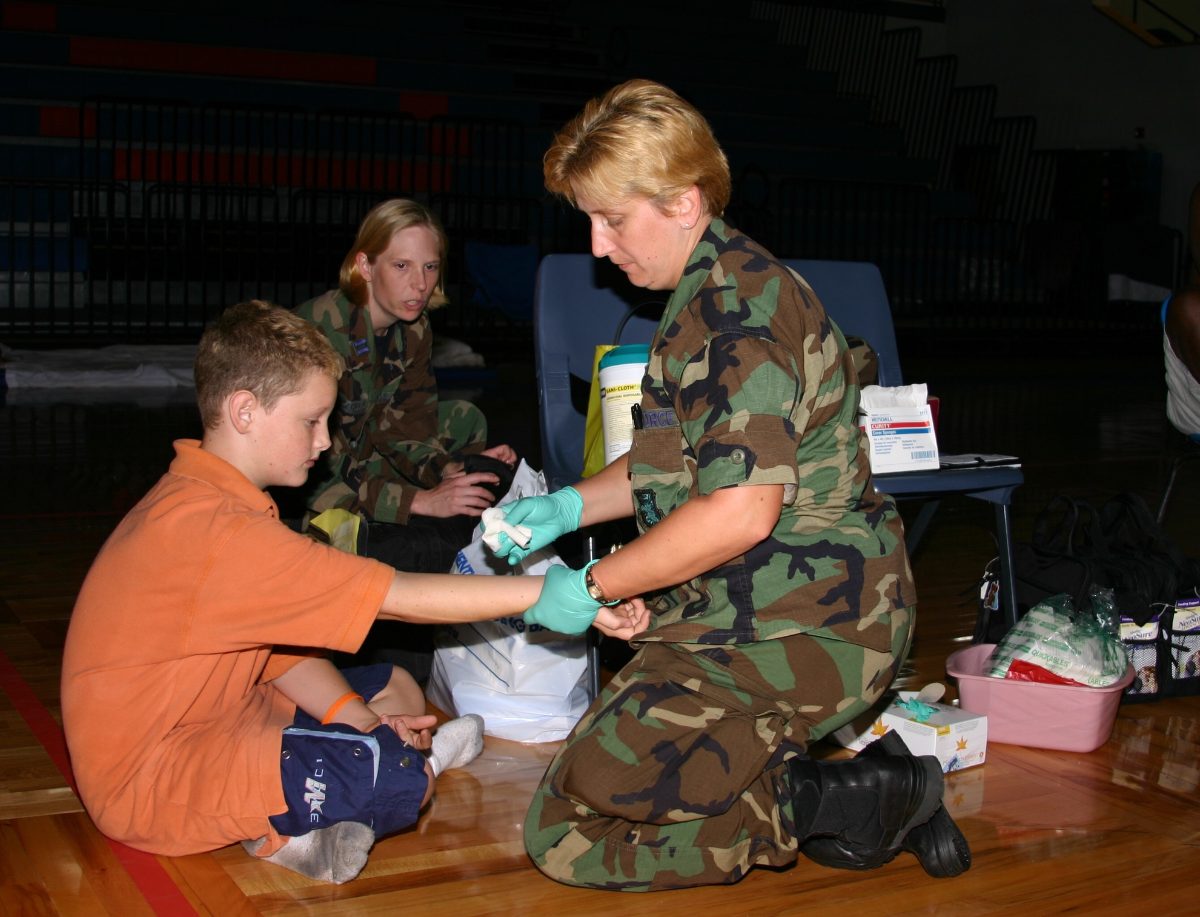
Thirty years of military service is not a ceiling, it's a foundation that most civilians will spend their entire careers trying to build, and the transition is entirely possible with a clear reframe of what you already have. Three decades in uniform means you have led people under pressure, managed budgets and equipment, made high-stakes decisions with incomplete information, and delivered results in conditions most corporate managers have never imagined. None of that disappears. What changes is the language around it. The single biggest mistake veterans make at this stage is underselling. "I was a logistics officer" becomes "I directed
Answered by Mary Spio
Reinvention
How do I get back into work after a long time. I took time to take care of the kids.
Getting back to work after raising kids is entirely possible, and it's happening all around you, people are doing it every day with less experience, less discipline and less real-world problem-solving ability than you just spent years building.

Answered by Mary Spio
Reinvention
How do I choose what to change when work, relationships and identity all feel unsettled?
When everything feels unsettled at once, you do not fix everything at once, you find the one thread that, if you pulled it, would stabilise the others. The instinct is to treat each area as its own emergency. It is not. Work, identity and relationships are load-bearing walls in the same structure, and when all three feel shaky at the same time, it usually means one of them shifted first and the others are responding to that movement. Your job is to find which one moved. Before you change anything, ask yourself which of the three you would describe last if someone ga

Answered by Mary Spio
Reinvention
Is it too late to create a life that feels more like me?
It is not too late, and more importantly, 'more like me' is not a fixed target you missed, it is something you build forward from where you are right now. The question underneath yours is whether the version of you that feels authentic is still available, or whether you have been someone else's version of you for so long that the original is gone. It is not gone. It is just quieter than it used to be. It does not require blowing up your life. It requires finding one thing, one piece of work, one relationship, one hour in your week, where you are not performing a role s

Answered by Mary Spio
Reinvention
What should I do when my next chapter is unclear but my current one is over?
When the current chapter is over but the next one is unclear, you are not lost, you are in the only honest place a transition can begin. The pressure to immediately name the next thing is almost entirely social. The chapter ended, and now the silence feels like failure. It is not. It is data. Clarity about a next chapter rarely arrives as a vision. It arrives as a series of small signals, something you did that made time disappear, a problem someone handed you that you couldn't put down, a skill people kept asking you about even when you weren't selli

Answered by Mary Spio
Reinvention · asked 2×
How do I stop waiting for permission to change my life?
Stop waiting for permission by understanding that no one is coming to give it to you, and that waiting is itself a decision you are already making. The permission you are waiting for does not exist in the form you are imagining. There is no moment where someone qualified looks at your situation, nods, and tells you it is your turn. What you are actually waiting for is certainty, and certainty is not on offer for anyone. Every day you spend waiting for permission is a day you are choosing the current version of your life over the next one. That is not passive. It

Answered by Mary Spio
Reinvention
Why does success feel like a trap instead of an achievement?
Success feels like a trap when you built your identity around the chase, and nobody warned you that arrival would feel like a stranger's house. This is more common than the success literature admits, and it is not ingratitude or dysfunction. It is what happens when the goal was always slightly ahead of you and then one day it is not. For years the gap between where you were and where you were trying to get gave you structure. It told you what to do next, what to sacrifice, what to defer. When you close that gap, the structure goes with it. What looked like a

Answered by Mary Spio
Reinvention
How do I make a major life change without losing financial stability?
You make a major life change without losing financial stability by making the change smaller and more reversible, not by making a leap and hoping the net appears. The framing that causes the most damage is the idea that a real change has to be total and immediate. It does not. The paycheck job you have right now is not the enemy of the life you want, it is the funding mechanism for building it, if you use it that way. The move is not to quit and then figure it out. The move is to identify the smallest version of the new direction that someone will pay you for, and build that w

Answered by Mary Spio
Reinvention
What do I do when I am capable but feel completely underused?
Being underused is not a patience problem, it is a signal that something needs to change, and the first job is to figure out whether the constraint is inside you, inside the role, or inside the organization. When capability runs ahead of opportunity, the instinct is often to wait it out, prove yourself quietly, and hope someone notices. That rarely works. Organizations do not tend to promote to the level of your private potential. They respond to what is visible and what is being asked for. So the first move is to stop treating this as something that will resolve on its own. There are three different problems that feel i

Answered by Mary Spio
Reinvention
How can I reinvent myself when people still see the old version of me?
Other people's perception of you is real, but it is not permanent, and you do not need their permission to change. The version of you they are holding onto is a story, and stories update when the evidence does. The problem is not that people are stubborn, it is that you are expecting the update to happen before you have given them enough new data to work with. Telling people you have changed rarely moves them. Showing up differently, consistently, over time does. Every time you act from the new version of yourself in front of the

Answered by Mary Spio
Reinvention
I have outgrown my old life. How do I build the next one?
You build the next life the same way you built the first one, one paid, real, small thing at a time, except now you have the advantage of knowing what you are walking away from. The version of you that outgrew it is the proof. You are not starting over empty-handed. You are starting over with pattern recognition, with a knowledge of which problems cost people real money, with a tolerance for difficulty that only comes from having already survived something. That is not nothing. That is most of it. The mistake most people make at this junction is trying to design the whole next life before th

Answered by Mary Spio
Reinvention
How do I know whether I need a new direction or just a break?
You need a break if the love is still there but the tank is empty; you need a new direction if rest stops changing how you feel about the work. The honest test is not how burned out you are, it is what you think about when you are not thinking about it. Rest is supposed to restore something. If you take two weeks away and find your mind drifting back to the work with something resembling curiosity, that is a tank that was empty. If you come back from a break and the dread is exactly where you left it, that is information. One of the clearest tests is this: s

Answered by Mary Spio
Reinvention
What is one practical step I can take when every option feels wrong?
Pick the option that is least wrong and move, because motion itself will show you information that standing still never will. When every path looks flawed, your brain is usually running an impossible calculation, comparing uncertain futures against a fantasy standard where one option carries zero cost. That standard does not exist. Every real choice comes with a downside attached, and waiting for the one that does not is how years go missing. The feeling of wrongness across all options often means you have reached the edge of what analysis

Answered by Mary Spio
Reinvention
Why do I keep thinking about a different life but never make a move?
You keep thinking about a different life because part of you already knows what you want, the part that won't stop sending the signal, but a louder part has decided the risk of moving is greater than the cost of staying still, and so far that louder part has been wrong and winning.

Answered by Mary Spio
Reinvention
How do I start over without throwing away everything I have built?
You do not start over by throwing things away, you start over by rerouting what you have built toward a new destination. The fear underneath your question is that starting over means erasure. It does not. It means re-pointing. The patents, the relationships, the hard-won judgment about how things actually work, none of that disappears. What changes is the org chart, the title, the category other people put you in. And that loss is real, but it is not the same as losing capability. Most of what you have built lives in two places: skills

Answered by Mary Spio
Reinvention
I feel stuck in life. What should I change first?
The first thing to change is not a circumstance, it is the question you are asking yourself every morning. Stuck is a feeling, not a fact. It tells you something has stopped moving, but it does not tell you what to move first. That distinction matters, because people who feel stuck tend to reach for the biggest lever available, quit everything, move cities, start over, when the actual problem is usually smaller and closer. Start here: what is one thing in your current life that is working, even partially? A skill, a relat

Answered by Mary Spio
Reinvention
What’s the best glp on the market? Ozempic or Other? Based on what people are saying. What has been your experience?
Talk to your doctor first. Here's what I've heard people actually saying about their experience with GLP-1 medications like Ozempic. What comes through consistently from people who have tried GLP-1 medications is that the progress is very encouraging. That matters more than it sounds. Most diets fail not because people lack willpower, they fail because of lack of progress. When you do the work and the scale does not move, you stop. GLP-1s seem to interrupt that cycle in a way that keeps people going. That is the signal underneath a lot of the conv

Answered by Mary Spio
Reinvention
I was laid off after 19 years. Where do I even begin?
Not with your resume. Begin with the fact that nineteen years of institutional knowledge did not disappear on Friday. The first instinct is to apply everywhere immediately, because applying feels like motion. It is mostly not. Spend the first two weeks writing down what you actually know, the processes, the failure modes, the things that only become obvious after a decade inside something. That list is your asset, and most people never make it. Then find the twenty organisations that would pay for that specific knowledge. Twenty tar

Answered by Mary Spio
Reinvention · asked 22×
Everyone my age is settled. What is wrong with me?
Nothing. You are comparing your inside to their outside, and their outside is a curated object. Settled is a presentation. I have sat across from a great many people who look settled and are quietly counting the years until they can stop. The feeling you are describing, that everyone received instructions you did not, is close to universal and almost never discussed, which is exactly why it feels like a personal defect. Ask one person you consider settled how they actually feel about their work. The answer will

Answered by Mary Spio
Reinvention · asked 9×
How do I start over with no savings?
You do not need runway. You need one paid thing inside ninety days, and the difference between those two ideas is the difference between planning and moving. Runway lets you build in private until you are ready. It is comfortable and it is also how people spend two years and arrive nowhere. Without it, you are forced into the only thing that reliably works: find someone who will pay you a small amount for something adjacent to what you can already do, now. It will not be the thing you eventually want to do. It is the bridge. Every person I know who rebuilt from nothing di

Answered by Mary Spio
Reinvention · asked 14×
I am 62 and just retired. Is it over?
Something ended. That is not the same as it being over, and the confusion between those two things is where most of the pain lives. Retirement removes structure, status, and a reason to leave the house, all in a single afternoon. People expect to feel relief and instead feel erased, then feel guilty about feeling erased. Give the ending its due, a few weeks of it being genuinely strange is not a crisis. Then build one fixed thing into the week that someone else depends on. One. Not a schedule. Obligation to another person is what re-establishes s

Answered by Mary Spio
Reinvention · asked 11×
Is 45 too late to change careers completely?
Completely is doing a lot of work in that sentence. Most successful changes are not complete, they are a pivot on something you already have. The people who struggle are the ones who try to erase twenty years and arrive as a blank slate. You are not a blank slate and you should not want to be. Find the part of your old work that transfers. Operations, judgement, knowing how organisations actually behave under pressure, these do not expire. Then change the surface around it. That is not a smaller move than starting over. It is the move that works.

Answered by Mary Spio
Reinvention · asked 24×
Am I too old to learn something new at 50?
No. And at 50 you have something a 25-year-old does not: you can tell which problems are worth solving. The learning was never the issue. You have learned harder things than this under worse conditions, usually while someone was depending on you. What you are really asking is whether you will be allowed to be a beginner in public at an age where people expect you to be finished. The answer is that nobody is watching as closely as you think, and the ones who are will lose interest within a month. Start with one thing yo

Answered by Mary Spio
Reinvention · asked 27×
How did Alex Gorsky go from the Army to running Johnson & Johnson?
Alex Gorsky served in the Army and went on to running Johnson & Johnson. West Point graduate and Ranger-qualified Army captain who started at Johnson & Johnson as a pharmaceutical sales rep and rose to become its chairman and CEO from 2012 to 2022.

Answered by Mary Spio
Reinvention
How did Shaggy go from the Marines to Grammy-winning stardom?
Shaggy served in the Marines and went on to Grammy-winning stardom. Jamaican-born U.S. Marine and Gulf War veteran who became a 2-time Grammy-winning reggae star behind ‘Oh Carolina’, ‘Boombastic’, ‘It Wasn’t Me’ and ‘Angel’. Shaggy. Jamaican-born U.S. Marine and Gulf War veteran who became a 2-time Grammy-winning reggae star behind ‘Oh Carolina’, ‘Boombastic’, ‘It Wasn’t Me’ and ‘Angel’. April 12, 1988 to May 4, 1992. Field artilleryman (cannoneer) with 5th Battalion, 10th Marine Regiment, 2nd Marine Division, Camp Lejeune, North Carolina; trained in artillery at Fort Sill, Oklahoma. Deployed December 1990 to April 1991 for Operations De

Answered by Mary Spio
Reinvention
How did Captain Chesley “Sully” Sullenberger go from the Air Force to the Miracle on the Hudson?
Captain Chesley “Sully” Sullenberger served in the Air Force and went on to the Miracle on the Hudson. Air Force F-4 fighter pilot who spent 30 years as an airline pilot, saved all 155 people aboard US Airways Flight 1549 by landing on the Hudson River, and then became an author, safety advocate and U.S. ambassador to the International Civil Aviation Organization.

Answered by Mary Spio
Reinvention
How did Admiral William McRaven go from the Navy to bestselling books and the University of Texas?
Admiral William McRaven served in the Navy and went on to bestselling books and the University of Texas. Navy SEAL and 4-star admiral who oversaw the bin Laden raid, then turned a commencement speech into a string of bestselling books and led the 14-campus University of Texas System.

Answered by Mary Spio
Reinvention
How did Tammy Duckworth go from the Army to the U.S. Senate?
Tammy Duckworth served in the Army and went on to the U.S. Senate. Black Hawk pilot who lost both legs in Iraq, then rebuilt her life in public service as Illinois veterans director, VA Assistant Secretary, congresswoman and U.S. senator.
Answered by Mary Spio
Reinvention
How did Colin Powell go from the Army to Secretary of State?
Colin Powell served in the Army and went on to Secretary of State. Son of Jamaican immigrants who rose from City College ROTC to 4-star general and Chairman of the Joint Chiefs, then became a bestselling author, youth-mentoring champion and the first Black U.S. Secretary of State.

Answered by Mary Spio
Reinvention
How did John Glenn go from the Marines to orbit and the Senate?
John Glenn served in the Marines and went on to orbit and the Senate. Marine fighter pilot and test pilot who became the first American to orbit Earth, then a business executive, a 24-year U.S. senator from Ohio, and at 77 the oldest person in space.

Answered by Mary Spio
Reinvention
How did Rocky Bleier go from the Army to 4 Super Bowls?
Rocky Bleier served in the Army and went on to 4 Super Bowls. Vietnam infantryman told he would never play again who fought his way back onto the Pittsburgh Steelers, won 4 Super Bowls, and became an author and speaker on resilience.
Answered by Mary Spio
Reinvention
How did David Robinson go from the Navy to the NBA and investing?
David Robinson served in the Navy and went on to the NBA and investing. Naval Academy graduate and Navy civil engineering officer who became a 2-time NBA champion, league MVP and Hall of Famer, then built a school network and a real estate private-equity firm in San Antonio.
Answered by Mary Spio
Reinvention
How did Roger Staubach go from the Navy to the NFL and a real estate fortune?
Roger Staubach served in the Navy and went on to the NFL and a real estate fortune. Navy Vietnam veteran and Heisman winner who joined the Dallas Cowboys as a 27-year-old rookie, won 2 Super Bowls, and built The Staubach Company into a real estate firm sold to Jones Lang LaSalle for $613 million.

Answered by Mary Spio
Reinvention
How did Jackie Robinson go from the Army to breaking baseball’s color line?
Jackie Robinson served in the Army and went on to breaking baseball’s color line. Army lieutenant who was court-martialed and acquitted for refusing to give up his bus seat, then broke Major League Baseball’s colour line in 1947 and later became a business executive, bank co-founder and civil-rights leader.

Answered by Mary Spio
Reinvention
How did Rob Riggle go from the Marines to comedy and acting?
Rob Riggle served in the Marines and went on to comedy and acting. Retired Marine lieutenant colonel with deployments from Liberia to Afghanistan who built a comedy career on the side, landed Saturday Night Live and The Daily Show, and became a film and TV star while still serving in the Reserve.

Answered by Mary Spio
Reinvention
How did Drew Carey go from the Marines to comedy and TV?
Drew Carey served in the Marines and went on to comedy and TV. Former Marine Corps Reserve sergeant who started telling jokes on Cleveland radio while serving and went on to star in The Drew Carey Show, host Whose Line Is It Anyway? and succeed Bob Barker on The Price Is Right.

Answered by Mary Spio
Reinvention
How did Adam Driver go from the Marines to Hollywood?
Adam Driver served in the Marines and went on to Hollywood. Former Marine mortarman, medically discharged before his unit went to Iraq, who got into Juilliard, became a 2-time Oscar nominee and founded Arts in the Armed Forces to bring theater to troops.
Answered by Mary Spio
Reinvention
How did Ice-T go from the Army to music and TV stardom?
Ice-T served in the Army and went on to music and TV stardom. Former 25th Infantry Division soldier who discovered hip-hop in the barracks and became a rap pioneer, metal frontman, Grammy winner and the longtime star of Law & Order: SVU.

Answered by Mary Spio
Reinvention
How did Mr. T go from the Army to fame?
Mr. T served in the Army and went on to fame. Army military policeman and top trainee who became a bouncer, a celebrity bodyguard and then a 1980s TV icon as B.A. Baracus on The A-Team. Mr. T. Army military policeman and top trainee who became a bouncer, a celebrity bodyguard and then a 1980s TV icon as B.A. Baracus on The A-Team. Enlisted in 1975 and served in the Military Police Corps; named top trainee of his cycle out of about 6,000 recruits, received a drill sergeant’s letter of recommendation and was promoted to squad leader; in July 1976 at Fort McCoy, Wisconsin, given an open-ended tree-cutt
Answered by Mary Spio
Reinvention
How did Clint Eastwood go from the Army to Hollywood?
Clint Eastwood served in the Army and went on to Hollywood. Army draftee and Fort Ord lifeguard who used the GI Bill to study, survived years of bit parts and odd jobs, and became a 4-time Oscar-winning actor-director. Clint Eastwood. Army draftee and Fort Ord lifeguard who used the GI Bill to study, survived years of bit parts and odd jobs, and became a 4-time Oscar-winning actor-director. Drafted in 1951 during the Korean War; stationed at Fort Ord, California, as a swimming instructor/lifeguard (also a training-film projectionist and a bouncer at the NCO club); on Sept 30, 1951 survived the ditching of a Navy plane he had hitche

Answered by Mary Spio
Reinvention
How did Johnny Cash go from the Air Force to a music legend?
Johnny Cash served in the Air Force and went on to a music legend. Air Force Cold War radio intercept operator who became one of the best-selling musicians in history, with more than 90 million records sold. Johnny Cash. Air Force Cold War radio intercept operator who became one of the best-selling musicians in history, with more than 90 million records sold. Enlisted July 7, 1950 (age 18) at the start of the Korean War; basic training at Lackland AFB and technical training at Brooks AFB, Texas; Morse code intercept operator with the 12th Radio Squadron Mobile, U.S. Air Force Security Service, Landsberg, West Germany, mo

Answered by Mary Spio
Reinvention
How did Morgan Freeman go from the Air Force to Hollywood?
Morgan Freeman served in the Air Force and went on to Hollywood. Air Force radar repairman who left at 22 to chase acting, struggled for nearly 3 decades, and became an Oscar-winning actor, director and producer. Morgan Freeman. Air Force radar repairman who left at 22 to chase acting, struggled for nearly 3 decades, and became an Oscar-winning actor, director and producer. 1955 to 1959, enlisted after high school (turning down a partial drama scholarship to Jackson State University); served as an Automatic Tracking Radar repairman and left as an Airman First Class, honorably discharged; last post San Bernardino, California.

Answered by Mary Spio
Reinvention
How did Jocko Willink go from the Navy to a leadership business?
Jocko Willink served in the Navy and went on to a leadership business. Retired Navy SEAL commander who turned 20 years of combat leadership into Echelon Front, the bestselling book Extreme Ownership and one of the most popular leadership podcasts.

Answered by Mary Spio
Reinvention
How did Robert A. McDonald go from the Army to running Procter & Gamble?
Robert A. McDonald served in the Army and went on to running Procter & Gamble. West Point graduate and 82nd Airborne Ranger who joined Procter & Gamble in entry-level marketing, rose to chairman and CEO, then served as the 8th U.S. Secretary of Veterans Affairs.

Answered by Mary Spio
Reinvention
How did H. Ross Perot go from the Navy to EDS?
H. Ross Perot served in the Navy and went on to EDS. Naval Academy graduate who left the Navy to sell computers for IBM, founded EDS with $1,000, and became a billionaire, presidential candidate and advocate for veterans and POWs.

Answered by Mary Spio
Reinvention
How did Jack Taylor go from the Navy to Enterprise Rent-A-Car?
Jack Taylor served in the Navy and went on to Enterprise Rent-A-Car. World War II Hellcat fighter pilot who started a 7-car leasing business in 1957 and built it into Enterprise, one of the world’s largest car rental companies. Jack Taylor. World War II Hellcat fighter pilot who started a 7-car leasing business in 1957 and built it into Enterprise, one of the world’s largest car rental companies. 1942 to 1945, naval aviator flying the F6F Hellcat from the carriers USS Essex (CV-9) and USS Enterprise (CV-6) in the Pacific with Air Group 15 under Cdr. David McCampbell, whose wingman he flew on several missions. Awarded 2 Distinguished Flying
Answered by Mary Spio
Reinvention
How did Sam Walton go from the Army to Walmart?
Sam Walton served in the Army and went on to Walmart. Army intelligence captain in World War II who opened a single variety store in 1945, lost it, started over, and built Walmart into the world’s largest retailer. Sam Walton. Army intelligence captain in World War II who opened a single variety store in 1945, lost it, started over, and built Walmart into the world’s largest retailer. 1942 to 1945, U.S. Army Intelligence Corps; rose to captain. Kept stateside (a heart condition kept him out of combat); supervised security at aircraft plants and served at Fort Douglas, Salt Lake City, Utah. Left the Army in 1945 at age 26 and bo

Answered by Mary Spio
Reinvention
How did Bob Parsons go from the Marines to GoDaddy?
Bob Parsons served in the Marines and went on to GoDaddy. Marine rifleman who nearly failed high school, earned a degree after Vietnam, and founded Parsons Technology and GoDaddy. Bob Parsons. Marine rifleman who nearly failed high school, earned a degree after Vietnam, and founded Parsons Technology and GoDaddy. Enlisted August 1968 in Baltimore; rifleman (lance corporal) with Delta Company, 1st Battalion, 26th Marines (attached to 1st Marine Division) at Hill 190, Quang Nam Province, Vietnam, 1969; wounded by shrapnel and medically evacuated. Combat Action Ribbon, Purple Heart, Vietnam Cross

Answered by Mary Spio
Reinvention
How did Fred Smith go from the Marines to FedEx?
Fred Smith served in the Marines and went on to FedEx. Marine infantry officer and twice-wounded Vietnam veteran who founded FedEx and credited the Corps for its culture. Fred Smith. Marine infantry officer and twice-wounded Vietnam veteran who founded FedEx and credited the Corps for its culture. Commissioned in the U.S. Marine Corps after Yale in 1966. Served 2 tours in Vietnam, as a platoon leader and then company commander with 3rd Battalion, 5th Marines, and as a forward air controller flying the OV-10 Bronco. Left as a captain. Founded Federal Express on June 18, 1971 with a $4

Answered by Mary Spio
Reinvention
How did Colonel Harland Sanders go from the Army to KFC?
Colonel Harland Sanders served in the Army and went on to KFC. Teenage Army enlistee who worked dozens of jobs, lost his restaurant at 65, and built Kentucky Fried Chicken from a Social Security check. Colonel Harland Sanders. Teenage Army enlistee who worked dozens of jobs, lost his restaurant at 65, and built Kentucky Fried Chicken from a Social Security check. Enlisted October 1906 at age 16 after falsifying his date of birth; served as a wagoner (teamster) in Cuba, earning the Cuban Pacification Medal; honorably discharged February 1907. ‘Colonel’ is an honorary Kentucky Colonel title (1935), not a military ran

Answered by Mary Spio
Reinvention
How did Captain Charles Plumb go from the Navy to a life as an author and speaker?
Captain Charles Plumb served in the Navy and went on to a life as an author and speaker. Navy fighter pilot who spent nearly 6 years as a Vietnam POW and became one of America’s best-known speakers with ‘Who’s packing your parachute?’.

Answered by Mary Spio
Reinvention
How did Mary Spio go from the Air Force to founding CEEK and Spio?
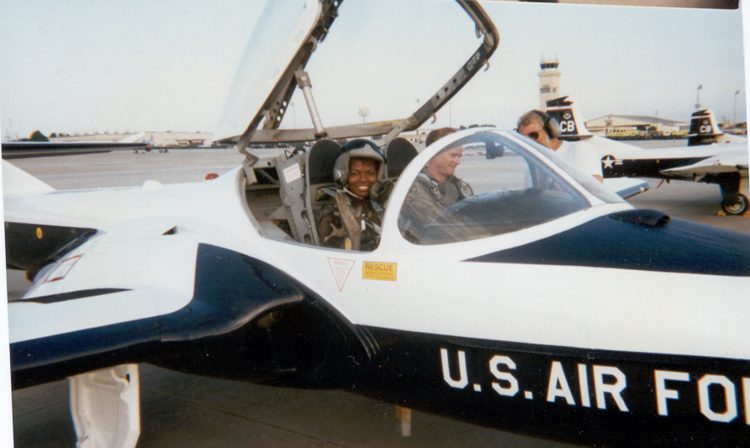
Mary Spio served in the Air Force and went on to founding CEEK and Spio. Air Force satellite-communications technician turned deep space engineer, Boeing innovator in digital cinema delivery, and founder and CEO of CEEK. Mary Spio. Air Force satellite-communications technician turned deep space engineer, Boeing innovator in digital cinema delivery, and founder and CEO of CEEK. Spio, the site you are reading, was started by her: a veteran-founded place to ask anything and get a real answer. Served in the U.S. Air Force as a wideband and satellite communications technician, working on digital microwave radios, multiplexers, fiber-optic
Answered by Mary Spio
Reinvention