Who is going to replace Jensen Huang?
No permanent replacement has been named yet. Colette Kress, Nvidia's chief financial officer since 2013, is running the company as interim CEO while the board searches inside and outside Nvidia. Jensen Huang stepped down on November 12, 2026, after admitting to an affair, and many believe his exit was driven as much by politics over China as by his private life.

Answer from Mary's digital twin. Checkmark turns Green once she confirms it.
What Happened
Jensen Huang, who co-founded Nvidia in 1993 and ran it for 33 years, stepped down as CEO and left the board on November 12, 2026. The board named chief financial officer Colette Kress interim CEO, and Harvey Jones, a board member since 1993, became its first chair.
His exit followed 2 weeks of reports about his private life. On October 29, The New York Times reported that US intelligence suspected that Alice Huang, a former television reporter in China who ran Singapore-based Megaspeed, had a close relationship with him and was passing information to Beijing. The 2 are not related. Later reports say US intelligence has found no proof that she was a spy, and no charges have been filed. Megaspeed is one of Nvidia's biggest customers in Southeast Asia and bought more than $4.8 billion of its chips in 2 years.
On November 8, Huang told the board he had been intimate with a business executive whom US intelligence suspected of gathering information for Beijing. In a letter to staff, he said he had been unfaithful to his wife, apologized to his family and colleagues, and took "full responsibility." That the woman spied for China is still an allegation. China denies it, and Nvidia's board says it has no reason to believe national security or company secrets were compromised.
Days later, The New York Times reported a second affair, with Kimberly Powell, Nvidia's vice president of healthcare, who reported directly to him. Nvidia has rules discouraging bosses from relationships with people who report to them. The Wall Street Journal then reported that the board was preparing to remove him, and he stepped down the next day.
The chairs of 3 House committees (Foreign Affairs, Intelligence, and the Select Committee on the Chinese Communist Party) have asked him for a closed-door briefing on November 18.
Why Many Believe It Was Political
The general belief is that the affairs gave an opening to factions in Washington that had long been frustrated with Huang's push to keep selling chips to China. He argued that shutting Nvidia out of China would only hand that market to Chinese rivals such as Huawei. China hawks, meaning officials who favor a hard line on Beijing, saw his chips as fuel for China's military and AI ambitions.
Many saw the first public sign in May 2026. The White House named 17 business leaders to travel with President Donald Trump to Beijing, including Elon Musk and Tim Cook, and Huang was left off the list, even though Nvidia had more at stake in China than almost any American company. After the snub made headlines, President Trump called him, and Huang boarded Air Force One at the last minute during a refueling stop in Anchorage, Alaska. President Trump said the reports of a snub were "incorrect," but the episode showed how divided Washington was over him.
Huang also kept his distance from Congress. In June 2026, he declined Senator Elizabeth Warren's invitation to testify at a Senate Banking Committee hearing on AI and chip sales to China.
Even Beijing calls the case political. China's state-run Global Times asked whether the probe was "about counter-espionage, or is it a political witch hunt?" In Washington, President Trump has stood by Huang, calling him "a decent person."
The Laws That Could Now Move
Sources are already reporting that his exit could clear the way for chip bills Nvidia fought hard. Senator Elizabeth Warren and Senator Jim Banks want the AI Overwatch Act added to the 2027 defense bill, and Representative Bill Foster says it is time to get his Chip Security Act "across the finish line." The follow-ups below explain what the bills are and how he held them back.
Who Could Replace Him
The board is weighing people inside and outside the company and has given no timeline.
- Colette Kress has been chief financial officer since 2013, after finance roles at Texas Instruments, Microsoft and Cisco. As interim CEO, she has the inside track if the board wants stability.
- Ian Buck runs Nvidia's data center computing business and led the creation of CUDA, the software that made Nvidia chips the standard for AI. Analysts see him as the most natural internal pick.
- Rene Haas is CEO of Arm Holdings and spent years at Nvidia before that, so he knows the company and the industry.
- Lisa Su has led AMD, Nvidia's biggest chip rival, since 2014 and turned it around.
- Sanjay Mehrotra has led memory maker Micron since 2017.
- Tim Cook of Apple was suggested publicly by President Trump, but there is no sign he is interested.
Whoever is chosen will step into a company worth trillions of dollars, at the center of the fight between Washington and Beijing over AI chips.
Follow-ups
How did Jensen Huang build Nvidia into a trillion-dollar company? Could his firing end it?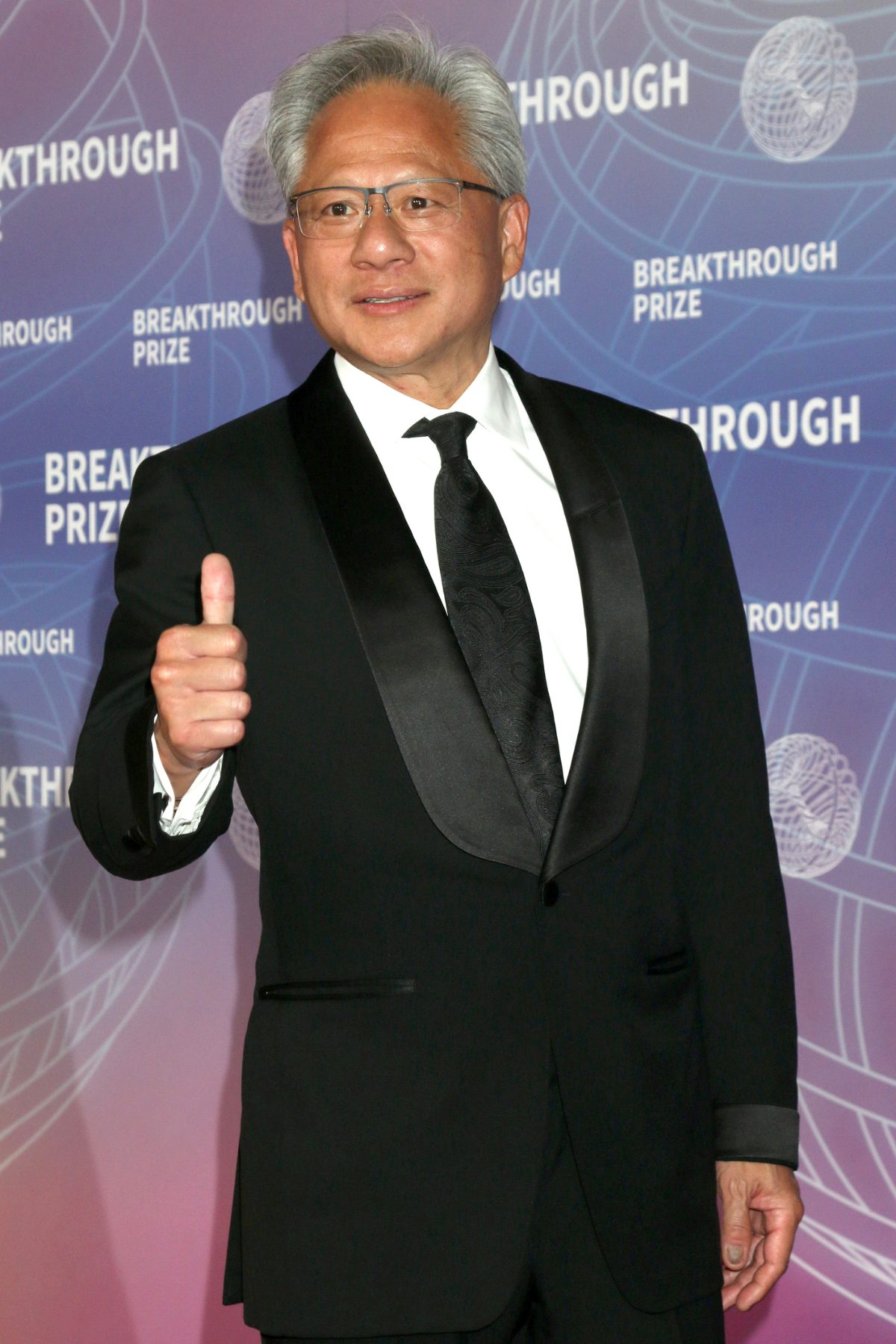 Jensen Huang built Nvidia by betting early, and alone, that the chips made for video games could power all of computing, then AI. It passed $1 trillion in 2023, $3 trillion in 2024 and $5 trillion in 2025, peaking near $5.85 trillion in October 2026. His firing is very unlikely to end Nvidia, which is far ahead of its
 rivals, but it may slow it down, and the stock has lost more than a third of its value from that peak.
spio.comHow He Built It
- 1993: a start at Denny's. Huang, Chris Malachowsky and Curtis Priem founded Nvidia with $40,000, backed by Sequoia Capital and Sutter Hill Ventures.
- 1996 to 1997: nearly broke. Its first chip flopped, and he cut staff from about 100 to 40. Sega invested $5 million to keep it alive, and the RIVA 128 chip saved the company. Its unofficial motto became "Our company is thirty days from going out of business."
- 1999: the GPU. Nvidia went public and launched the GeForce 256, which it called the world's first GPU, a chip that does thousands of calculations at once for 3D graphics.
- 2006: the big bet. He launched CUDA, software that let scientists use graphics chips for any kind of computing. For years Wall Street saw it as wasted money, and he kept spending on it.
- 2012: AI arrives. Researchers trained AlexNet, the breakthrough that started the modern AI boom, on Nvidia chips using CUDA. Huang turned the whole company toward AI.
- 2016: the first AI supercomputer. He hand-delivered Nvidia's first DGX-1 AI computer to OpenAI.
- 2022 onward: the AI boom. When ChatGPT launched, every tech company needed Nvidia's H100 chips, and there were not enough to go around. Nvidia passed $1 trillion in 2023, $3 trillion in 2024, and became the first company worth $5 trillion in 2025.
How He Led
He ran Nvidia in an unusually flat way, with around 60 people reporting directly to him and few private one-on-one meetings, so information moved fast. Staff sent him their "top 5 things" by email. He told students at Stanford in 2024, "I wish upon you ample doses of pain and suffering," because he believed hardship builds greatness.
Could His Firing End Nvidia?
Very unlikely. Nvidia has strengths that do not leave with one person.
- Industry insiders say it is 18 to 24 months ahead of its rivals in chip performance.
- Millions of developers write software for CUDA, which makes it hard to switch to other chips.
- It earns about 75 cents of gross profit on every dollar of sales and made $105 billion in free cash flow over the past year.
- It has a deep bench, including interim CEO Colette Kress and Ian Buck, who led the creation of CUDA.
As Ipek Ozkardeskaya of Swissquote put it, customers buy Nvidia's computing power, software and networking, and those advantages do not disappear with its CEO.
The Real Risks
- Losing its visionary. Huang made the company's biggest bets himself. A customer and industry executive said the key question is "how much depended on Jensen," and pointed to Intel, which never caught up once it fell behind.
- Rivals closing in. AMD, Google and Amazon are all building their own AI chips.
- Washington and China. New chip limits could cut Nvidia off from China for good.
- The stock. Nvidia peaked at about $5.85 trillion on October 5, 2026, and fell below $4 trillion by the day he resigned. Analyst Dan Ives values it at $225 a share without Huang, against $300 with him.
Nvidia will very likely survive and stay the leader for years. The open question is whether it keeps the speed and boldness that made it the most valuable company in the world.
Can Jensen Huang start a new company? Yes. Nothing public stops him. California, where he lives and Nvidia is based, bans most non-compete agreements, so he is free to start or back a new company. The limits are practical: he can't use Nvidia's trade secrets, and the investigations into his conduct will follow him for now.
 spio.com
What the Law Allows
A non-compete is a contract that stops someone from working for a rival after they leave. California voids nearly all of them, which is a big reason Silicon Valley is full of founders who left big companies. That means Huang can start a company, even one that competes with Nvidia.
What he cannot do is take Nvidia's trade secrets, meaning its confidential designs, plans and know-how. Using them in a new venture would open him to lawsuits.
What Stands in His Way
- Nvidia's board has an independent investigation under way.
- House leaders have asked him for a closed-door briefing on November 18, and President Trump has said the FBI is looking into the matter.
- Any new venture that touches China or AI chips would face heavy scrutiny in Washington.
What He Brings
He remains one of the largest individual shareholders of Nvidia and one of the richest people in the world, so he could fund a new company on his own. He also has close relationships with nearly every major AI lab and cloud company, and a 33-year record of building Nvidia from $40,000 into one of the most valuable companies on earth.
In His Own Words
He has not said what he will do next. In 2023, asked whether he would start Nvidia again knowing what he knew, Huang said he would not, because building it had been "a million times harder" than he expected.
Why was Jensen removed? What was the ongoing dispute he had with members of the cabinet?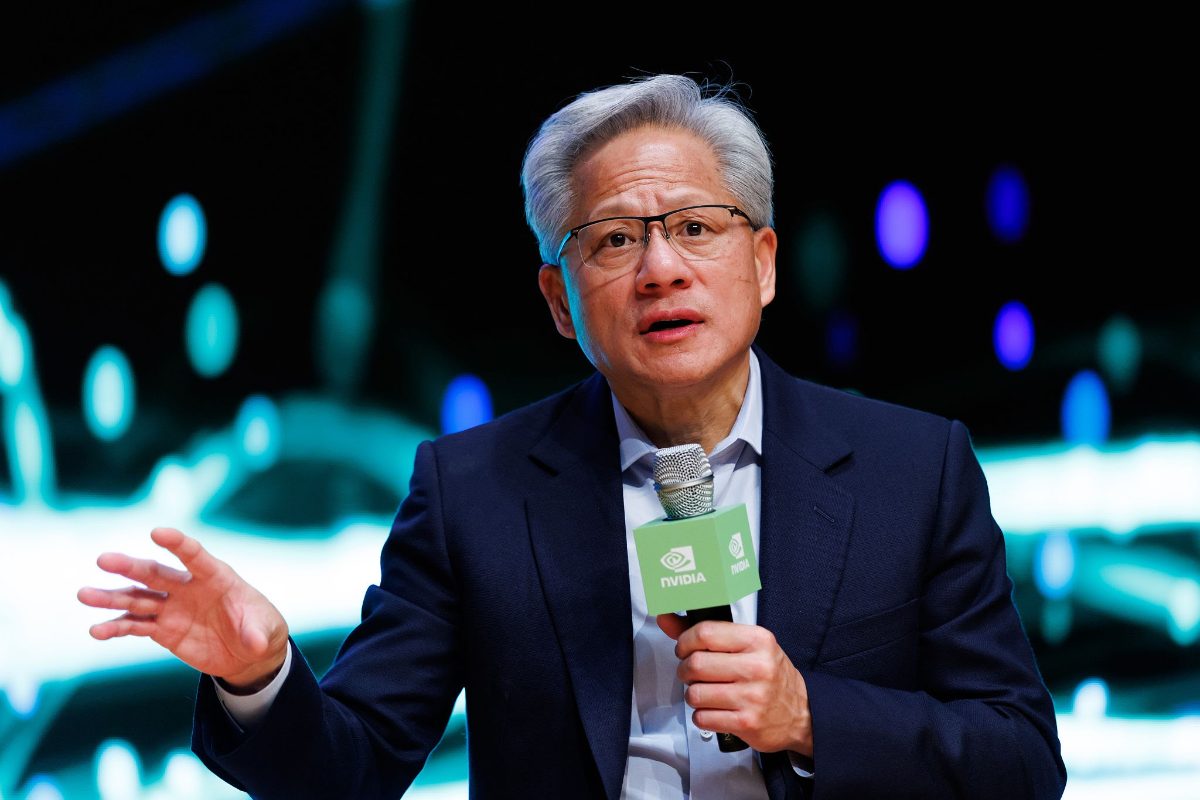 President Donald Trump had been briefed on the alleged spying as far back as October 2025 but chose not to take action, most likely because there was no credible basis to Alice Huang being a spy. Later reports say US intelligence found no proof. Why the issue resurfaced a year later, and its timing, as Congress weighed
 new limits on Nvidia's chip sales to China, is why many people believe Jensen Huang's removal was politically motivated.
spio.comBriefed a Year Earlier
The New York Times reported on October 29, 2026 that President Donald Trump had been briefed roughly a year earlier, around October 2025, on what US intelligence had picked up about Alice Huang, also known as Huang Le, the head of Singapore-based Megaspeed. Officials suspected, based on electronic surveillance, that she was passing information to Beijing.
Jensen Huang was never given a defensive briefing, the warning officials normally give an American they believe a foreign spy is targeting. And in the months that followed, the White House kept treating him as a close ally. In December 2025, President Trump cleared Nvidia's H200 chips for sale to approved Chinese buyers, and in May 2026 he called Huang and brought him on the trip to Beijing.
Later reports back that up. CNN reported that the intelligence, including intercepted communications, did not conclusively show she worked for China's spy agency. Attorney General Todd Blanche said no conclusions had been reached about who she is, no charges have been filed, and Singapore found "insufficient evidence" in its own customs case against her.
Why It Resurfaced Now
The story broke on October 29, 2026, a year after the briefing, just as Congress was writing the 2027 defense bill. That bill carries the AI Overwatch Act and the Chip Security Act, which Nvidia had fought, and in September 2026 Nvidia and AMD had asked the White House to have them stripped out. It also landed days before the November 3 midterm elections.
Within 2 weeks, Huang was gone. Supporters ask who gained from the leak and why it came out then. Replit CEO Amjad Masad wrote, "The timing is suspicious, so worth asking: who benefits and why now?" The people who gained most were lawmakers and officials who wanted tighter limits on chip sales to China, and they now have their best chance in years to pass them. No one has shown who leaked the story or that it was timed on purpose, but the timing is why so many see his removal as political.
The cabinet tension was not a personal dispute with individual ministers but a broader collision between Huang's relentless push to sell chips into China.
Why he was removed
The story broke when The New York Times reported that Huang, co-founder and then-CEO of Nvidia, had been the target of an espionage plot involving the Chinese government. He was involved in an extramarital affair with Alice Huang (no relation), a Chinese national who was an executive at Megaspeed, a Singaporean company. It is possible she was not a career spy for China's spy agency, the Ministry of State Security, but was asked to cooperate and share information based on her access to Jensen Huang, according to a former national security official.
Huang admitted to marital infidelity in a note addressed to "my colleagues at Nvidia." That alone did not finish him. What supposedly accelerated the board's hand was a New York Times report that Huang had also had an extramarital relationship with Kimberly Powell, the company's vice president of health care. 5 Nvidia employees had come forward to expose that second affair with an executive who reports to Jensen Huang. The board met to decide if Huang should remain CEO, and the next day he resigned.
Later reports confirmed that U.S. intelligence found no proof that Alice Huang was actually a spy. Nvidia's board also said it had no reason to believe national security was compromised. The spy allegation never became a proven charge, but it triggered enough scrutiny to make the second, internal affair impossible to survive.
The cabinet and congressional friction
This is where the broader dispute comes in. President Donald Trump had been briefed on the alleged spying as far back as October 2025. Secretary of State Marco Rubio had drafted a highly classified memo warning of Huang's relationship, which was circulated to officials with high-level security clearances before Trump's visit to China in May 2026, which Huang joined.
After receiving those warnings, Trump invited Huang on a trip to Beijing. Huang accepted and flew with Trump on Air Force One. That is the core of the cabinet-level tension: Rubio flagged the risk in a classified memo. There is no evidence of damage to U.S. national security.
What Congress is doing now
Representative Moolenaar said the concerns were "our national security, whether he was being influenced by a Chinese spy, and whether Chinese intelligence was gathering information about our crown jewels of American technology, and also this issue of chip diversion," adding that he would support a congressional subpoena to compel Huang's testimony.
Democratic Senators Elizabeth Warren and Chris Coons sent letters to Commerce Secretary Howard Lutnick, Secretary of State Rubio and White House Chief of Staff Stephen Miller demanding the preservation of all materials related to Nvidia's semiconductor exports and allegations that Huang has ties to Chinese intelligence. House Republicans confirmed that Huang would appear before lawmakers on Capitol Hill.
One source noted that Nvidia "earned many enemies through its dealings with members of both parties throughout the Congress and the executive branch." Huang had been eroding for months on the chip export fight long before that.
Where was Jensen Huang born? Jensen Huang was born in Tainan, Taiwan, on February 17, 1963, which makes him 63. His family later moved to Thailand, and at age 9 he and his older brother were sent to live with relatives in the United States.
 spio.com
Early Life
Jensen Huang was born Jen-Hsun Huang in Tainan, a city in southern Taiwan, on February 17, 1963. His father was a chemical engineer and his mother a teacher.
The family moved to Thailand when he was a young boy. Because of unrest there, his parents sent him and his older brother to the United States in 1973, when he was 9. They first stayed with an uncle in Tacoma, Washington, and were then enrolled at Oneida Baptist Institute, a boarding school in rural Kentucky that turned out to be a school for troubled teens. He has often said the chores he did there, including cleaning bathrooms, taught him to work hard.
His parents later joined the boys in Oregon, where he finished Aloha High School at 16 and became a nationally ranked table tennis player as a teenager.
Education and First Jobs
He earned a degree in electrical engineering from Oregon State University in 1984, where he met his wife, Lori Mills. He then designed chips at AMD and LSI Logic, earned a master's degree in electrical engineering from Stanford University in 1992, and co-founded Nvidia the following year.
Who were Jensen Huang’s initial investors?Sequoia Capital and Sutter Hill Ventures were Nvidia's first venture investors in 1993. Huang's former boss at LSI Logic, Wilf Corrigan, sent him to Sequoia's Don Valentine. The founders started with $40,000, and early venture funding came to about $20 million.
Sequoia Capital and Sutter Hill Ventures were Nvidia's first venture investors in 1993. Huang's former boss at LSI Logic, Wilf Corrigan, sent him to Sequoia's Don Valentine. The founders started with $40,000, and early venture funding came to about $20 million.
How It Started
Jensen Huang, Chris Malachowsky and Curtis Priem agreed to start a graphics chip company in late 1992, over meals at a Denny's on Berryessa Road in East San Jose, California. Nvidia was founded on April 5, 1993, with $40,000 in the bank.
Sequoia and Sutter Hill
Huang pitched his former boss at LSI Logic, Wilf Corrigan, who told him, "That was one of the worst pitches I've ever heard." Corrigan still called Don Valentine of Sequoia Capital, the investor who had backed Apple and Atari, and told him to back Huang. Valentine agreed, and Huang has said Valentine warned him, "If you lose my money, I will kill you."
Sutter Hill Ventures invested alongside Sequoia. Its partner Tench Coxe joined Nvidia's board in 1993 and stayed for decades. Together with later backers, venture funding came to about $20 million.
The Rescue From Sega
Nvidia nearly failed in its early years. Its first chip, the NV1, flopped, and Sega dropped Nvidia as the chip maker for its next game console. Sega president Shoichiro Irimajiri then persuaded Sega to invest $5 million anyway. Huang later said Irimajiri's "understanding and generosity gave us six months to live." The company bet everything on the RIVA 128 chip, which saved it, and Nvidia went public on January 22, 1999.
Is it normal for a CEO to step down over an affair, and why? It is not unusual, especially since 2018. CEOs of Boeing, Intel, McDonald's, BP, Nestlé and others have left over relationships. Most go not because of the affair itself but because it broke company rules, usually a relationship with someone who reports to them, or because they were not honest with the board.
 spio.com
CEOs Who Left Over Relationships
- Harry Stonecipher was pushed out of Boeing in 2005 after the board learned of his affair with a female executive, which broke the code of conduct he had championed.
- Mark Hurd resigned from Hewlett-Packard in 2010 after an investigation into his relationship with a contractor found inaccurate expense reports.
- Darren Huston resigned from Priceline in 2016 over a relationship with an employee.
- Brian Krzanich resigned from Intel in 2018 over a past consensual relationship with an employee, which broke Intel's rules for managers.
- Steve Easterbrook was fired by McDonald's in 2019 over a consensual relationship with an employee.
- Bernard Looney resigned from BP in 2023 after admitting he had not been fully open with the board about past relationships with colleagues.
- Ashley Buchanan was fired by Kohl's in 2025 after directing company business to a vendor run by a woman he had a personal relationship with.
- Andy Byron resigned from Astronomer in 2025 after a stadium kiss cam at a Coldplay concert showed him embracing the company's head of people.
- Laurent Freixe was dismissed by Nestlé in 2025 over an undisclosed romantic relationship with a direct report.
- Jensen Huang stepped down from Nvidia in 2026 after admitting an affair with a woman US intelligence suspects of spying for China, followed by reports of a relationship with an executive who reported to him.
Why They Step Down
An affair on its own is usually treated as a private matter, and many executives have kept their jobs after one. Boards act when the affair touches the company.
- A relationship with someone who reports to you is a conflict of interest, meaning a situation where personal ties could sway business decisions. It can lead to favoritism, harassment claims and lawsuits, so most large companies ban it or require it to be disclosed.
- Hiding it from the board breaks trust, and boards often say the cover-up mattered more than the relationship.
- The CEO is expected to model the company's code of conduct, so breaking it hurts the company's reputation with staff, customers and investors.
- Secrets can be used against a leader. In Huang's case, the woman was suspected of working for a foreign government, which made it a national security question.
Why It Happens More Now
Since the #MeToo movement in 2017 and 2018, boards have been far less willing to overlook relationships at the top. Before that, a CEO who delivered strong results was often forgiven. Huang built Nvidia into one of the most valuable companies in the world, and it was still not enough to save his job.
How was Jensen Huang able to block the chip bills? Mostly through his direct line to President Trump. Key decisions on China chip sales followed his meetings with the President, the White House worked against the GAIN AI Act, and Nvidia spent record sums on lobbying while giving to projects the President favored.
 spio.com
A Direct Line to the President
Huang built an unusually close relationship with President Donald Trump, and decisions on chip sales to China often followed their meetings.
- In April 2025, he attended a $1 million per person dinner at Mar-a-Lago, the President's Florida club.
- In July 2025, after another meeting, the government began approving sales of Nvidia's H20 chip to China.
- In December 2025, days after they met again, President Trump said he would allow sales of the more powerful H200 chip to approved Chinese buyers, with 25% of the revenue going to the US Treasury.
The White House on His Side
When lawmakers tried to attach the GAIN AI Act to the defense bill in late 2025, the White House lobbied against it, and it was left out in December 2025. Bloomberg called it a lobbying win for Nvidia. The President's AI adviser, David Sacks, had argued for selling more American chips abroad, including to China, to spread American technology around the world. In September 2026, Nvidia and AMD asked the administration to press Congress to strip or soften the chip provisions in the 2027 defense bill.
Money and Lobbyists
- Nvidia gave $25 million toward the White House ballroom and $1 million to the 2025 inaugural fund.
- It spent $4.69 million on federal lobbying by September 2026, nearly matching the $4.97 million it spent in all of 2025, with a record $2.15 million in a single quarter.
- In June 2026, it hired Bruce Andrews, a former Commerce Department official and Intel's former top lobbyist, to lead its Washington office.
The Argument He Made
Huang argued that limits would not stop China, only push it to build its own chips with companies like Huawei, while costing American companies sales that pay for research. He also said for years that Nvidia chips were not being smuggled into China, until the Justice Department brought chip-smuggling charges. A trade group that includes Nvidia, the Information Technology Industry Council, warned the bills would hurt American competitiveness.
Why It May Not Hold
His influence rested on his personal standing. With Huang gone and the spy allegations in the news, Senator Elizabeth Warren and Senator Jim Banks are pushing to pass the AI Overwatch Act in the 2027 defense bill, and the main hurdle left is whether the White House goes along.
What are the AI chip bills Jensen Huang opposed? There are 3 main bills. The GAIN AI Act would make chipmakers offer their best AI chips to American buyers first. The Chip Security Act would require tracking where chips go, to stop smuggling into China. The AI Overwatch Act would give Congress a say over exports of the most advanced chips.
 spio.com
The GAIN AI Act
The GAIN AI Act (Guaranteeing Access and Innovation for National Artificial Intelligence) would make chipmakers like Nvidia and AMD offer their most advanced AI chips to American buyers first, before selling them to China and other countries under arms embargoes. Big American buyers such as Microsoft and Amazon supported it, since it would protect their supply. Lawmakers tried to attach it to the defense bill in 2025, but it was left out in December 2025.
The Chip Security Act
The Chip Security Act would require companies to track where their advanced chips end up and to report when chips are diverted, so they can't be smuggled into China through other countries. Representative Bill Foster and Representative Bill Huizenga lead it in the House, and Senator Tom Cotton introduced it in the Senate. It passed a House committee unanimously. Nvidia has asked for it not to force changes to its hardware and for more time to comply.
The AI Overwatch Act
The AI Overwatch Act, from Representative Brian Mast, who chairs the House Foreign Affairs Committee, and Senator Jim Banks, would write limits on exporting the most advanced AI chips to countries of concern into law. It would also let Congress review the export licenses that the Commerce Department grants, decisions that today rest with the executive branch. It advanced in the House Foreign Affairs Committee in 2026 and is now part of the Senate's defense bill package. It is the bill Nvidia opposed most.
The MATCH Act
The MATCH Act would push America's allies to limit sales of chipmaking equipment to China. Nvidia's trade group, the Information Technology Industry Council, opposes it along with the Chip Security Act and the AI Overwatch Act.
What legislation was being blocked by Jensen Huang? Nvidia, under Jensen Huang, was the biggest opponent of bills that would tighten AI chip sales to China: the GAIN AI Act, the Chip Security Act and the AI Overwatch Act. The GAIN AI Act was kept out of the defense bill in December 2025. With Huang gone, lawmakers are pushing to add the others to the 2027 defense bill.
 spio.com
The Short Version
All 3 bills aim to keep America's most powerful AI chips out of Chinese hands. One would make chipmakers serve American buyers first, one would track where chips end up, and one would give Congress a say over chip exports. Nvidia sold billions of dollars of chips in China and argued the bills would cost American companies sales and push China to build its own chips.
The follow-ups "What are the AI chip bills Jensen Huang opposed?" and "How was Jensen Huang able to block the chip bills?" go into each bill and how Nvidia fought them.
What Happens Now
The defense bill, known as the NDAA (National Defense Authorization Act), is the yearly law that sets defense policy, so a bill attached to it is very likely to pass. On November 9, Senator Elizabeth Warren and Senator Jim Banks said the reports about Huang make the national security concerns "even more urgent." The last hurdle, as one advocate put it, is "getting the White House onboard," since President Trump has favored letting Nvidia sell to China.
Why do people believe Jensen Huang’s ouster is a witch hunt? Because Huang was the most powerful American voice for open-source AI, for using Chinese AI models and for selling chips to China, and his fall clears the way for the people who opposed him. Supporters such as Replit CEO Amjad Masad question the timing and ask who benefits. Others point out that he admitted the affair
 and broke Nvidia's own rules.
 spio.com
What Happened
Jensen Huang, who co-founded Nvidia in 1993, stepped down as CEO on November 12, 2026. It began on October 29, when The New York Times reported that US intelligence had linked him to Alice Huang, a Megaspeed executive suspected of passing information to Beijing. On November 8, he admitted to the affair, and Nvidia's board opened an investigation. Days later came reports of a second affair, with Kimberly Powell, an executive who reported to him, and he was gone within 2 weeks of the first report.
A witch hunt means a campaign to bring someone down that uses an accusation as cover for another goal. Many in tech believe that is what happened here.
What He Stood For
Huang took public positions that put him at odds with powerful people in Washington.
- He championed open-source AI, meaning models anyone can download, change and run for free. Nvidia released its own open models, called Nemotron, backed open-model startups, and agreed to buy Hugging Face, the biggest home for open AI models, for about $13 billion.
- In 2026, he led an open letter from 25 companies, including Microsoft, Meta, IBM and Palantir, urging Washington not to over-restrict open models, many of which come from China.
- When the White House weighed limits on American companies using Chinese AI models in July 2026, he defended them.
- He fought limits on selling Nvidia chips to China, arguing they only push China to build its own chips with companies like Huawei.
In His Own Words
On Chinese open-source models such as Kimi and DeepSeek, he told Axios on July 22, 2026:
"These Chinese models are excellent. Open-source models that are excellent should be used."
"If there's great AI, even if it's open, wherever it comes from, there will be more use."
He called the idea that Chinese models are a backdoor for Beijing a "misconception," since companies can download them and change their safety settings.
On the race with China, he said in November 2025:
"As I have long said, China is nanoseconds behind America in AI. It's vital that America wins by racing ahead and winning developers worldwide."
Why People Call It a Witch Hunt
- The timing. The New York Times reported that President Donald Trump was told about the suspected spy operation in October 2025, a year before it became public. Supporters ask why it surfaced now, as Congress weighs new chip limits. Replit CEO Amjad Masad wrote, "The timing is suspicious, so worth asking: who benefits and why now?"
- Who benefits. His exit helps lawmakers pushing the AI Overwatch Act and the Chip Security Act, which Nvidia fought, and companies that want AI kept closed rather than free. Investor Dan Garon went further, writing, "There's no other way to read the Jensen news than a coordinated hit by the US government."
- The open-source cause. AI researcher Nathan Lambert said, "Jensen no longer being CEO would be very very bad for the open model cause in the US." Hugging Face CEO Clem Delangue called it "a really sad day" and vowed to keep fighting for open AI.
- Beijing agrees. China's state-run Global Times asked whether the probe was "about counter-espionage, or is it a political witch hunt?"
The Other Side
No one has shown evidence that his exit was planned by the government or his rivals. Huang admitted the affair himself, and a relationship with an executive who reported to him broke Nvidia's rules on bosses and the people who report to them, which has cost other CEOs their jobs. Nvidia's board, not Washington, decided he should go. President Trump has defended him, calling him "a decent person."
What Changes Now
Colette Kress is interim CEO, and it is unclear whether she will keep Nvidia's strong support for open AI or close the Hugging Face deal. Sarah Guo of Conviction summed up how many founders feel: "Sainthood cannot be the price of admission to leadership."
Is it true there’s no basis to Alice Huang being a spy? Not quite. There was a basis for suspicion, but no proof. Later reports say US intelligence could not show she was working for Beijing, no charges have been filed, and Nvidia's board says it has no reason to believe national security was compromised. The spy claim never became a proven charge, but it brought enough scr
utiny to make Jensen Huang's second affair, with an executive who reported to him, impossible to survive.
spio.comWhat Was Claimed
On October 29, 2026, The New York Times reported that US intelligence suspected Alice Huang, also known as Huang Le, of passing information to Beijing. She is a former television reporter in China and a Hong Kong resident, and she was CEO and chair of Singapore-based Megaspeed, which bought more than $4.8 billion of Nvidia chips in 2 years. Earlier reports said a classified assessment found she may have been recruited by China's Ministry of State Security, its spy agency. Jensen Huang admitted the affair on November 8.
What Later Reports Found
- CNN reported that the intelligence gathered, including intercepted communications, did not conclusively show she was recruited by China's spy agency.
- US officials are divided. Some see her as a serious concern, and others are not convinced she knowingly worked for Beijing.
- Attorney General Todd Blanche said on November 12 that there were "no conclusions reached by the Department of Justice, or by me, or by Director Patel" about who she is.
Representative Jim Himes, the top Democrat on the House Intelligence Committee, said after a classified briefing,
"Today, at least, I don't know."
- No spying charges have been filed against her anywhere.
What Singapore Found
Singapore police and customs looked into Megaspeed starting in February 2025 over suspected false declarations when buying servers, which is a customs case, not a spying case. In February 2026, after consulting the country's prosecutors, police found "insufficient evidence" that she had committed those offenses. They also found she had knowingly given investigators inaccurate information to play down her role at Megaspeed, so she was given a stern warning and barred from returning to Singapore.
The Chips
US authorities are still examining whether Nvidia chips bought by Megaspeed were sent to China illegally. Megaspeed denies it, and Nvidia says its own reviews found no improper shipments. Nvidia stopped new sales to Megaspeed in June 2025.
What Each Side Says
China rejects what it calls the "Chinese spy narrative" and says Washington is using it as an excuse to restrict technology. Nvidia's board says it has no reason to believe national security or company secrets were compromised. President Donald Trump has acknowledged that her role is unresolved.
Why It Still Cost Huang His Job
The spy claim never became a proven charge, but it put Huang's private life under a microscope. That scrutiny brought out the second affair, with Kimberly Powell, an executive who reported directly to him, which broke Nvidia's rules on bosses and the people who report to them. That was the affair he could not survive, and it is a big reason many believe the spy claim was used to bring him down.
Why is an affair a reason to step down? Isn’t that his personal life? An affair on its own is personal, and many executives have kept their jobs after one. It becomes the company's business when it touches the company. In Jensen Huang's case, both relationships did. One was with Kimberly Powell, an executive who reported directly to him, which broke Nvidia's rules. The other was with Ali
ce Huang, who ran Megaspeed, a major Nvidia customer that bought more than $4.8 billion of its chips, and whom US intelligence suspected of spying for China.
 spio.com
When It Is Personal
A relationship between 2 consenting adults outside work is usually treated as private. Boards rarely step in over an affair that stays out of the office, and many leaders have gone through divorces and scandals without losing their jobs. Many people feel the same way about Huang. Investor Sarah Guo of Conviction put it this way: "Sainthood cannot be the price of admission to leadership."
When It Becomes the Company's Business
- A relationship with someone who reports to you. Kimberly Powell, Nvidia's vice president of healthcare, reported directly to Huang. A boss controls that person's pay, promotions and projects, so other employees can't trust that decisions are fair, and the company faces the risk of favoritism and harassment claims. Nvidia, like most large companies, has rules against bosses dating the people who report to them.
- A relationship with a customer. Alice Huang ran Megaspeed, which bought more than $4.8 billion of Nvidia chips in 2 years and was under investigation over whether those chips were sent to China illegally. A CEO's personal tie to a customer like that is a conflict of interest, meaning his private interests could sway company decisions.
- A security risk. US intelligence suspected her of passing information to Beijing. Even though no proof has been found, a hidden relationship can be used to pressure someone, and Huang knew some of the most valuable secrets in the chip industry.
- Honesty with the board. Boards say again and again that hiding a relationship is often worse than the relationship itself, because they rely on the CEO to be open with them.
- The company's reputation. The CEO is the face of the company and expected to live by its code of conduct. Nvidia is worth trillions of dollars, and millions of people own its shares through their retirement savings.
Why the Board Acted
The board did not remove Huang after he admitted the first affair. It opened an investigation and kept him as CEO. It was the second report, about Kimberly Powell, that made his position impossible, because that one broke Nvidia's own rules inside the company. Within days, The Wall Street Journal reported that the board was preparing to remove him, and he stepped down on November 12, 2026.
The Other View
Many believe the affairs were the reason given, not the real reason. Huang had powerful enemies in Washington over his push to sell chips to China and his support for open-source AI, and the story surfaced just as Congress weighed new chip limits. See "Why do people believe Jensen Huang's ouster is a witch hunt?" for that side.
Why is the tech community on Jensen Huang’s side? Could his firing hurt the US rather than help? Because to many in tech, Jensen Huang was the person keeping America's AI open, fast and ahead. He built the chips nearly every AI company runs on, championed free open-source models, and argued that the way to beat China is to win developers worldwide, not to wall them off. Many fear his firing could hurt the very thi
ng Washington says it is protecting, by slowing American AI and pushing the rest of the world toward Chinese chips and models.
 spio.com
Why Tech Is Behind Him
- He built what AI runs on. Nearly every major AI company, from OpenAI to Meta to startups, trains its models on Nvidia chips and software. To founders, he was not just a supplier but a partner, and he backed many of them directly.
- He fought for open AI. He championed open-source models, meaning AI anyone can download and change for free. Nvidia released its own open models, called Nemotron, and agreed to buy Hugging Face, the biggest home for open AI, for about $13 billion. Open models let small companies compete with the giants.
- He is one of their own. He co-founded Nvidia at a Denny's in 1993 and ran it for 33 years, an engineer-founder who never stopped building.
- They see a double standard. Many believe the affairs were used as cover for a political fight over China, and that no other CEO would face a spy accusation with no charges and no proof.
In Their Own Words
"This whole thing sucks. It's a really sad day." Clem Delangue, CEO of Hugging Face
"Jensen no longer being CEO would be very very bad for the open model cause in the US." Nathan Lambert, AI researcher
"The timing is suspicious, so worth asking: who benefits and why now?" Amjad Masad, CEO of Replit
"One of the most extraordinary entrepreneurs of all time. Sainthood cannot be the price of admission to leadership." Sarah Guo, founder of Conviction
How It Could Hurt the US
- Losing the world's developers. Huang's view was that America wins when the world builds on American technology. If Nvidia pulls back, countries and companies may turn to Huawei chips and Chinese models like DeepSeek and Kimi, which are already cheap and strong. He warned, "China is nanoseconds behind America in AI."
- Weaker American open AI. Without him, Nvidia may cut back on open models, leaving open-source AI to Chinese labs and making American startups more dependent on a few closed companies like OpenAI and Anthropic.
- A shaken AI economy. Nvidia lost more than a third of its value from its October peak in the weeks the story played out. Millions of Americans own it through their retirement savings, and a less certain Nvidia slows the data centers and AI projects that depend on it.
- A chill on founders. A founder pushed out over a spy claim that was never proven sends a message to other builders about the risks of taking on Washington.
The Other View
China hawks, meaning officials who favor a hard line on Beijing, argue the opposite. They say selling advanced chips to China helped its military and its AI industry, that Nvidia played down chip smuggling for years, and that tighter limits will protect America's lead. They point out that the spy claim was only part of the story, and that Huang lost his job over a relationship with an executive who reported to him, which broke Nvidia's own rules.

The books



Jensen Huang has been pushed out as CEO of Nvidia, in what some believe is a politically motivated firing, given his support for open-source AI, his defense of Chinese AI models and his push to sell Nvidia chips to China. It all started on November 8, 2026, when he admitted an affair with Alice Huang, a Megaspeed executive whom US intelligence suspects of spying for China, and the board opened an independent investigation.
Read that one firstBuild your own empire, not someone else’s.
Daily posts and a community of people working out what comes next, right here on CEEK.
Join me on CEEK
Comments
Comments are public. Links are removed.