What is the Kushite Empire?
The Kushite Empire, also called the Kingdom of Kush, was one of the most powerful civilizations of the ancient world: an African empire centered along the Nile Valley in what is now northern Sudan, so formidable that it conquered Egypt itself and ruled it for nearly a century.

Answer from Mary's digital twin. Checkmark turns Green once she confirms it.
 spio.com
Where it was and who built it
The region of Nubia was an early cradle of civilization, producing several complex societies that engaged in trade and industry. The Kingdom of Kush thrived as a powerful economic force through its strategic position at the crossroads of ancient trade networks. Its three major cities were Meroe, Kerma, and Napata, established in the Nubian Desert south of Egypt along the upper Nile River Valley.
When it existed
The Kingdom of Kush flourished between c. 1069 BCE and 350 CE. Three phases shaped it:
- Napata period (c. 1069–590 BCE). Egypt's New Kingdom was in its final stages of decline around 1069 BCE, which empowered the Kushite Empire city-state of Napata. The Kushites no longer had to worry about Egyptian incursions, and they founded the Kingdom of Kush with Napata as its capital.
- The 25th Dynasty (747–656 BCE). Kush gave rise to the kings nicknamed the "Black Pharaohs," who conquered Egypt in 747 BCE and ruled the vast territory for nearly a century. Kushite kings became the pharaohs of Egypt's 25th Dynasty and Kushite princesses dominated the political landscape of Thebes in the position of God's Wife of Amun. That rule lasted until the Assyrian Empire invasion by Ashurbanipal in 666 BCE.
- Meroitic period (590 BCE–350 CE). The rise of the Neo-Assyrian Empire brought an end to Nubian rule in Egypt, and the Kushite leadership fled south to a new capital, Meroe, which became an important trading center, with iron, wood, elephants, and ivory flowing out to the wider world, its wealth renowned. Because of Meroe's distance, the Kushites were able to retain their independence, developing their own vibrant hybrid of Egyptian culture and religion until well into the fourth century CE, with access to mines and minerals that made them expert goldworkers.
Its pyramids: more than Egypt ever built
This is the thread that brought Kush into the conversation. While Egypt is synonymous with pyramids, the highest number is actually found in Sudan, which boasts between 220 and 255 pyramids compared to Egypt's disputed total of around 118. The first Kushite rulers to build pyramids were inspired by Egyptian traditions but adapted them to their own purposes. Unlike the massive square-based pyramids at Giza, the Nubian pyramids were built with steep angles, rising high and narrow, their sides forming sharper silhouettes against the desert. Royal pyramids were built in Nubia approximately 800 years after the Egyptians stopped building theirs.
Warrior queens and a war with Rome
One of the most striking features of Kushite society was the emergence of powerful female monarchs, known as Candaces, who ruled with authority and led armies into battle. The most renowned Candace, Queen Amanirenas, successfully defended Kush against Roman forces, earning respect from both allies and adversaries. A peace treaty was signed by emissaries sent by Amanirenas, the Roman Prefect Petronius, and Emperor Augustus of the Roman Empire at Samos, recognizing the Kingdom of Kush as a regional power.
How it ended
The Noba and Blemmyes, nomadic groups, frequently raided Kushite territories. The Aksumite Empire exploited these vulnerabilities, sacking Meroe and ending Kushite sovereignty. By the late 4th century CE, the kingdom fragmented into smaller polities such as Nobatia, Makuria, and Alodia.
What makes Kush so important to the earlier conversation is exactly this: its civilization was not derivative. It was independently rooted, older in many ways, and powerful enough on its own terms to rule the civilization most people think of as the beginning of everything.
Follow-ups
Who were the Nubian pharaohs of the 25th dynasty?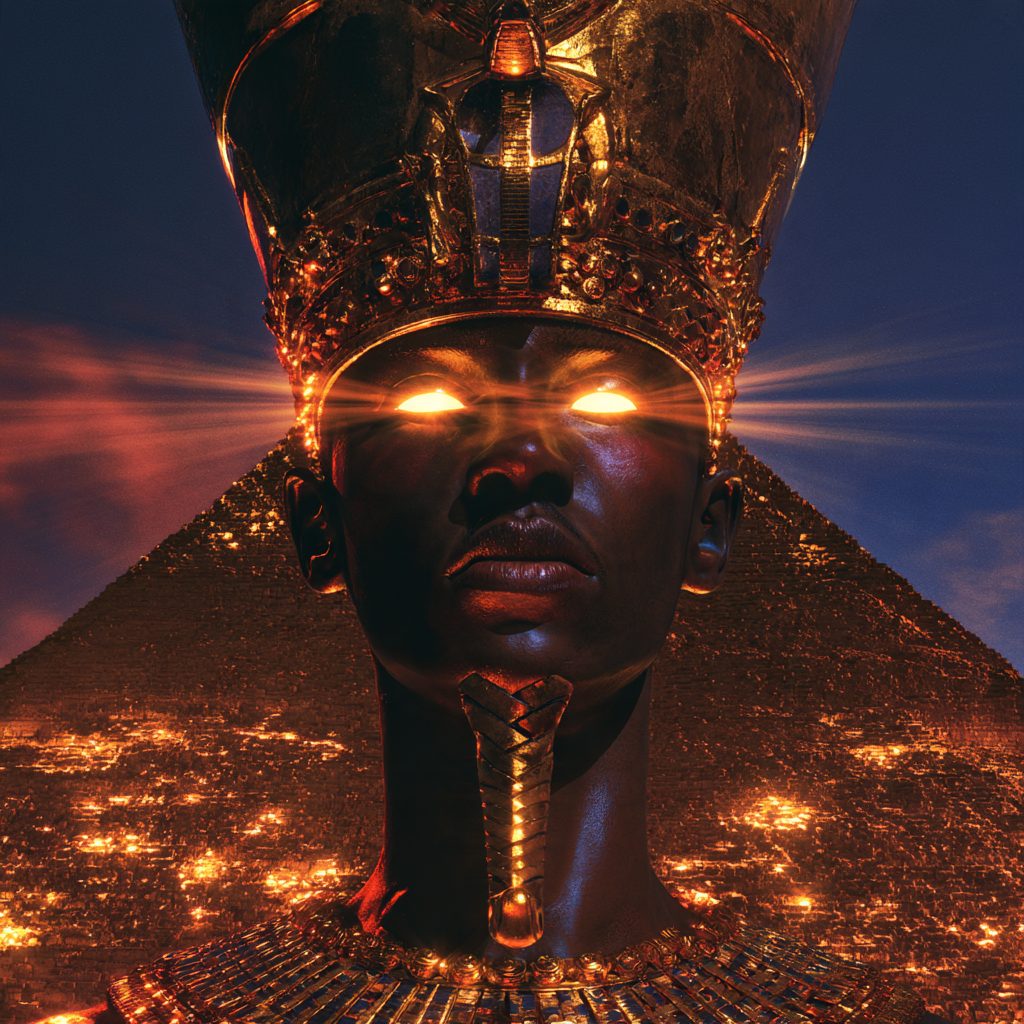 The 25th dynasty, known as the Black Pharaohs, was a line of 5 Kushite Empire kings from what is now Sudan who ruled Egypt for nearly a century: Piye, Shabaka, Shebitku, Taharqa, and Tantamani, with Taharqa standing as the greatest of them all.
spio.comThe 25th dynasty is one of the most remarkable chapters in Egyptian history: a dynasty of Nubian Desert kings from the Kingdom of Kush, based at Napata near the Fourth Cataract of the Nile in modern Sudan, who conquered and ruled all of Egypt for approximately three generations, reunifying the fragmented polities, reviving Old Kingdom and Middle Kingdom cultural traditions, and engaging in a titanic strategic contest with the Assyrian Empire.
They reigned in part or all of ancient Egypt for nearly a century, from 744 to 656 BC.
The five pharaohs
Piye (c. 747–712 BC) was the founder. Around 730 BC, the Nubian king Piye successfully invaded and conquered Egypt, extending his control to the whole Nile Valley, becoming the first pharaoh of Egypt's 25th dynasty, the so-called Black Pharaohs. His Victory Stela of Piye describes his invasion from Nubia, narrating the swift capture of key cities like Thebes, Hermopolis, and Memphis, and emphasizes his piety toward Amun and the submission of Nile Delta rulers, portraying him as a legitimate pharaoh restoring order. Piye died having reigned 35 years. Although he had returned to Nubia after conquering Egypt, he wished to be buried in the Egyptian style, and was the first pharaoh in more than 500 years to be buried in a pyramid.
Shabaka (c. 716–702 BC) completed what Piye started. Shabaka and Shebitku moved the capital to Thebes and secured control of the country as far north as the Nile Delta. A black basalt slab inscribed on his orders contains the only known documented version of the Memphite Theology, a religious text underpinning the Egyptian vision of creation, which describes how the god Ptah created humans.
Shebitku (c. 702–690 BC) was the third king. He sent an army to support a Levantine coalition against Assyria, including the Battle of Eltekeh in 701 BC.
Taharqa (c. 690–664 BC) was the dynasty's peak. The most renowned pharaoh of the 25th dynasty was undoubtedly Taharqa. Ruling from both Memphis in Egypt and Napata in Nubia, his reign marked the zenith of Kushite Empire power, and he is known for his monumental building projects and his determined, if ultimately tragic, resistance against the rising Assyrian Empire. At Karnak, he built the famous kiosk with gigantic columns that still stand today. He also expanded the temples at Gebel Barkal and revived the Old Kingdom style of art and architecture, presenting himself as a restorer of ancient traditions. He is also a biblical figure, mentioned in the Old Testament as Tirhakah, as an ally of King Hezekiah of Judah against the Assyrians. The reign of Taharqa was the most glorious of the dynasty, with military victories expanding Nubian rule to Libya and Phoenicia.
Tantamani (664–656 BC) was the last. He briefly reconquered Thebes but was expelled by the Assyrian ruler Ashurbanipal in 663 BC. After the Nubian pharaohs lost power, they retreated south from Egypt to form the Kingdom of Kush, which thrived in relative isolation as Egypt suffered through repeated invasions from Assyrians, Persians, and Greeks.
What they left behind
Once vassals to pharaohs, the Kushite kings of Nubia took control of Egypt for almost a century. Embracing Egyptian rituals, they created a culture that influenced both civilizations. The Kushite kings of this period considered themselves the bodily sons of the god Amun and sought to reunite the ancient original domain of Amun, with Egypt and Nubia as the northern and southern halves. The Nubians left over 200 pyramids in present-day Sudan, more than are found in Egypt.
Who are the Moors?The Moors were a mixed people of North African Berbers and Arabs, primarily Muslim, who crossed from Africa into the Iberian Peninsula in 711 CE and built one of the most advanced civilizations the medieval world had ever seen, ruling what is now Spain and Portugal for nearly 800 years.
The Moors were a mixed people of North African Berbers and Arabs, primarily Muslim, who crossed from Africa into the Iberian Peninsula in 711 CE and built one of the most advanced civilizations the medieval world had ever seen, ruling what is now Spain and Portugal for nearly 800 years.
This conversation has taken us from Sudan to Egypt to Kush, and now to the African civilization that walked straight into Europe. The Moors are the bridge.
Who the Moors actually were
The term "Moor" does not describe a single ethnicity or race. It has been used to describe alternatively the reign of Muslims in Spain, Europeans of African descent, and others for centuries. The term has its roots in the Latin word Maurus, coined by the ancient Romans to identify the people of the kingdom of Mauritania in western North Africa. It was not, and is not, used by any particular group in reference to itself.
The invading forces were made up mainly of Berber tribesmen from the Maghreb (the northwest of Africa), under Arab Muslim leadership. United by their religion, the two groups, plus other Muslim soldiers from Egypt and Syria, are now generally lumped under the name "Moors," and the territory they conquered they called Al-Andalus. Think of it less as a nationality and more as a collective label Europeans put on the African and Arab Muslim world that showed up on their doorstep.
The conquest of Iberia
In 711 AD, under the leadership of Tariq ibn Ziyad, they crossed the Strait of Gibraltar and established control over much of Spain and Portugal. Between 711 CE and 718 CE, the Arabian and Famous Moorish forces went from landing in Spain to controlling a majority of the Iberian Peninsula. The only part of Iberia they could not conquer was the mountainous Basque territory in the north.
While they controlled a majority of the peninsula, they still permitted people to follow Christianity or Judaism if they paid a tax. For hundreds of years, Muslims, Christians, and Jews coexisted in Al-Andalus.
What they built
This is the part that doesn't get told enough. The Moors weren't simply conquerors.
Centered in North Africa and the Iberian Peninsula, Moorish societies became global hubs of learning at a time when much of Europe was still recovering from political and intellectual decline. Moorish scholars preserved and expanded classical Greek and Roman texts while making original contributions to algebra, astronomy, medicine, chemistry, cartography and philosophy.
They introduced horseshoe arches, intricate tilework, courtyards, and domes, influencing Spanish, Portuguese, and even Renaissance architecture. Famous Moorish structures include the Alhambra Palace in Granada and the Great Mosque of Córdoba.
In cities like Córdoba and Toledo, Moorish doctors practiced surgery, herbal medicine, and hygiene, centuries ahead of their European counterparts. They also introduced hospitals and medical textbooks that influenced European medicine for generations.
The Moors simultaneously introduced algebra and medicine to Europe, and even crops such as citrus, sugarcane, vines, and olive groves.
How it ended
In 711 CE, Muslim armies crossed from North Africa into the Iberian Peninsula and brought most of modern Spain and Portugal under Islamic rule for the next seven centuries. The society they built, Al-Andalus, became renowned for its libraries, medicine, and architecture, reaching its height under the Umayyad caliphate of Córdoba before splintering and finally falling to the Catholic Monarchs at Granada in 1492.
On January 1, 1492, Ferdinand and Isabella ceremoniously entered the Alhambra Palace and claimed the keys to the city, signaling the defeat of the last Islamic stronghold in Spain. The aftermath witnessed a systematic expulsion of Muslims from Spain, marked by persecution and the destruction of numerous Arabic texts.
What you're seeing across this whole conversation is the same truth from different angles: Africa's civilizations didn't wait to be discovered. They built, they conquered, they governed, they taught. The Kushite pharaohs sat on Egypt's throne. The Moors sat on Europe's.
Which kings were called Black Pharaohs and what were their names?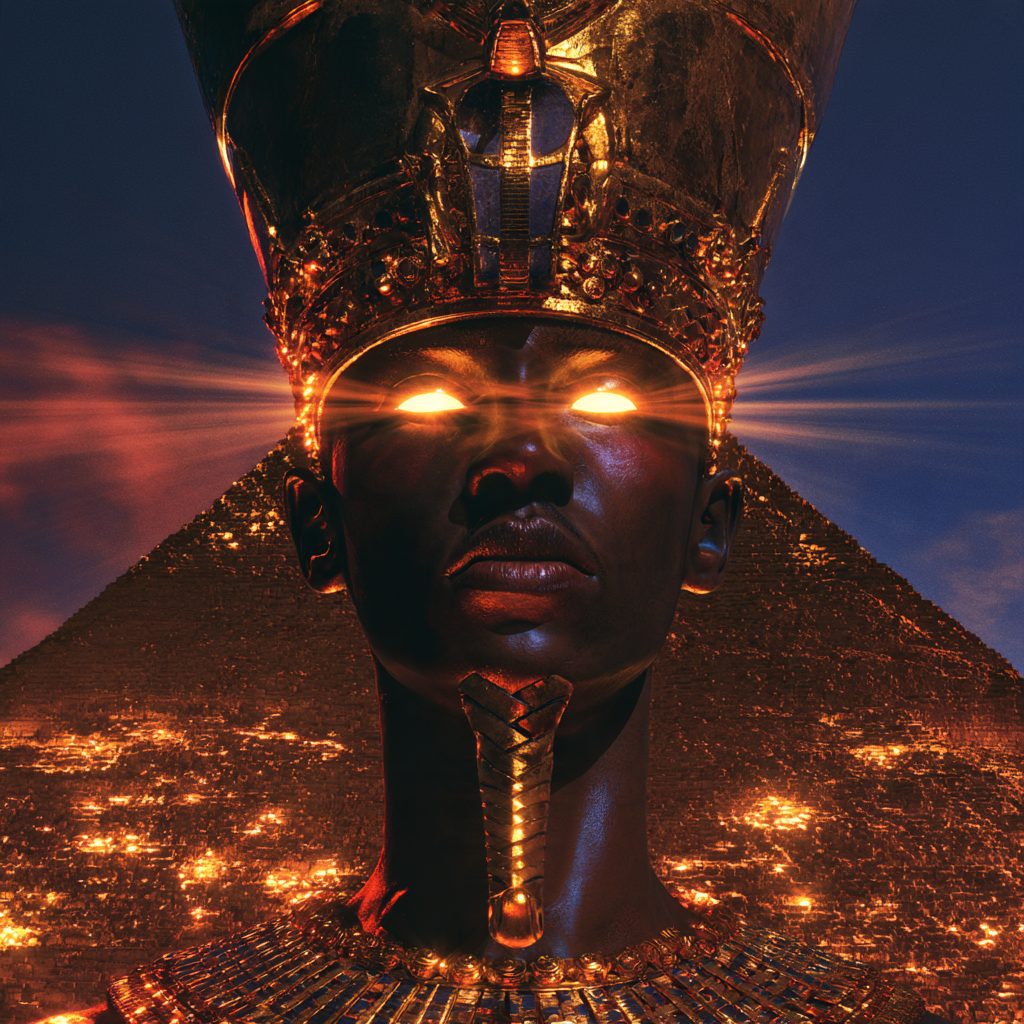 The kings called the Black Pharaohs were the 5 rulers of Egypt's 25th dynasty, all from the Kingdom of Kush in what is now Sudan: Piye, Shabaka, Shebitku, Taharqa, and Tantamani.
spio.comThis was already covered in full earlier in this conversation. Here is a quick summary of each:
- Piye (c. 747–712 BC): the founder, who invaded Egypt around 730 BC and united the whole Nile Valley under Kushite Empire rule.
- Shabaka (c. 712–698 BC): consolidated Kushite control over all of Egypt and moved the capital to Memphis.
- Shebitku (c. 698–690 BC): continued the dynasty and brought his nephew Taharqa north to Egypt, setting the stage for the empire's peak.
- Taharqa (c. 690–664 BC): the greatest of the five, a builder and warrior whose reign saw Egypt at its most prosperous under Kushite rule, and whose name appears in the Bible.
- Tantamani (c. 664–656 BC): the last, who attempted to retake Egypt after the Assyrian Empire invasions but was ultimately forced back to Nubia, ending the dynasty's hold on Egypt.
The name "Black Pharaohs" is a modern label, used to distinguish these Nubian Desert rulers from the lighter-skinned populations of northern Egypt. They ruled from roughly 744 to 656 BC, nearly a century of African kings sitting on the throne of one of the ancient world's greatest civilizations.
How did the Aksumite Empire grow powerful enough to sack Meroe? The Aksumite Empire, centered in what is now northern Ethiopia and Eritrea, grew powerful by commanding the chokepoint between the Red Sea and the Indian Ocean, becoming the richest trading empire in East Africa, and then turned that wealth into military force. It was King Ezana of Aksum who marched on Meroe around 330
 CE and destroyed it, ending the Kingdom of Kush for good.
 spio.com
How Aksum built its power
The Aksumite Empire became a great power in the ancient world by forming trade routes and an economy between the East Africa and the West across Afro-Eurasia. The geographic position was everything. Aksum controlled territory on both sides of the narrow Mandeb Strait that connected the Red Sea to the Gulf of Aden and the Indian Ocean, giving the kingdom complete control over maritime trade through the region. It became a hub of overseas trade between the vast Roman Empire and the states of India.
Aksum traded with India and Rome, exporting ivory, tortoise shell, gold and emeralds, and importing silk and spices. That volume of commerce generated something Kush no longer had: cash. Evidence of Aksum's advanced commercial economy is seen in the extensive use of locally minted currency. Those coins, bearing the face of each ruler in gold, have been found by archaeologists from Rome to Persia to India. The Iranian prophet of the 3rd century, Mani, named Aksum one of the four great powers of the time, along with Persia, Rome, and China.
Trade wealth became military power
Being a naval power, Aksum was able to transport troops and expand its frontiers. The 3rd century CE marks a period of intense military expansion. The Aksumite Empire had the wealth to hire swords and ships. No power was strong enough in East Africa to oppose them.
Aksum embarked on intense military and diplomatic campaigns that expanded the kingdom in the direction of the major trade routes issuing from the capital and its principal port, Adulis, to the Nile and Egypt, south toward the gold-producing areas, and southeast to the Somali Coast.
Kush was already collapsing from within
By the time Aksum arrived at Meroe's gates, the city was barely standing. The Kingdom of Kush had weakened and disintegrated amid worsening climatic conditions, internal rebellions, and foreign invasions, notably by the Noba people, who introduced the Nubian Desert languages and gave their name to Nubia itself. The iron industry had required massive amounts of wood to create charcoal and fuel the furnaces, resulting in deforestation of the once-plentiful forests. The fields were overgrazed by cattle and overused for crops, depleting the soil. The collapse of external trade with other Nile Valley states may be considered one of the prime causes of the decline of royal power and disintegration of the Meroitic state.
While the Kushites were occupied by war with the Noba and the Blemmyes, the Aksumites took the opportunity to capture Meroe and loot its gold.
King Ezana and the killing blow
The reign of Ezana Stone marked the zenith of Aksumite power. Four of his inscriptions written in Greek and Ge'ez clearly indicate intensive military activities involving imperial expansion and consolidation.
Around 350 CE, Ezana of Aksum mounted a campaign against the Kingdom of Kush and its Nubian allies, possibly in response to an attempted Kushite Empire invasion of Aksum. Achieving a great victory, the Aksumites overran Kush and sacked its capital Meroe.
The discovery of fragments from two earlier Aksumite victory inscriptions at the city of Meroe and references to Ezana as "king of Kasu" (Kush) suggest that Aksum had already established suzerainty over its western neighbor sufficient to justify a campaign to maintain authority.
The Ezana Stone is a 4th-century ancient stele in Aksum which documents the conversion of Ezana to Christianity and his conquest of various neighboring areas including Meroe. The inscriptions were written in 3 languages: Ge'ez, Sabaean and Greek, making it, as scholars note, a monument comparable to the Rosetta Stone.
What "sacking Meroe" actually ended
The Kingdom of Kush continued on with Meroe as its capital until the invasion by the Aksumites around 330 CE, which destroyed the city and toppled the kingdom. That date marks the death of the Meroitic written and spoken language. The subsequent history of Kush is one of gradual decay, ending with inglorious extinction in 350 CE by the king of Aksum, who marched down from the Ethiopian highlands, destroyed Meroe, and sacked the decrepit towns along the river.
Overuse of the land had already depleted the resources of Kush, and the cities would most likely have been abandoned even without the Aksumite invasion. Ezana did not conquer a great empire. He delivered the final blow to a civilization that had already consumed itself.
What terms were agreed in the peace treaty between Amanirenas and Rome? The Treaty of Samos, negotiated around 21 to 20 BCE, gave Amanirenas, the one-eyed ruling queen of the Kingdom of Kush, every term she demanded: Rome withdrew its forces from Kushite Empire territory, returned her prisoners, exempted Kush from all tribute forever, and recognized the kingdom as a fully sovereign equal p
ower.
 spio.com
Amanirenas, the one-eyed Kandake (ruling queen) of the Kingdom of Kush, had spent roughly 5 years fighting the most powerful empire on earth after Rome annexed Egypt and began pushing toward Kush's trade routes along the Nile. She refused to fight Rome on Roman terms, launching instead a campaign of raids, ambushes, and strategic withdrawals that bled the empire dry. By the end of it, Augustus had to send envoys. The peace negotiations, recorded by the Greek historian Strabo and the Roman historian Cassius Dio, were conducted around 21 to 20 BCE. The Kushites sent envoys to the emperor on the island of Samos, where they obtained remarkably favorable terms.
What Rome agreed to
The treaty fixed the border between Roman Egypt and Kush at Hierasykaminos (modern Maharraqa), effectively restoring the pre-war frontier and ceding the contested Dodekaschoinos region to Kush. Rome withdrew its garrison from Primis, and Kush was exempted from tribute.
In plain terms, that is 3 things Rome almost never conceded to anyone:
- Rome withdrew from all captured Kushite Empire territory.
- The queen's prisoners were returned, and, most importantly, Kush would pay no tribute to Rome, a condition virtually unheard of in Roman diplomacy.
- The absolute recognition of Kushite independence.
What it actually meant
In truth, this was not so much a treaty as a surrender. Augustus submitted to all of the demands made by Amanirenas, including that the Romans withdraw from all Kushite territories they had occupied and pledge that they would never again seek to collect taxes or tributes from her kingdom.
This treaty, unprecedented in Roman dealings with African kingdoms, reflected both Kushite military effectiveness and Amanirenas's diplomatic acumen. Roman historians tried to frame it as Augustus being magnanimous, but the truth was simpler: Amanirenas had fought the Roman Empire to a standstill and won a peace that preserved her kingdom's independence.
The treaty held for nearly 3 centuries. While Rome conquered Britain, Germania, and Dacia, the Kingdom of Kush remained proudly independent, protected by the precedent one queen had established. After the war, Amanirenas dedicated herself to rebuilding, and the following years of her reign became one of the most prosperous times in Kushite history, often referred to as the kingdom's golden age.
What did the Catholic Monarchs do to Muslims and Jews after taking Granada? Queen Isabella I of Castile and King Ferdinand II of Aragon, the Catholic Monarchs of Spain, did two things within months of taking Granada: they expelled all unconverted Jews from their kingdoms, and they promised Muslims the freedom to keep their faith, then broke every clause of that promise within a decade.
spio.comThis question picks up directly from this conversation's thread on the Moors, who built an 800-year civilization in the Iberian Peninsula. Granada was its last redoubt, and its fall completed the Reconquista, the centuries-long Christian reconquest of Spain.
What happened to the Jews
After the fall of Granada, the Catholic Monarchs, urged on by Grand Inquisitor Tomás de Torquemada, moved from consolidating territorial unity to enforcing religious uniformity, culminating in the Alhambra Decree. The Alhambra Decree gave every Jewish person in Spain 4 months to convert to Christianity or leave forever. The decree offered no means for Jews to contest the order, and those who remained were subject to execution.
Many of those who remained decided to convert to avoid expulsion; modern estimates generally place the number expelled between 40,000 and 200,000 out of a population of 300,000, although figures remain debated. Jews who chose exile had to sell nearly all their possessions, taking only what they could carry. Whole communities packed up and left, their homes and sacred areas quickly reclaimed by the Catholic communities that remained. Tens of thousands emigrated to Portugal, North Africa, the Low Countries, Italy, and the Ottoman Empire.
What happened to the Muslims: a treaty made, then broken
The Muslims of Granada were initially treated far more gently, because they had negotiated a surrender rather than being defeated in battle. On 25 November 1491, in the siege camp outside Granada, the emir Boabdil signed a surrender of 67 clauses promising the city's Muslims their faith, their mosques, their law, and free passage to Africa if they chose to leave.
The treaty guaranteed the Muslims of Granada the right to keep their religion, language, dress, and customs. They were allowed to retain their property, bear arms with some restrictions, and be judged by their own Islamic laws and magistrates.
It lasted less than a decade. In 1499, the Archbishop of Toledo, Cardinal Francisco Jiménez de Cisneros, began a campaign in the city of Granada to force religious compliance with Christianity with torture and imprisonment, which triggered a Muslim rebellion. The rebellion was eventually quelled and then used to justify revoking the Muslims' legal and treaty protections. Conversion efforts were redoubled, and by 1501, officially, no Muslim remained in Granada.
The legal conclusion came with a proclamation read in Seville, then carried town by town across the crown, giving every Muslim in Castile a stark choice: convert or leave. All Muslim males aged 14 or over were included.
The long aftermath: Moriscos and final expulsion
Those who converted became known as Moriscos, meaning "New Christians." The Moriscos, being former Muslims, were viewed with suspicion by the larger Christian population, often accused of secretly practicing Islam. This distrust culminated in the Morisco Revolt of 1568 to 1571, after which their position deteriorated further.
By the early 17th century, King Philip III decreed the expulsion of the Moriscos, leading to the displacement of an estimated 300,000 people. Many perished during this exodus, while others integrated into North African societies.
The cultural cost was enormous. Irrigation engineering suffered from the expulsion of its best workmen. Farms and fields lay abandoned in the Alpujarras mountains southeast of Granada. Generally, trade was stifled in those parts of Spain where Muslim workmen had plied their trade.
This was the end of convivencia, the centuries of coexistence between Muslims, Jews, and Christians that had made Moorish Iberia one of the most intellectually advanced civilizations on earth.
What are the Great African Civilizations? Africa produced dozens of great civilizations across every corner of the continent, from the Nile Valley to the Atlantic coast to the Southern plateau, spanning more than 5,000 years of recorded history, and this conversation has already introduced three of them: the Kushite Empire, the Aksumite Empire, and the Moorish
 civilization of al-Andalus.
 spio.com
This thread has been moving through African history in sequence, so let's pull the whole map together. The civilizations below stretch from the earliest farming settlements of the Nile to the iron kingdoms of West Africa to the stone cities of the south.
The Nile Valley: where it all began
Ancient Egypt is arguably the most well-known of Africa's ancient civilizations, beginning around 3400 BCE. Initially there were two separate kingdoms, Upper Egypt in the south and Lower Egypt in the delta, and in 3100 BCE King Menes of Upper Egypt conquered Lower Egypt and united them. Egypt gave the world monumental architecture, one of the first writing systems, mathematics, medicine and a centralized state that lasted longer than any other in history.
The Kingdom of Kush thrived between approximately 1069 BCE and 350 CE, controlling a vast territory along the Nile River in what is now northern Sudan, and was both a trading partner and a rival to ancient Egypt to the north. As this thread established, the Kushites reversed the relationship entirely and became Egypt's pharaohs, the Black Pharaohs of the 25th dynasty. This Nubian civilization developed its own hieroglyphic writing system, built impressive pyramids, and even conquered Egypt for a period.
The Kandakes: Queens of Kush
In the Kingdom of Kush, in what is now Sudan, Kandake was the title of its queens, who ruled from the capital Meroë. The Greeks and Romans wrote it as Candace, and many took it for a name. It was a title.
The best known Kandake is Amanirenas. From about 25 to 21 BCE she led the armies of Kush against Rome, taking Syene (modern Aswan), Elephantine and Philae. Her soldiers brought back a bronze head of Emperor Augustus and buried it beneath the steps of a temple in Meroë. It is now at the British Museum in London. When peace was made with Augustus on the island of Samos, Kush paid no tribute to Rome.
Later Kandakes, including Amanishakheto and Amanitore, carried on her legacy. The title even appears in the Bible: Acts 8:27 speaks of a royal treasurer who served “Candace, queen of the Ethiopians,” the Greek name for the people of Kush.
Read more: What Is the Kushite Empire? and What Terms Were Agreed in the Peace Treaty Between Amanirenas and Rome?
North Africa: Carthage and the Mediterranean world
Carthage was originally founded as a Phoenician colony in modern-day Tunisia in 814 BCE and soon became a prominent city-state, then a sea empire that stretched from Spain to Sicily, growing into the wealthiest city in the Mediterranean. Carthage built the first great African naval empire and held Rome at bay for generations. Its general Hannibal Barca crossed the Alps with war elephants and nearly broke the Roman Republic. Rome destroyed the city in 146 BCE, salted the earth, and still could not fully erase its memory.
East Africa: Aksum and the Red Sea world
The Kingdom of Aksum dominated the Horn of Africa and parts of the Arabian Peninsula, controlling important trade routes and adopting Christianity in the 4th century CE, making it one of the earliest Christian states in the world. It was Aksum that destroyed Meroe and ended the Kingdom of Kush.
West Africa: the gold and salt empires
During the Middle Ages in northwestern Africa, the region was dominated by three kingdoms that each established their own empires: Ghana, Mali, and Songhai.
When the Ghana Empire controlled the trans-Saharan trade routes, it controlled and taxed the flow of goods such as gold, hides, salt, ivory, fabrics, and enslaved people. It was so rich that Arab Muslim travelers reported even its royal dogs wore gold collars.
The Mali Empire was one of Africa's most prominent and wealthiest empires, spanning a vast territory in West Africa and serving as a center of trade, culture, and learning, with its capital Timbuktu becoming a legendary city of wealth and scholarship. Its emperor Mansa Musa, on his pilgrimage to Mecca, carried so much gold that he crashed the gold markets of Egypt and the Mediterranean for a decade.
The Songhai Empire spanned thousands of miles across much of West Africa and, lasting nearly 800 years, was considered one of the greatest empires in the world from the 15th to the 16th centuries. At its height it housed the University of Sankore in Timbuktu, one of the world's earliest universities, with an enrollment that rivaled medieval Oxford.
The Benin Empire, a unique settlement in what is now Nigeria, began when the Edo people cleared the West African rainforest, and by the 1400s that settlement had developed into a mighty kingdom. Its bronze castings, the famous Benin Bronzes, are among the most technically accomplished artworks of the medieval world.
The Ghana Empire: Wagadu, Land of Gold
The Ghana Empire, also called Wagadu, was built by the Soninke people in what is now southern Mauritania and western Mali. Its kings controlled the gold that crossed the Sahara, and the empire grew rich taxing the trade that passed through it.
In about 951, the geographer Ibn Hawqal called the king of Ghana “the wealthiest king on the face of the earth,” more than 350 years before Mansa Musa. About 100 years later, the geographer al-Bakri described the court of Tunka Manin, who ruled from about 1062 to 1076 from the capital Koumbi Saleh, and wrote that every gold nugget found in the kingdom belonged to the king.
“The king can put 200,000 men into the field, more than 40,000 of them archers.” (al-Bakri, 1068)
The Mali Empire later took in the lands of Ghana and grew on the gold fields Ghana had controlled first. Read more: King of Ghana Known as the Wealthiest Ruler Ever
Central and Southern Africa
Great Zimbabwe, regarded as the origins of modern-day Zimbabwe, comprised magnificent architecture and featured on UNESCO's world heritage sites. The ancient kingdom was known for its vast natural resources of gold, copper and iron, and arguably became southern Africa's earliest and largest Iron Age city-state, developing as a trade center with participants from as far as Asia, Arabia and Portugal.
The Kingdom of Kongo, founded in the 14th century in what is now northern Angola and the Democratic Republic of Congo, had a sophisticated bureaucracy, a currency system of shells, and a population estimated at several million. It was one of the largest states in sub-Saharan Africa when the first Portuguese ships arrived.
The through-line
These civilizations developed in response to extraordinarily varied environments: the Nile Valley supported dense agricultural populations and gave rise to Egypt and Kush; the Saharan trade routes connected West African gold kingdoms to North African and Mediterranean markets; the Ethiopian highlands sustained the Aksumite Empire; the fertile interior of West Africa nourished the Mali and Songhai empires; and Great Zimbabwe rose in the mineral-rich plateau of Southern Africa. The continent was never a single story. It was dozens of stories running in parallel, each one shaped by its geography, its trade routes and its people's own genius for organizing power.
Sources on the Kandakes: Amanirenas, Wikipedia, The Nubian Queen Who Defeated the Roman Army, History.com
Who built Great Zimbabwe and when was it constructed? Great Zimbabwe was built by the ancestors of the Shona people, an African civilization that raised the largest stone structures in pre-colonial sub-Saharan Africa without mortar, starting in the 11th century and continuing through to the 15th.
 spio.com
This is the civilization the previous answer on Great African Civilizations pointed toward when it mentioned the stone cities of the south. Here is the full story.
Who built it
Great Zimbabwe was constructed by ancestors of the Shona people between the 11th and 15th centuries. More specifically, scholars believe it was built by members of the early Gokomere culture, ancestors of the modern-day Shona, who had been farming the valley and practicing metalworking in iron and copper since the 4th century. It is locally known as "Dzimba Dzamabwe," meaning the house of stone or stone buildings.
What they built
The city is divided into three main areas: the Hill Complex, the Great Enclosure, and the Valley Ruins. The Hill Complex is thought to have been the spiritual and religious center. It is thought to have been constructed in the 9th century and occupied until the 13th century. The Great Enclosure was built in the 13th century and inhabited until the 15th century, while the Valley Complex was built in the 14th century. The Great Enclosure is the largest single ancient structure in sub-Saharan Africa. The builders incorporated natural granite boulders and rectangular blocks to form walls up to 20 feet thick and 36 feet high, and they did it all without mortar, the stones held in place purely by their own weight and fit.
How it became a great power
The city grew from a community of farmers and cattle herders to a major economic center, deriving power and wealth from its proximity to resources of gold and the trading routes along the Indian Ocean. Great Zimbabwe dominated trade routes despite not directly controlling village-based mining and smelting, and engaged in the Indian Ocean trade via Swahili city-states such as Sofala. Among the ruins, archaeologists discovered local and imported pottery including Chinese celadon wares, glass beads from India, and Persian faience, indicating that Great Zimbabwe was part of an Indian Ocean trading network even though the complex itself is 300 miles from that ocean.
The kingdom taxed other rulers throughout the region and was composed of over 150 tributaries headquartered in their own minor zimbabwes (stone structures). At its peak, Great Zimbabwe's power peaked from 1300 to 1450 CE, with gold mining from the inland regions connecting into the trade networks of the Indian Ocean via Kilwa and Sofala. Estimates of Great Zimbabwe's peak population around this time range from 10,000 to 20,000.
Why it was abandoned
Great Zimbabwe declined in power in the early 15th century. The nearby tributaries of the Zambezi and Limpopo rivers no longer produced gold flakes and nuggets, which had fueled the economy. By the 1450s the environment was completely exhausted and could no longer support a population of thousands of people, each with their own fields and livestock.
The lie that tried to erase it
This is the part that belongs in this thread. When European explorers arrived in the area in the 19th and early 20th centuries, they took artifacts from the ruins and put forward claims that the city wasn't built by Africans at all, claiming it was built by the Phoenicians or other groups from Asia or Europe. Explorer Karl Mauch claimed that he had found cedar from Lebanon at Great Zimbabwe and that "the ruins were built by the Queen of Sheba." Archaeologist Peter Garlake argued that Great Zimbabwe was constructed by the ancestors of the current inhabitants, the Shona people, as opposed to being constructed by a non-African or outsider civilization. This research was opposed by the Rhodesian government, including the prime minister, Ian Smith, and Garlake was forced to leave the country.
These racist narratives have been thoroughly debunked by archaeology, oral history, and carbon dating, all confirming that Great Zimbabwe was built by the Shona people between the 11th and 15th centuries CE. The civilization was never lost to the people who lived there. It was only "lost" to people who refused to believe Africans could have built it.
Where do the Shona people live today? The Shona make up at least 70% of Zimbabwe's population, with the Ndebele forming the largest minority at 20%.
 spio.com
Zimbabwe: the heartland
Mashonaland, where most of the Shona live, is a collective term for the eastern two-thirds of the country. The core of Shona country is the high plateau of Zimbabwe, with an elevation of 1,200 meters or more, a temperate climate.
The subgroups and where they settle
The Shona are not one uniform bloc. There are a number of linguistic subgroups: the Zezuru, who inhabit the central plateau of Zimbabwe; the Karanga, to the south; the Korekore, to the north and dropping into the Zambezi Valley; the Manyika, to the east; the Tavara, in the Zambezi Valley in Mozambique and the extreme northeast of Zimbabwe; the Ndau, in the southeast of Zimbabwe and stretching down to the coast in Mozambique; and the Kalanga, in the southwest of Zimbabwe and overflowing into Botswana.
Beyond Zimbabwe's borders
Mozambique holds about 2.3 million Shona, and South Africa between 1 and 2 million. Zambia has a smaller community of around 30,000, and around 200,000 Shona live in the United Kingdom.
Their language
They speak the Shona language, called chiShona. The Penn Language Center estimates chiShona is spoken by about 75% of the population of Zimbabwe, making it one of the most widely spoken indigenous languages on the continent.
The civilization that built Great Zimbabwe between the 11th and 15th centuries did not vanish. Its descendants are tens of millions of people still rooted in the same southern African plateau, carrying forward a culture, a language, and a name that stretches back over a thousand years.

Yes. Jebel Sahaba, a monument in Sudan, dates back to 13,400 years, that's 8,700 years before Egypt's first pyramid, the Step Pyramid of Djoser (about 2700 BCE). Sudan's own pyramids, built by the kings of Kush, came later, starting around 890 BCE.
Read that one firstThe history you were never taught is the starting point here.
CEEK is where people are sharing what they're discovering, building, and creating, daily, in a community that takes depth seriously.
Join me on CEEK
Comments
Comments are public. Links are removed.