Who was Dr. John Henrik Clarke?
Asked 2 times
Dr. John Henrik Clarke was a self-taught Pan-Africanist historian, professor and pioneer who, starting from a freight-train ride out of Jim Crow Georgia, spent his entire life proving that the history of African people was not a footnote to human civilization but its very foundation.

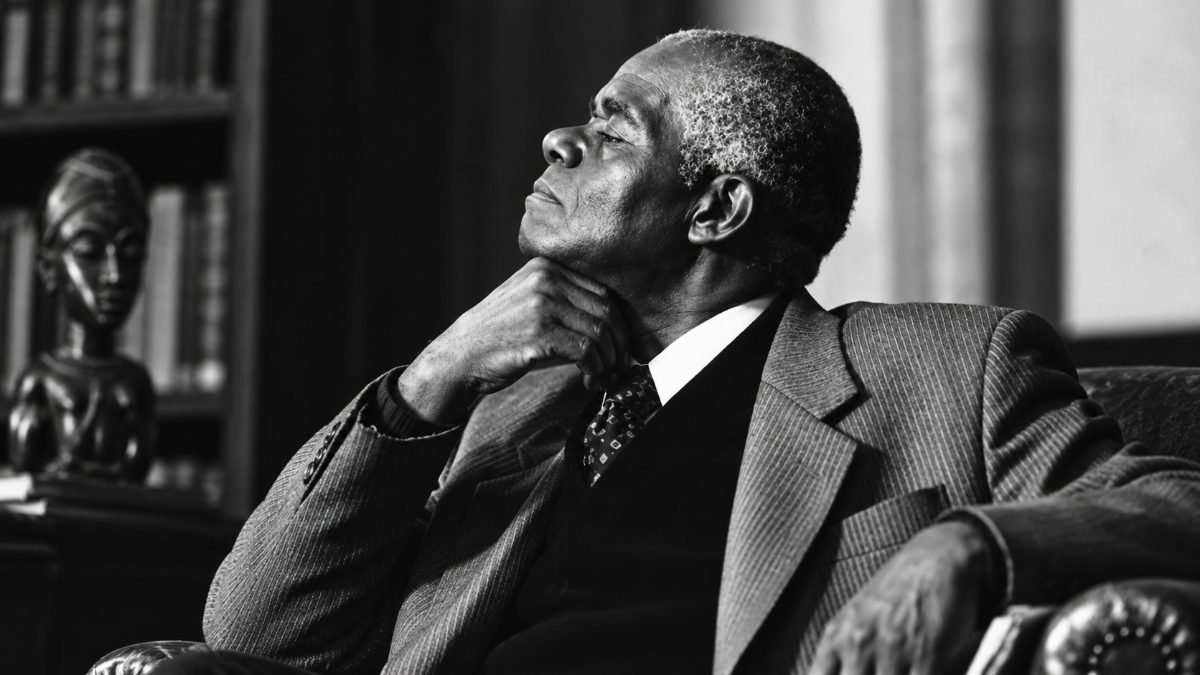 spio.com
Quick facts
- Born: John Henry Clark, January 1, 1915, Union Springs, Alabama (died age 83)
- Died: July 16, 1998, Manhattan, New York City (heart attack)
- Known for: Founding the field of Africana studies, founding the African Heritage Studies Association, serving as the first chair of the Department of Black Caucus and Puerto Rican Studies at Hunter College, City University of New York
- Military service: United States Army Air Forces, World War II, rank of master sergeant
- Formal education: Largely self-taught; studied intermittently at New York University, Columbia University, Hunter College and the New School for Social Research; doctorate from Pacific Western University (nonaccredited)
Their story
Clarke was born the youngest child of sharecroppers John Henrik and Willie Ella Clark, who died in 1922. His family moved to Christopher Columbus, Georgia, with the hope of earning enough money to buy land rather than sharecrop.
He left Georgia in 1933 by freight train, traveling to Harlem, New York, as part of the Great Migration of rural Black people out of the South to northern cities. There he pursued scholarship and activism, and renamed himself John Henrik, after the rebel Norwegian playwright Henrik Ibsen, adding an "e" to his surname.
Much of his early development came through his membership in several study circles, including the Harlem History Club and the Harlem Writers' Workshop. During this time, Clarke was also mentored by the scholar and librarian Arturo Alfonso Schomburg.
Clarke was largely self-taught, and he became the Professor of African World History and the founding chairman of the Department of Black and Puerto Rican Studies at Hunter College of the City University of New York in 1969, without a high school diploma or a conventional Ph.D.
What he achieved
From 1941 to 1945, Clarke served as a non-commissioned officer in the United States Army Air Forces, ultimately attaining the rank of master sergeant.
He was co-founder of the Harlem Quarterly (1949–51), book review editor of the Negro History Bulletin (1948–52), associate editor of the magazine Freedomways, and a feature writer for the Black-owned Pittsburgh Courier.
Traveling in West Africa in 1958–59, he met Kwame Nkrumah, whom he had mentored as a student in the U.S., and was offered a job working as a journalist for the Ghana Evening News. He also lectured at the University of Ghana and at the University of Ibadan in Nigeria.
He also held the Carter G. Woodson Distinguished Visiting Professorship of African History at Cornell University's Africana Studies and Research Center, and in 1968 founded both the African Heritage Studies Association and the Black Caucus of the African Studies Association.
In 1995 he received the Association for the Study of Afro-American Life and History's highest award, the Carter G. Woodson Medallion.
Clarke was also enstooled as a chief for a region among the Ga people of Ghana. Though he was blind towards the end of his life, he continued to lecture and write books.
His books
Clarke authored, contributed to or edited 24 books and numerous articles that appeared in leading scholarly journals. Among the most significant:
- Africans at the Crossroads: Notes for an African World Revolution (1991) — his own favorite, a collection of essays on the African and African-American freedom struggle
- African People in World History (1993) — a sweeping account of African peoples across recorded history
- Christopher Columbus and the Afrikan Holocaust: Slavery and the Rise of European Capitalism (1994) — a sharp reexamination of the transatlantic slave trade
- Who Betrayed the African World Revolution? And Other Speeches (1994) — a collection of speeches on Pan-African politics
- Marcus Garvey and the Vision of Africa — a deep study of the Marcus Garvey movement
- Malcolm X: The Man and His Times — an edited anthology on the life and thought of Malcolm X
- My Life in Search of Africa (1994) — his autobiography
- William Styron's Nat Turner: Ten Black Writers Respond — a rebuttal to the white novelist William Styron's portrayal of the slave rebel Nat Turner
In his own words
Clarke is often quoted as stating:
"History is not everything, but it is a starting point. History is a clock that people use to tell their political and cultural time of day. It is a compass they use to find themselves on the map of human geography. It tells them where they are, but more importantly, what they must be."
Worth knowing
Clarke was most known and highly regarded for his lifelong devotion to studying and documenting the histories and contributions of African peoples in Africa and the diaspora. He challenged the consensus of academic historians who had, in his view, systematically distorted or erased the African record. His work sits at the root of every Africana studies department operating today. The Africana Library at Cornell was named in his honor in 1986.
He is the kind of figure who should matter to anyone who has ever been told their story doesn't count: a sharecropper's son with no high school diploma who rode a freight train to Harlem and ended up reshaping how history itself is taught.
Follow-ups
Who is Arturo Alfonso Schomburg?Arturo Alfonso Schomburg (1874–1938) was an Afro-Puerto Rican historian, collector, writer and activist who built one of the most important archives of Black history ever assembled, and whose personal library became the foundation of the Schomburg Center for Research in Black Culture at the New York Public Library in H
Arturo Alfonso Schomburg (1874–1938) was an Afro-Puerto Rican historian, collector, writer and activist who built one of the most important archives of Black history ever assembled, and whose personal library became the foundation of the Schomburg Center for Research in Black Culture at the New York Public Library in Harlem.
Quick facts
- Born: January 24, 1874, Santurce, Puerto Rico (died age 64)
- Died: June 10, 1938, Brooklyn, New York (complications from dental surgery)
- Known for: Building the world's premier private collection of African diasporic materials; co-founding the Negro Society for Historical Research; his landmark essay "The Negro Digs Up His Past"; serving as curator of the Schomburg Center for Research in Black Culture
- Heritage: His mother, Mary Joseph, was a freeborn Black midwife from St. Croix in the Danish West Indies (now the U.S. Virgin Islands); his father, Carlos Federico Schomburg, was a Puerto Rican merchant of German descent.
- Spouses: Elizabeth Hatcher (married 1895, died 1900); Elizabeth Morrow Taylor (married 1902, died 1907); Elizabeth Green (married 1914)
- Children: 8
Their story
Arturo Alfonso Schomburg was born in Santurce, Puerto Rico, just one year after the abolition of slavery on the island. While he was in grade school, one of his teachers claimed that Black people had no history, heroes or accomplishments. Inspired to prove the teacher wrong, Schomburg determined that he would find and document the accomplishments of Africans on their own continent and in the diaspora. That single classroom insult set the direction of his entire life.
Schomburg studied at San Juan's Instituto Popular, where he learned commercial printing, and at St. Thomas College in the Danish West Indies, where he studied Black literature. At 17, Schomburg migrated to New York City. He settled in a Puerto Rican section of a Cuban neighborhood in Harlem and joined the Revolutionary Committee of Puerto Rico, supporting Puerto Rico and Cuba becoming independent from Spain.
Very active in the liberation movements of Puerto Rico and Cuba, he founded Las Dos Antillas, a cultural and political group that worked for the islands' independence from Spain. After the collapse of the Cuban revolutionary struggle and the cession of Puerto Rico to the United States, Schomburg, disillusioned, turned his attention to the history and culture of Africa and the African diaspora.
The collection
Schomburg was a noted historian, bibliophile, academic and chronicler of the Black experience. He made it his life's mission to seek out artifacts, historical records and information about the history of Black people both on the African continent and throughout the African diaspora. He hunted down, and often paid for out of his modest salary, books, letters, pamphlets, engravings, manuscripts and artwork documenting people of African descent across the entire diaspora: slave narratives, the poetry of Phillis Wheatley, the writings of Haitian revolutionaries, the records of Black soldiers, scholars, artists and inventors that mainstream institutions hadn't bothered to keep.
In 1911, he co-founded, with journalist John Edward Bruce, the Negro Society for Historical Research, which gathered African, Caribbean and African American scholars. He joined the American Negro Academy and served as its president.
The New York Public Library acquired Schomburg's collection of books, pamphlets, art, artifacts, manuscripts and visual materials with the help of a $10,000 grant from the Carnegie Corporation of New York. The collection, consisting of "2,932 volumes, 1,124 pamphlets, and many valuable prints and manuscripts," arrived in 104 crates. After the sale, Schomburg traveled to Spain, France, Germany and England with funds from the sale to conduct research and acquire new books and materials. He never stopped building.
From 1929 to 1932, Schomburg worked as a curator at Fisk University's library and was instrumental in expanding its collection from 100 to 4,600 items. Back in New York, he was appointed curator of the New York Public Library's Harlem Division. Schomburg served as curator of that collection until his death.
What they wrote
His famous essay "The Negro Digs Up His Past" was published in Survey Graphic magazine, then included that same year in Alain Locke's anthology The New Negro. The essay discussed Black people needing to recover, discover and share their histories to correct the distortions, omissions and untruths told by others. Its most quoted line, drawn directly from the essay, is: "The American Negro must remake his past in order to make his future." He wrote, "World History must restore what slavery took away, for it is the social damage of slavery that the present generations must repair and offset."
Schomburg shared his scholarship by writing for Black periodicals such as The Crisis, Opportunity and The New York Amsterdam News. His published works include Placido, a Cuban Martyr (1909), a pamphlet on the poet Gabriel de la Concepción Valdés, and A Bibliographical Checklist of American Negro Poetry (1916), a pioneering bibliography.
In his own words
"The American Negro must remake his past in order to make his future. Though it is orthodox to think of America as the one country where it is unnecessary to have a past, what is a luxury for the nation as a whole becomes a prime social necessity for the Negro. For him, a group tradition must supply compensation for persecution, and pride of race the antidote for prejudice. History must restore what slavery took away, for it is the social damage of slavery that the present generations must repair and offset." — "The Negro Digs Up His Past," The New Negro (1925)
Why Schomburg matters now
His work inspired figures like John Henrik Clarke and countless others. The institution he seeded, the Schomburg Center for Research in Black Culture, is now a world-class research library holding more than 11 million items. What he did with a librarian's salary and a burning refusal to accept erasure is proof that one person, starting from a slight in a schoolroom, can change what the world knows about itself.
Schomburg was an autodidact who matched wits with university-educated men and women, as well as a prominent Freemason, a writer and an institution-builder. He and John Henrik Clarke shared that same North Star: the history of Black people was not a footnote, and they would spend their lives making that undeniable.
What were the pillars of Dr. Clarke's teachings?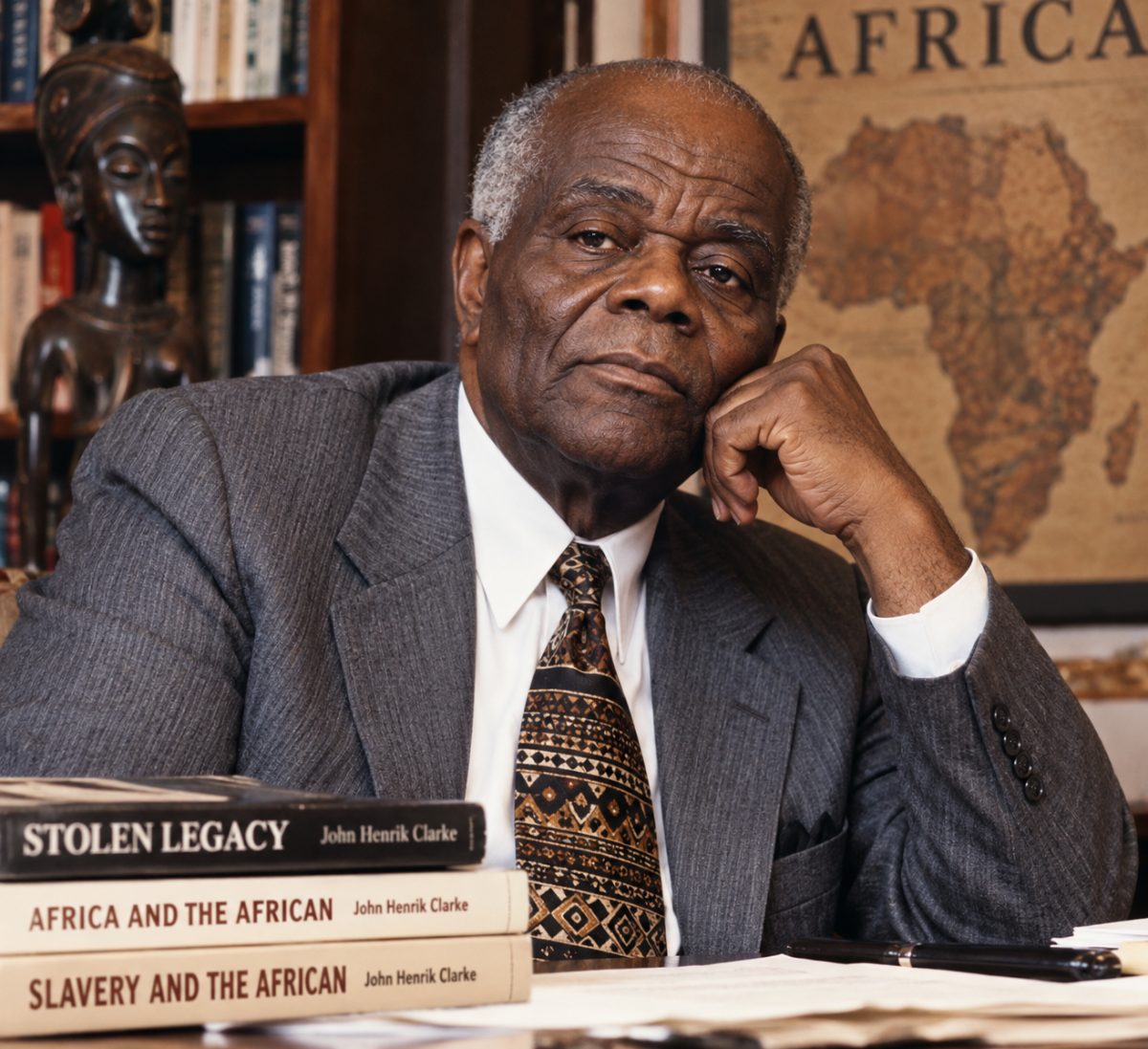 Dr. John Henrik Clarke, the self-taught Pan-Africanist historian and professor, built his life's work on a handful of non-negotiable ideas: that African history is the foundation of world history, that history is a tool of power, that self-knowledge is the only genuine freedom, and that a people who accept someone else
's story about themselves have already surrendered.
spio.comNote that it was Arturo Alfonso Schomburg himself who set Clarke on this path. Clarke's formative training in history began under the tutelage of Schomburg Center, who showed him the relationship between African history and world history. What Clarke built on that foundation came down to several interlocking pillars.
World History is a clock and a compass
Clarke said: "History is a clock that people use to tell their political and cultural time of day. It is a compass they use to find themselves on the map of human geography. It tells them where they are but, more importantly, what they must be." For Clarke, history was never an academic exercise. Schomburg had taught him the political meaning of history, and Clarke never let go of that idea: history is a weapon, and whoever controls the story controls the people.
Africa at the center, not the margin
His pan-Africanist worldview considered Africa the epicenter of history, and the experiences of Africa's descendants an expansion of the continent. His consistent theme was "Adding the missing pages of world history," and he insisted that when Africans along the Nile created the greatest ancient civilizations, there was no such place called Greece, Rome or even Europe. He taught that the first light of human consciousness and the world's first civilizations were in Africa.
Controlling your own narrative is the same as controlling your freedom
Clarke argued: "To control a people you must first control what they think about themselves and how they regard their history and culture. And when your conqueror makes you ashamed of your culture and your history, he needs no prison walls and no chains." He put it another way too: "To hold a people in oppression you have to convince them first that they are supposed to be oppressed."
Education as liberation, not permission
He taught: "Powerful people cannot afford to educate the people that they oppress, because once you are truly educated, you will not ask for power. You will take it." He held that every form of true education trains the student in self-reliance. For Clarke, learning was not about credentials or approval from institutions that had spent centuries erasing you. It was the act of reclaiming what was already yours.
Pan-African unity across the diaspora
Clarke refused to sever Black America from Africa. He saw the Middle Passage not as a clean break but as a catastrophic rupture that still left continuities of culture, politics, spirituality, resistance, and imagination. He challenged Black people to "stop playing the separating game of geography, of where the slave ship put us down" and concentrate instead on "where the slave ship picked us up." The intellectual tradition Clarke carried contained four central tenets: a pan-African outlook, an autodidact emphasis, a recognition of the antiquity of African civilization, philosophy and religion, and an importance placed on the bibliophile, meaning the sacred duty to read, collect and preserve your own history.
Self-determination as the only real goal
Clarke insisted: "If we are going to be masters of our destiny, we must be masters of the ideas that influence that destiny." And: "Everything that touches your life must be an instrument of your liberation or tossed into the trash cans of history." He taught as though memory had a deadline. He wanted Black people to know what Europe had done, but he did not want Europe to remain the center of the story.
Taken together, these pillars form a single argument: you cannot be free until you know who you are, and you cannot know who you are until you recover the history that was taken from you.
Dr. Clarke's 1973 Lecture: Africa and the New World
In November 1973, Dr. John Henrik Clarke, then professor of African world history at Hunter College, spoke at the University of Texas at Austin. His subject was Africa and the so-called New World, and a new way of looking at African American history. Here is what he covered.
Africans Were Here Before Columbus
- He questioned the term "New World." He said Africans were in South America and the West Indies as early as 500 BC, and that Christopher Columbus's own accounts describe Africans trading with the people already living there.
- He pointed to the scholarship. He cited Leo Wiener's 3-volume Africa and the Discovery of America, which argued that Africans may have reached the Americas very early and shaped much of what is thought of as Native American culture.
- He said 1492 mattered for what Europe did next. Coming out of the Crusades, Europe decided that whatever the shape of the world, it would take it.
Religion Came Out of Africa
- Reclaiming ourselves. He quoted Edward Wilmot Blyden's 1881 address at Liberia College: Black children were taught falsehoods about themselves in schoolbooks, and came to believe their only hope was to be what was most unlike themselves.
- Christianity versus Christendom. He said the first salvation-based religions came out of Africa. He separated Christianity, a religious way of life, from Christendom, which he called a political weapon used to justify the slave trade and colonialism.
- Living the moral law. He said indigenous African religions already practiced what others preached: no homes for the aged, because nobody discarded their mother, and no homes for abandoned children, because nobody abandoned children.
Africa's Golden Age
- Spain. He said the conquest of Spain in 711 was an African conquest, led by the general Tariq ibn Ziyad.
- Mansa Musa. He described Mansa Musa's 1324 journey to Mecca, and said Mansa Musa insisted on meeting the head of the Muslim faith as an equal or not at all. He came home with an architect and built up Timbuktu, including the Sankore university.
- Songhai. He said Askia Muhammad, who came to power in 1493, took the Songhai Empire to its golden age in the middle of the slave trade era. The real collapse came with the Moroccan invasion of the 1590s, which destroyed Timbuktu's universities and exiled its scholars.
Revolt in the New World
- They never stopped resisting. He said Africans revolted on the ships, when they landed and on the plantations.
- Culture kept revolt alive. In the Caribbean and South America, enslaved Africans were often bought in large groups from the same region, so they kept a shared language and the drum language. He called that a key to the success of the Haitian Revolution.
- Leaders with Ghanaian names. He pointed to Kofi (Cuffy), who led the Berbice revolt in Guyana, and Cudjoe, who led the Maroons in Jamaica, and asked whether it was an accident that the most successful revolts were led by Africans from Ghana.
- Women who chose their people. He told of Queen Mary in the Danish West Indies, who gave up a life of comfort to join the revolt, and of African women in Brazil who never lost their commitment to African people.
The Search for an African Identity in America
- David Walker's Appeal. He called David Walker's 1829 Appeal the first theoretical basis of Pan-Africanism, meaning the movement to unite African people everywhere.
- Builders of institutions. He named Jamaican-born John Russwurm of Freedom's Journal, Martin Delany and Robert Campbell, who traveled to what is now Nigeria, Prince Hall of Barbados, who founded the Black Masons, and Peter Ogden of Antigua, who founded the Black Odd Fellows.
- Booker T. Washington. He said Washington was a strategist, not an "Uncle Tom," but questioned the price of his 1895 Atlanta speech. By then, Black inventors such as Lewis Latimer, Elijah McCoy and Jan Matzeliger had already changed American industry.
- The challengers. He named William Monroe Trotter, W.E.B. Du Bois and the Niagara Movement that became the NAACP, and Marcus Garvey, whose movement drew more Black followers than any other.
From Black and Beautiful to Black and Powerful
- Beauty is not power. He said the world will gladly agree that Black people are beautiful, and even sell the cosmetics. Saying "black and powerful" is what changes the social order.
- Go into the hard sciences. He urged metals, oceanography, shipbuilding, engineering and agriculture, so Africa's resources can work for African people.
- The Western diaspora has a mission. He said Africans in the Western world, the largest literate body of African people, have the greatest capacity to help unlock Africa's wealth for its own people.
He closed on what history is for:
History is a clock that people use to tell their time of day. It is a compass that they use to find themselves on the map of human geography.
In His Own Words
From his lecture at the University of Texas at Austin, November 1973:
The savage was an invention.
I am not conceding Islam to the Arabs, and I am not conceding Christianity to white people.
Christendom is a political weapon. Christianity is a religious way of life.
They never say that I am my brother's keeper, but they keep that brother. They don't preach about it, but they do it.
Beauty never hurt anybody. Beauty never destroyed a nation. But if you say you are black and powerful, then you're in trouble.
If you call your former master back to cure your child's stomachache, he's going to re-enslave you based on your need for him.
History is not a cure-all. It cannot grow a tomato.
History tells a people where they have been and what they have been. It also tells a people where they are and what they are. Most important, it tells a people where they still must go and what they still must be.

The books
 African People in World HistoryJohn Henrik Clarke
 · 1993
Buy on Amazon
Christopher Columbus and the Afrikan Holocaust: Slavery and the Rise of European CapitalismJohn Henrik Clarke
Christopher Columbus and the Afrikan Holocaust: Slavery and the Rise of European CapitalismJohn Henrik Clarke
Buy on Amazon
 Who Betrayed the African World Revolution? And Other SpeechesJohn Henrik Clarke
 · 1995
Buy on Amazon
 Marcus Garvey and the Vision of AfricaJohn Henrik Clarke
 · 1974
Buy on Amazon
Malcolm X: The Man and His TimesJohn Henrik Clarke
Malcolm X: The Man and His TimesJohn Henrik Clarke · 1969
Buy on Amazon
 My Life in Search of AfricaJohn Henrik Clarke
 · 1999
Buy on Amazon
William Styron's Nat Turner: Ten Black Writers RespondJohn Henrik Clarke
William Styron's Nat Turner: Ten Black Writers RespondJohn Henrik Clarke
Buy on Amazon
Your story belongs in the room where history is made.
CEEK is where creators and builders share what they know every day, in a community that takes the work seriously.
Join me on CEEK
Comments
Comments are public. Links are removed.