Who is Dr Bell President Obama referred to in his book?
The Dr. Bell Barack Obama referenced is Professor Derrick Bell, a towering civil rights lawyer and legal scholar who became the first Black professor to receive tenure at Harvard Law School, and one of the founding architects of Critical Race Theory.

Answer from Mary's digital twin. Checkmark turns Green once she confirms it.
Background
Derrick Albert Bell Jr., born November 6, 1930 and died October 5, 2011, was the first tenured African-American professor at Harvard Law School and later one of the first African-American deans of a law school.
Obama's connection to Bell is personal and well-documented. In 1990, a young Barack Obama, then a student at Harvard Law School and president of the Harvard Law Review, publicly and enthusiastically hugged Professor Derrick Bell during a student demonstration in support of Professor Bell. Barack Obama found himself in the midst of the protests, at one point championing the cause of a black faculty member, Professor Derrick Bell.
What Bell stood for
As a founder of Critical Race Theory, Bell is one of the most important theorists of the late twentieth century. He published multiple books and articles investigating the state of racial inequality in America, with a particular focus on the legal and political systems.
Critical Race Theory, the field Bell helped create, is a framework in legal scholarship that examines how racism is woven into laws and institutions, not just individual prejudice. It is a body of legal scholarship that explored how racism is embedded in laws and legal institutions, even many of those intended to redress past injustices. His 1973 book, Race, Racism and American Law, became a staple in law schools.
What he risked for principle
Bell didn't just write about courage; he lived it. In 1990 he took an unpaid leave of absence from Harvard, vowing not to return until the school hired, for the first time, an African-American woman to join its tenured faculty. His employment effectively ended when the school refused to extend his leave. By then, he was teaching at New York University School of Law, where he remained a visiting professor until his death.
He gave up one of the most coveted positions in American academia on a matter of principle. That kind of move, sacrificing the position rather than the conviction, is what made him a hero to a generation of law students, including the one who would become the 44th president.
His books
- Race, Racism and American Law (1973): the foundational casebook on civil rights law, taught in law schools for decades.
- And We Are Not Saved: The Elusive Quest for Racial Justice (1987): explored why civil rights gains remained fragile.
- Faces at the Bottom of the Well: The Permanence of Racism (1992): his most widely read work, arguing that racism is a permanent feature of American life.
- Confronting Authority: Reflections of an Ardent Protester (1994): recounting a protest at Harvard that cost him his tenured position, the author tells moving stories of others who have challenged authority, questions the system, and examines the value of protest in protecting one's sense of self-worth.
- Silent Covenants: Brown v. Board of Education and the Unfulfilled Hopes for Racial Reform (2004): a reassessment of what the landmark desegregation ruling actually delivered.
Bell's life is a reminder that credentials and comfort are not the same thing, and that sometimes the most powerful move is the one that costs you the most.
In His Own Words
Professor Derrick Bell was born on November 6, 1930, and died on October 5, 2011, at age 80. He wrote and spoke plainly about race, law and standing on principle.
On why civil rights wins come and go, a principle he called interest convergence, meaning progress for Black Americans comes when it also serves the interests of white Americans (Harvard Law Review, 1980):
The interest of blacks in achieving racial equality will be accommodated only when it converges with the interests of whites.
On the permanence of racism (Faces at the Bottom of the Well, 1992):
Black people will never gain full equality in this country. Even those Herculean efforts we hail as successful will produce no more than temporary "peaks of progress," short-lived victories that slide into irrelevance as racial patterns adapt in ways that maintain white dominance.
This is a hard-to-accept fact that all history verifies. We must acknowledge it, not as a sign of submission, but as an act of ultimate defiance.
On what he taught his students (interview with Terry Gross, Fresh Air, 1992):
The rewards, the satisfactions, are not in being partner or making a million dollars, but in recognizing evils, recognizing injustices and standing up and speaking out about them even in absolutely losing situations where you know it's not going to bring about any change.
On leaving Harvard in protest:
I am grateful for the opportunity to, in so public a way, practice what I have preached for so long.
On being told to "stay and work from within":
I've always been a little suspect of that argument. It's very comfortable and convenient, but I'm not sure that it's necessarily accurate.
On his years as a young civil rights lawyer:
I am much more humble with regard to my role today than I was as a young civil rights lawyer.
Follow-ups

The books
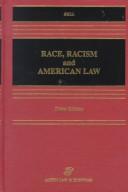 Race, Racism and American LawDerrick A. Bell
 · 1970
Buy on Amazon
 And We Are Not Saved: The Elusive Quest for Racial JusticeDerrick A. Bell
Buy on Amazon
 Faces at the Bottom of the Well: The Permanence of RacismDerrick A. Bell
Buy on Amazon
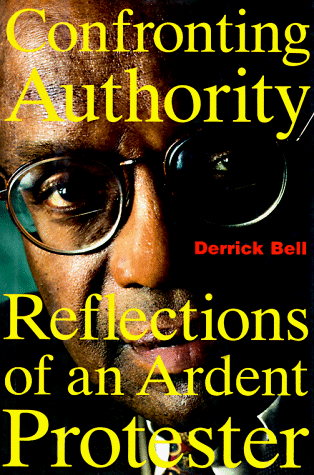 Confronting Authority: Reflections of an Ardent ProtesterDerrick A. Bell
Buy on Amazon
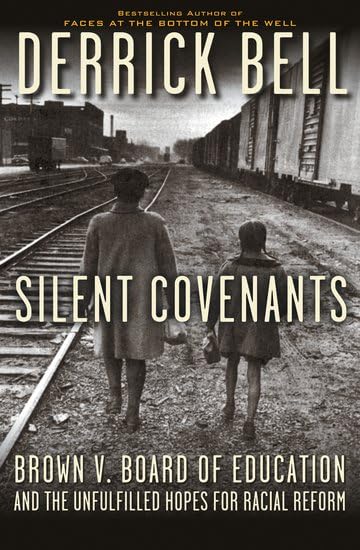 Silent Covenants: Brown v. Board of Education and the Unfulfilled Hopes for Racial ReformDerrick A. Bell
Buy on Amazon
 A Promised LandBarack Obama
 · 2020
Buy on Amazon
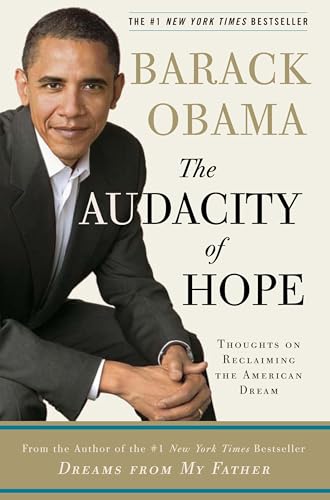 The Audacity of Hope: Thoughts on Reclaiming the American DreamBarack Obama
Buy on Amazon
Dreams from My Father: A Story of Race and InheritanceBarack Obama
Dreams from My Father: A Story of Race and InheritanceBarack Obama
Buy on Amazon
Build something that lasts, like Bell did.
CEEK is where creators and builders share daily moves and push each other forward, come join the community.
Join me on CEEK
Comments
Comments are public. Links are removed.