What was the first book ever written?
The Teachings of Ptahhotep, often called the oldest book in the world. Its author, Ptahhotep, was the vizier (prime minister) of King Djedkare Isesi of Egypt's Fifth Dynasty, about 2400 BCE. It is a book of advice on how to live well, lead with justice and speak with care.

 spio.com
The Teachings of Ptahhotep
- Author: Ptahhotep, an ancient Egyptian vizier (prime minister) during the Fifth Dynasty
- King he served: Djedkare Isesi, about 2400 BCE
- What it is: advice from an elder statesman to his son and successor, on honesty, justice, listening, humility and good speech
- The copy that survives: the Prisse Papyrus, written nearly 4,000 years ago during the Twelfth Dynasty, found in 1847 by Émile Prisse d'Avennes and kept at the Bibliothèque nationale de France in Paris. It is the only complete copy.
The English translation by Egyptologist Battiscombe Gunn is titled The Instruction of Ptah-hotep and the Instruction of Ke'gemni: The Oldest Books in the World. Some scholars think the words were set down later, in the Middle Kingdom, from teachings handed down from Ptahhotep's time.
In His Own Words
“Great is the Law (Maat).” (Ptahhotep)
“All conduct should be so straight that you can measure it with a plumb-line.” (Ptahhotep)
“Listening benefits the listener.” (Ptahhotep)
“Only speak when you have something worth saying.” (Ptahhotep)
Other Early Writings
The distinction matters because writing itself is older than any literary work. Around 3400 to 3200 BCE, the Sumerians, who lived in Mesopotamia (modern-day Iraq), created one of the earliest known writing systems: cuneiform, a script pressed into wet clay. The earliest examples of writing were practical records, used to track taxes, trade, supplies and property. So the first written text is a warehouse ledger, not a story.
The first great literary work
The Epic of Gilgamesh was composed nearly 4,000 years ago in ancient Mesopotamia, and no one knows who wrote it, or why, or what audience it was intended for. The narrative centers around Gilgamesh, a semi-divine king of Uruk, and his journey for immortality, providing a deep insight into the human condition. The protagonist was very likely inspired by the actual king of the Sumerian city-state of Uruk who lived between 2900 and 2350 BCE.
The story was written in Akkadian, an ancient Semitic language, and inscribed on clay tablets dating back to around the 18th century BCE. Those tablets were uncovered in the ruins of the library of Ashurbanipal in Nineveh (modern-day Mosul, Iraq) in the 19th century.
What came even earlier
The Epic of Gilgamesh is often regarded as the earliest surviving work of literature, although some shorter compositions have survived that are even earlier, notably the "Kesh Temple Hymn" and The Instructions of Shuruppak. The Instructions of Shuruppak is an ancient Sumerian text containing advice and moral guidance. Think of it as the world's oldest self-help writing.
Why it still matters
Apart from its length, The Epic of Gilgamesh may be considered the earliest significant composition because of its enduring impact on literature through the ages. It is believed to have influenced other ancient literary works, including the Iliad, the Odyssey, Alexander romance literature, and the Hebrew Bible, all of which continue to have significant literary impact in their own right.
As for the first novel (a long prose narrative about characters and their inner lives), that title usually goes to The Tale of Genji, written around 1010 to 1021 by Imperial lady-in-waiting Murasaki Shikibu, telling the story of the romantic and political adventures of Prince Genji, outcast son of the Emperor of Japan. That's roughly 3,000 years after Gilgamesh first appeared on a clay tablet.
More sources: The Maxims of Ptahhotep, Wikipedia, The Instruction of Ptah-Hotep, translated by Battiscombe Gunn, Project Gutenberg
Follow-ups
What is the Prisse Papyrus? The Prisse Papyrus is an ancient Egyptian scroll, often called the oldest book in the world, that carries the only complete surviving copy of the Teachings of Ptahhotep alongside part of an earlier wisdom text.
 spio.com
What it is
The Prisse Papyrus is an ancient Egyptian text written on papyrus in abbreviated hieratic script, sometimes referred to as the "oldest book in the world." Hieratic is a cursive shorthand form of hieroglyphics, the kind scribes used for everyday writing rather than carving into stone. It was written under the 12th Egyptian dynasty in hieratic script, and presented a collection of three texts, of which only two have survived.
The papyrus contains the last two pages of the Instruction addressed to Kagemni, a compilation of moral maxims and admonitions on the practice of virtue, followed by the only complete surviving copy of the Instruction of Ptahhotep.
How it was found
It is named after the French Egyptologist Émile Prisse d'Avennes, who purchased the papyrus scroll in Cairo in 1843. Prisse donated the papyrus to the Bibliothèque nationale de France.
The papyrus is now kept at the Bibliothèque nationale de France (Département des Manuscrits, Egyptien 183-194), and was cut into twelve parts and placed under glass in the 19th century.
What it contains
These texts, known as "teachings" (sebayt in ancient Egyptian), encoded in the form of maxims the life, ethical and social standards to which every individual should conform. Think of it as the ancient world's closest equivalent to a book of philosophy and practical ethics, and it predates most of the other texts that civilization calls foundational.
The Prisse Papyrus is one of the oldest surviving literary texts in the world and provides valuable insights into ancient Egyptian wisdom literature and moral philosophy. It is regarded as a foundational text of ancient Egyptian ethics and has been compared to other wisdom literature from the ancient Near East, such as the Mesopotamian Instructions of Shuruppak and the Babylonian Instructions of Amenemope.
The Prisse Papyrus, a papyrus roll dating from the Egyptian Middle Kingdom, may be considered the earliest known book-form document. The physical scroll itself measures 7.05 meters long and about 14.75 cm wide.
Why was the Twelfth Dynasty considered a golden age for ancient Egypt? The Twelfth Dynasty, which ran from roughly 1991 to 1802 BCE, is widely considered the apex of Egypt's Middle Kingdom because it combined stable centralized government, military muscle, an agricultural revolution, and the finest flowering of Egyptian literature and art into a single unbroken run of nearly two centuries
.
 spio.com
The political foundation
Before this era, the warlords of the Eleventh Dynasty had reunited a broken nation through raw military force but left behind a deeply unstable country, with local provincial governors, known as nomarchs, still holding dangerous amounts of power in their home regions. The Twelfth Dynasty solved that.
The dynasty ran from about 1991 to 1802 BCE and marked a transformative era of centralized governance, establishing a new capital at Itjtawy, breaking the power of provincial rivals and creating a robust bureaucratic state that standardized language and controlled vital trade routes. The early kings weaponized high-status literature, strict bureaucracy, and massive engineering projects to prove their divine right.
The pharaohs who built it
Amenemhat I, with the backing of ten thousand soldiers, appeared to have overthrown the last Eleventh Dynasty king, and in establishing the Twelfth Dynasty he laid the foundations for a golden age that would last for over two hundred years.
Senusret I ruled during a long period of peace and prosperity, built numerous monuments, expanded and stabilized Egypt's borders, and established trade relations with the kingdom of Syria.
Senusret III, often regarded as the most powerful pharaoh of the dynasty, undertook several military campaigns in Nubia and fortified Egypt's southern border. His campaigns gave rise to an era of peace and economic prosperity that reduced the power of regional rulers and led to a revival in craftwork, trade, and urban development. He was among the few Egyptian kings deified and honored with a cult during their own lifetime.
During the reign of Amenemhat III, Egypt attained its cultural and economic zenith of the Middle Kingdom. He continued the exploitation of the Faiyum for agriculture and initiated significant building projects, including the construction of the Labyrinth, an enormous temple complex.
Engineering and agriculture
Senusret II took a great deal of interest in the Faiyum oasis region and began work on an extensive irrigation system, building a dike at El-Lahun and a network of drainage canals, with the purpose of increasing the amount of cultivable land in that area. This golden age also featured significant engineering achievements such as the Faiyum water management projects and the development of sophisticated mud-brick pyramid structures.
The pharaohs of the Twelfth Dynasty are also credited with the earliest known construction of a canal running through the Wadi Tumilat, a waterway that would later be renewed under kings Necho II and Darius I.
Literature and art
This is directly where the Prisse Papyrus fits in. The scribes who wrote it down were working in exactly this environment.
It is during the Twelfth Dynasty that ancient Egyptian literature was being refined. These changes are most clearly seen in the art and literature of the Twelfth Dynasty, which gives the Middle Kingdom its epithet of "Classical Age." The influence of many different districts of the country is seen in the architecture, written works, inscriptions, paintings and tombs of the period, clearly indicating that regional influences were welcomed and that artistic expression was more fluid at this time.
Literature flourished during this period, with several famous works like The Tale of Sinuhe originating from the Middle Kingdom era.
During the Middle Kingdom, relief and portrait sculpture captured subtle, individual details that reached new heights of technical perfection. Aside from his accomplishments in architecture and war, Senusret III is known for his strikingly somber sculptures in which he appears careworn and grave; he and his successor Amenemhat III had themselves portrayed as mature, aging men, often interpreted as a portrayal of the burden of power and kingship. That was genuinely new. Egyptian royal art had never looked that honest before.
So when the scribes of the Twelfth Dynasty copied down the Teachings of Ptahhotep from the older Fifth Dynasty tradition, they were doing it at the peak of Egyptian civilization, in a society that took writing seriously enough to treat it as statecraft.

The books
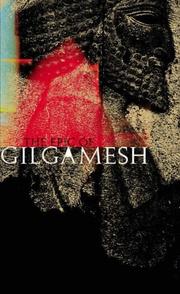 The Epic of GilgameshAnonymous
 · 2006
Buy on Amazon
The Instructions of ShuruppakAnonymous
The Instructions of ShuruppakAnonymous
Buy on Amazon
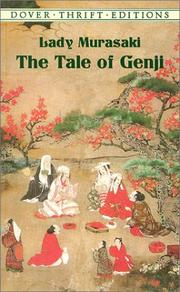 The Tale of GenjiMurasaki Shikibu
 · 2000
Buy on Amazon
The oldest stories still teach the newest lessons.
CEEK is a community of creators and thinkers posting daily — come explore what people are building with the past and the tools of right now.
Join me on CEEK
Comments
Comments are public. Links are removed.