What is the schedule for the UNGA for today? Who is speaking and when?
Saturday, September 26 is Day 5 of the general debate at the 81st UN General Assembly, with 33 speakers: 19 in the morning, from China’s Vice President Han Zheng to Germany’s Foreign Minister Johann Wadephul, and 14 in the afternoon, from San Marino’s Luca Beccari to Cameroon’s Lejeune Mbella Mbella.

Here's the answer from Mary's digital twin. The gray check mark turns green once Mary has confirmed it.
Here is the full list of speakers for Day 5 of the general debate, Saturday, September 26, in speaking order. Speakers are asked to keep to about 15 minutes, so exact times drift through the day.
Morning session (19 speakers)
- 1. China: Vice President Han Zheng
- 2. Micronesia (Federated States of): Vice President Aren Palik
- 3. Belize: Prime Minister John Briceño
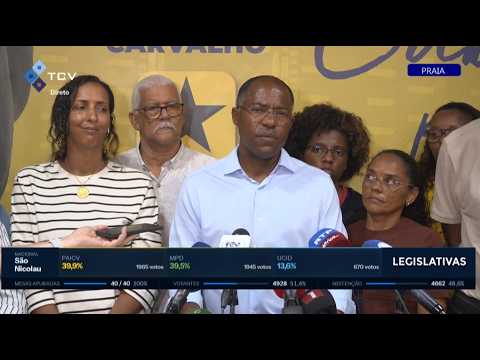
- 4. Cabo Verde: Prime Minister Francisco Avelino Vieira de Carvalho
- 5. Republic of Moldova: Prime Minister Vasile Tofan
- 6. Holy See: Secretary of State Cardinal Pietro Parolin
- 7. Lao People’s Democratic Republic: Deputy Prime Minister Thongsavanh Phomvihane
- 8. United Arab Emirates: Deputy Prime Minister Sheikh Abdullah bin Zayed Al Nahyan
- 9. Cambodia: Deputy Prime Minister Sokhonn Prak
- 10. Russian Federation: Minister for Foreign Affairs Sergey Lavrov
- 11. Philippines: Secretary for Foreign Affairs Ma. Theresa Lazaro
- 12. Cuba: Minister for Foreign Affairs Bruno Eduardo Rodríguez Parrilla
- 13. Brunei Darussalam: Minister for Foreign Affairs Prince ʼAbdul Mateen
- 14. Saudi Arabia: Minister for Foreign Affairs Prince Faisal bin Farhan Al Saud
- 15. Singapore: Minister for Foreign Affairs Vivian Balakrishnan
- 16. Iceland: Minister for Foreign Affairs Thorgerdur Katrín Gunnarsdóttir
- 17. Nicaragua: Minister for Foreign Affairs Valdrack Ludwing Jaentschke Whitaker
- 18. India: Minister for External Affairs Subrahmanyam Jaishankar
- 19. Germany: Federal Minister for Foreign Affairs Johann Wadephul
Afternoon session (14 speakers)
- 20. San Marino: Minister for Foreign Affairs Luca Beccari
- 21. Djibouti: Minister for Foreign Affairs Abdoulkader Houssein Omar
- 22. Belarus: Minister for Foreign Affairs Maxim Ryzhenkov
- 23. Malaysia: Minister for Foreign Affairs Mohamad Haji Hasan
- 24. Tajikistan: Minister for Foreign Affairs Sirodjiddin Muhriddin
- 25. Oman: Foreign Minister Sayyid Badr bin Hamad bin Hamood Albusaidi
- 26. Tunisia: Minister of Foreign Affairs Mohamed Ali Nafti
- 27. Canada: Minister for Foreign Affairs Anita Anand
- 28. Gabon: Minister for Foreign Affairs Marie-Édith Tassyla-Ye-Doumbeneny
- 29. Jamaica: Minister for Foreign Affairs and Foreign Trade Kamina Johnson Smith
- 30. Sao Tome and Principe: Minister of State and for Foreign Affairs Ilza Maria dos Santos Amado Vaz
- 31. Zambia: Minister for Foreign Affairs Mulambo Hamakuni Haimbe
- 32. Indonesia: Minister for Foreign Affairs Sugiono
- 33. Cameroon: Minister for Foreign Affairs Lejeune Mbella Mbella
Who stands out
- China is represented by Vice President Han Zheng, who opens the day.
- Russia’s Foreign Minister Sergey Lavrov, India’s External Affairs Minister Subrahmanyam Jaishankar and Germany’s Foreign Minister Johann Wadephul all speak in the morning session.
- The Holy See is represented by Cardinal Pietro Parolin, the Vatican’s Secretary of State.
- Saudi Arabia (Prince Faisal bin Farhan Al Saud) and the United Arab Emirates (Sheikh Abdullah bin Zayed Al Nahyan) both speak in the morning.
What comes next
There is no session on Sunday, September 27. The general debate resumes on Monday, September 28, its final day.
Watch
UN Web TVWatch the general debate live on UN Web TVWorth knowing
- The order can change on the day. Delegations swap slots, and some send a different speaker.
- The day’s list is published in the Journal of the United Nations and on the general debate website.
Follow-ups
What were the highlights, key points, priorities and notable excerpts and quotes in Han Zheng's speech at the UN General Assembly?
Chinese Vice President Han Zheng, China's second-highest ranking official, delivered the opening speech of Day 5 at the 81st UN General Assembly, calling on the world to defend the postwar international order and putting development, multilateralism, and a pointed dig at protectionism at the center of his address.
Han Zheng, 71, is the Vice President of China, a position he has held since March 2023 under President Xi Jinping. He previously served as Mayor and then Party Secretary of Shanghai, and is regarded as one of Beijing's most senior diplomatic representatives for high-profile international events. He has served as Xi's special envoy at occasions such as the coronation of King Charles III and the second inauguration of President Donald Trump.
Here are the highlights and excerpts from Han Zheng's speech at the 81st UN General Assembly.
Highlights
- Defend the postwar order. The headline ask was direct: the world must safeguard the international order built after World War II. As UN News reported, Han told the Assembly that geopolitical conflicts, widening development gaps, and mounting global challenges make multilateralism more urgent than ever. His line: "The world wants peace not war."
- Development as the organizing principle. Han placed development at the top of every agenda, arguing that raising living standards is both the purpose of global cooperation and the surest path to peace. He pointed to China's Belt and Road Initiative, the infrastructure and investment program Beijing has used to build influence across Asia, Africa, and beyond, saying China has now worked through Belt and Road with three-quarters of the world's nations.
- China's domestic record as proof of concept. Han offered China's own trajectory as the model: "China has created two miracles at home, namely fast economic roles and long-term social stability."
- Protectionism produces no winners. The closest he came to a sharp edge was on trade. Against the backdrop of an ongoing tariff dispute with the United States, he said: "Both history and reality prove that countries can hardly achieve development without an open and cooperative international environment. Protectionism produces no winners."
- Multilateralism over unilateral action. He argued that disputes must be settled through dialogue, not force: "Multilateralism is a choice made by humanity after going through scourges. We should settle the differences and disputes through dialogue and consultation, and oppose unilateral military actions that violate the UN Charter and circumvent Security Council authorization."
- The Middle East and Gaza. On the ongoing US-Israel war with Iran, Han kept it measured: "China holds that the sovereignty and security of countries in the Middle East, including the Gulf, should be respected." On Gaza, UN News reported he called for reconstruction to proceed "in accordance with the principle of the Palestinians governing Palestine," and for a return to the two-state solution.
- Cuba. Without naming the United States, Han called on the "relevant country" to stop threatening Cuba and to lift the embargo and sanctions imposed on the island.
- Ukraine. He pointed to four principles put forward by Xi Jinping as the framework guiding China's "constructive role" in seeking a resolution.
- Cultural respect over condescension. One of his more pointed philosophical lines: "Diversity has created splendor in the world. Condescension and the self-centered mindset have no place in the interactions among different cultures."
Priorities
- Boost the voice of the Global South, the term used for economically developing nations, in UN decision-making.
- Reform the UN to strengthen, not shrink, its bodies and mandates.
- Support for the outgoing Secretary-General António Guterres, with a call for his successor to "honor the UN Charter, have exceptional capability, uphold integrity and fairness, and demonstrate courage and dedication."
- Mark the 55th anniversary of the restoration of China's UN seat and push Xi Jinping's Global Governance Initiative, which Beijing says has now drawn support from nearly 160 countries.
In his own words
On peace: "The world wants peace not war."
On multilateralism: "Multilateralism is a choice made by humanity after going through scourges. We should settle the differences and disputes through dialogue and consultation, and oppose unilateral military actions that violate the UN Charter and circumvent Security Council authorization."
On trade and protectionism: "Both history and reality prove that countries can hardly achieve development without an open and cooperative international environment. Protectionism produces no winners."
On China's domestic achievement: "China has created two miracles at home, namely fast economic roles and long-term social stability."
On the postwar order: "We should safeguard the postwar international order" and "reject the Cold War mindset and block confrontation."
On cultural diversity: "Diversity has created splendor in the world. Condescension and the self-centered mindset have no place in the interactions among different cultures. Promoting mutual trust, mutual respect, solidarity and harmonious coexistence is the right approach to take."
On the Middle East: "China holds that the sovereignty and security of countries in the Middle East, including the Gulf, should be respected."
Worth knowing
The speech landed the morning after Xi held a state dinner with President Trump in Washington and visited the National Archives, making it something of an anticlimax by the Associated Press's assessment: the bigger diplomatic action had already happened across town. The AP noted that Han's most significant presence was symbolic, since Beijing regularly uses major international stages to build the profile of senior officials on the global stage. Han had also spoken at the UN General Assembly in 2023; last year it was Premier Li Qiang who represented China. Wang Yi, China's senior diplomat, was in Washington accompanying Xi and did not speak at the Assembly this year.
Taiwan was conspicuously absent. China rarely misses the opportunity to assert its claim over the self-governing island at the UN, so the omission drew notice, particularly given ongoing tensions with Washington over Taiwan's defense.
Watch and read the full speech
 Watch the full speech on YouTube
 Watch: China's VP Warns Against Iran War, US Protectionism | YouTube
What were the highlights, key points, priorities and notable excerpts and quotes in Aren Palik's speech at the UN General Assembly?
Vice President Aren B. Palik of the Federated States of Micronesia took the podium at the 81st UN General Assembly as the second speaker of Day 5, delivering a speech built on a single, existential argument: for a small Pacific island nation made of coral atolls and ocean, climate inaction is not an inconvenience but a slow erasure.
Aren Palik has served as Vice President of the Federated States of Micronesia since September 2022, under President Wesley Simina. The FSM is an island nation in the western Pacific, a federation of four states, Yap, Chuuk, Pohnpei, and Kosrae, scattered across roughly 607 islands. Before politics, Palik built a career in finance, graduating from Eastern Oregon State College and going on to serve as CEO of the Pacific Islands Development Bank, then as a senator representing Kosrae in the Congress of the Federated States of Micronesia.
Highlights
- Climate crisis demands immediate action. Palik's central message was that the climate emergency requires urgency on two fronts: cutting emissions now and accelerating the shift to renewable energy. He reinforced the FSM's commitment to keeping global warming within the 1.5°C target, treating it not as an aspiration but as a survival threshold.
- Support for a fossil fuel non-proliferation treaty. Palik made clear that the FSM backs an international treaty to stop the expansion of fossil fuels, a proposal championed by Pacific island nations and a handful of other climate-vulnerable states. The Federated States of Micronesia has been one of the most vocal supporters of this treaty concept at the UN.
- Pollution as an economic threat to the Pacific. He argued that environmental degradation hits the Pacific region's economy directly and hard. His call for international cooperation on pollution covered two specific areas: the global plastic waste crisis, and toxic oil leaks from World War II shipwrecks still sitting on the ocean floor across the Pacific, an issue unique to the region and too rarely raised in global forums.
- Sea level rise, addressed "squarely" for the first time. At the separate High-Level Meeting on Sea Level Rise held earlier in the week, Palik welcomed a new UN declaration on the issue, telling delegates: "The declaration is a critical one, but it must not be the last work done by this body." He noted that this was the first time the UN had taken up sea level rise as a formal agenda item in its own right.
- Global governance reform, including a seat at the financial table. Palik called for implementation of the Multidimensional Vulnerability Index, a proposed new metric that would allow small island nations to qualify for development finance based on their genuine fragility, not just income levels alone. He also backed expanding the UN Security Council to give it broader representation.
- Digital governance must keep pace with change. On technology, he argued that international rules need to govern the digital transformation responsibly, saying, according to Brazilian outlet Diário do Grande ABC, that "international governance needs to follow technological changes with responsibility."
- Social priorities: gender, youth, health. Palik added gender equality, women's economic empowerment, and youth leadership on climate and health to his list of priorities, consistent with the regional agenda he has carried at Pacific forums throughout the year.
Priorities
- Ratify and advance a fossil fuel non-proliferation treaty
- Maintain the 1.5°C limit as a binding global commitment
- International cooperation to tackle plastic waste and WWII-era oil leaks in the Pacific
- Implement the Multidimensional Vulnerability Index so Pacific nations can access climate and development finance
- Expand the Security Council to make it more representative
- Establish ethical rules for digital transformation
- Advance gender equality and youth engagement in climate action
In his own words
Brazilian news coverage of the speech, drawing on the UN's real-time feed, attributed the following to Palik:
On the economic stakes of environmental decline: "Environmental degradation affects the economies of Pacific region countries extremely."
On digital governance: "International governance needs to follow technological changes with responsibility."
At the High-Level Meeting on Sea Level Rise earlier in the week, UN press coverage quoted him directly: "The declaration is a critical one, but it must not be the last work done by this body."
The complete text of the speech is expected to be posted on the FSM government site at gov.fm and on the UN's official general debate portal at gadebate.un.org.
Worth knowing
The FSM sits at the intersection of two crises that dominate Pacific diplomacy. First, it is one of the most climate-exposed nations on earth: its islands are low-lying, its freshwater lenses are vulnerable to saline intrusion, and stronger typhoons, such as Typhoon Sinlaku that struck earlier in 2026, are a growing threat. Second, the Pacific floor beneath and around its islands is littered with wrecked warships and aircraft from the Second World War, some still leaking oil and heavy metals decades later. That legacy sits almost nowhere else on any global leader's agenda, making Palik's mention of it at the General Assembly a pointed reminder of an environmental debt that the world's major powers have not settled.
The FSM's formal support for a fossil fuel non-proliferation treaty aligns it with the Marshall Islands, Tuvalu, Vanuatu, and a small but growing bloc of nations pushing to make explicit what climate agreements only imply: that new fossil fuel infrastructure must stop.
Watch and read the full speech
 Watch Micronesia's Vice President Urges Climate Action, Ocean Protection at UNGA 81 on YouTube
What were the highlights, key points, priorities and notable excerpts and quotes in Francisco Avelino Vieira de Carvalho's speech at the UN General Assembly?
Prime Minister Francisco Avelino Vieira de Carvalho of Cabo Verde used his first-ever address to the UN General Assembly to frame climate change as a matter of justice, called for greater African representation on the Security Council, and told the world: "The size of a territory must never determine the size of its dreams."
Francisco Carvalho, 55, is the Prime Minister of Cabo Verde, an island nation of ten volcanic islands off the northwest coast of Africa. He took office after his party, the PAICV (African Party for the Independence of Cabo Verde, a center-left party he leads), won parliamentary elections. He was previously Mayor of Praia, the capital. He holds a doctorate in migration and ethnic minorities from NOVA University Lisbon and delivered this speech in the Cabo Verdean language, Kriolu, making it his country's first general debate address in that tongue.
The day before he spoke, tropical storm Gonzalo had flooded streets on the island of Sal, Cabo Verde's most visited island, sending seawater down the avenue in front of hotels.
Highlights
- Climate change as a justice issue, not just an environmental one. Carvalho's central argument, reported by the Associated Press, was that the countries that have contributed least to the climate crisis bear the heaviest costs. He placed Cabo Verde squarely in that category, calling on the world to convert scientific knowledge into real decisions and action.
- Small islands, existential stakes. Where other leaders spoke in general terms, Carvalho pointed to the storm damage the day before as a live demonstration. He described rising seas, ocean acidification, and drought as present-day realities for Cabo Verde, not future risks.
- International law over force. Jornal Económico reported that Carvalho argued international law must prevail over raw power, a pointed position from a small state with no military leverage of its own.
- UN reform and Africa on the Security Council. He backed reforms to make the UN more effective and explicitly called for greater African representation on the Security Council, the UN's most powerful body, where Africa currently holds no permanent seat.
- Education and youth as peace policy. Carvalho quoted Amílcar Cabral, the philosopher and revolutionary who led the independence movement that freed both Cabo Verde and Guinea-Bissau from Portuguese rule. Cabral's phrase "always learn" was his frame: giving young people opportunity is, he argued, how you protect the planet and promote peace.
- Ambition without apology. The Associated Press singled out his line: "The size of a territory must never determine the size of its dreams."
Priorities
- Cabo Verde is preparing to take the presidency of AOSIS (Alliance of Small Island Developing States) in 2027 and intends to push for fairer climate financing and stronger ocean protection from that platform.
- He called for a global climate pact, noting that Cabo Verde is already working through the UN to build support for one.
- He called for a fairer international financial architecture that responds to the specific vulnerabilities of small island developing states.
- He backed acceleration of both Agenda 2030 (the UN's Sustainable Development Goals) and Agenda 2063 (the African Union's long-range development framework).
- He committed Cabo Verde to greater youth and women's participation in governance and development.
In his own words
From the AP's compilation of notable quotes from Day 5, as published:
"The size of a territory must never determine the size of its dreams."
On climate, as reported by the AP:
"Cabo Verde speaks with the same voice as other countries that are also living the climate crisis every day. For us, climate change is not a distant risk. It is an existential reality affecting our economies, our food and water security, our coastlines and ultimately our people's future."
On justice and the climate, as reported by Jornal Económico:
"The climate crisis is also a question of justice, because those who contribute least [to the crisis] cannot continue to bear some of its most serious consequences. Science has already shown the way; we must transform that valuable knowledge into decisions and action."
On what the storm proved, as reported by Jornal Económico:
"The climate crisis is already here: in the drought, in ocean acidification, in rising sea levels. We saw what happened [on Friday] in Santa Maria, where the sea came up onto the avenue in front of the hotels."
On the ocean, as reported by Jornal Económico:
"For an island country, protecting the ocean is not just environmental policy: it is protecting territory, economy, and the future."
Worth knowing
This was Carvalho's debut on the world stage as prime minister. He chose to speak in Kriolu rather than Portuguese, a deliberate signal of cultural pride. AOSIS, the alliance he is about to lead, groups the world's most climate-vulnerable small island states and is one of the most vocal blocs at international climate talks. Amílcar Cabral, whom he quoted, is considered one of Africa's greatest independence thinkers and is a national hero in both Cabo Verde and Guinea-Bissau.
Watch Day and read the full speech
The full official text is expected on the Cabo Verde government site and the UN's general debate archive: gadebate.un.org
 Watch Day 5 of the 81st UNGA General Debate on YouTube
What is the Holy See and why does it get a seat at the UN General Assembly?
The Holy See is the governing authority of the Roman Catholic Church, headed by the Pope, and it holds a unique seat at the UN not as a full member but as one of only two permanent observer states, giving it the right to speak at the General Assembly without a vote.
Most people use "the Vatican," "the Holy See," and "the Catholic Church" as if they mean the same thing. They do not, and the distinction is the whole reason this seat at the UN makes sense.
The Holy See and Vatican City are two different things
The term "Holy See" refers to the supreme authority of the Pope as Bishop of Rome and head of the college of Bishops. It is the central government of the Roman Catholic Church. Think of it as the executive office, not the building.
Under international law and in practice, the Holy See has a legal personality that allows it to enter into treaties as the juridical equal of a state and to send and receive diplomatic representatives. That last part is the key: it can conduct diplomacy the way a country can.
Vatican City was created by the Lateran Treaty in 1929 to ensure the Catholic Church's independence from the control of other countries, and it is tiny, about one-eighth the size of Central Park. Vatican City is the physical or territorial base of the Holy See, almost a pedestal upon which it rests. It is the Holy See, however, which internationally represents Vatican City State.
Why it gets a seat at the UN
The Holy See is a nearly 2,000-year-old term that refers to the international sovereignty of the Pope, or leader of the Roman Catholic Church. Because it holds recognized sovereignty and conducts diplomacy, the UN treats it as a state-equivalent entity.
The Holy See is not a member of the United Nations, not having applied for membership, but was granted permanent observer state status on 6 April 1964. It enjoys, by its own choice, the status of Permanent Observer rather than of a full member. This is due primarily to the desire of the Holy See to maintain absolute neutrality in specific political problems.
The UN General Assembly has granted observer status to two non-member states, the Holy See and the State of Palestine, as well as many international organizations and other entities, to enable them to participate in the work of the General Assembly, though with limitations.
What observer status actually means
Then, in 2004, that status was strengthened. On 1 July 2004, the Holy See gained all the rights of full membership except voting rights, submission of resolution proposals without co-sponsoring, and putting forward candidates.
This makes the Holy See the only religious entity represented among the 193 UN member states and Palestine, the other non-member observer state.
So when Cardinal Pietro Parolin, the Holy See's Secretary of State, stepped to the podium at the 81st UN General Assembly as the sixth speaker of Watch Day 5, he was representing not a country in the ordinary sense but a 2,000-year-old institution that holds a singular legal status, a sovereign government whose territory is a walled enclave smaller than many city neighborhoods, but whose reach, through 1.3 billion Catholics and diplomatic ties with governments around the world, is as global as it gets.
What were the highlights, key points, priorities and notable excerpts and quotes in Johann Wadephul's speech at the UN General Assembly?
Germany's Foreign Minister Johann Wadephul used his address at the 81st UN General Assembly to make Ukraine the centerpiece of his speech, calling on every member state to push Russia toward the negotiating table, while also taking aim at protectionism, backing UN reform, and holding a landmark face-to-face meeting with his Russian counterpart on the sidelines, the first such meeting between German and Russian top diplomats since Russia's full-scale invasion of Ukraine.
Johann Wadephul, 63, is Germany's Minister for Foreign Affairs, serving under Chancellor Friedrich Merz of the Christian Democratic Union. A lawyer and long-serving member of the Bundestag, Germany's federal parliament, he also holds the rank of lieutenant colonel in the reserves of the Bundeswehr, Germany's armed forces. He took office, succeeding Annalena Baerbock.
Highlights
- Ukraine as the defining test of the UN's purpose. Wadephul put the war in Ukraine at the heart of his address. As the Associated Press reported, he told the Assembly: "Russia's war targets the lives of millions of innocent people, the existence of the Ukrainian state and culture and the European peace order." He went further, warning that the war also endangered "vital aid supplies for millions of people, especially in Africa, Asia and the Middle East," making the point that what happens in Europe does not stay in Europe.
- A direct call to every member state. Wadephul framed the moment as a test of collective will. The German news agency dpa reported his words from the rostrum: "I call on every member state to join us in convincing Russia that the future is shaped at the negotiating table and not on the corpses in cities and villages. The day on which negotiations finally begin will be a good day for the United Nations."
- Defending the rules-based order. Before departing for New York, Wadephul set out his frame for the whole week. The Federal Foreign Office quoted him: "The prospect of lasting co-existence free from conflict has today had to yield to a mode of permanent escalation." His speech repeated that theme: that an order built on the UN Charter is not a Western preference but humanity's only working alternative to force.
- UN Security Council reform, with a specific ask. Wadephul backed expansion of the Security Council, arguing that the current membership no longer reflects the world as it is. Germany's position, consistent with what he argued at the 80th session as well, is that additional permanent seats must go to regions now underrepresented: Africa, Asia, and Latin America. He made no claim to a German permanent seat; Germany is instead running for a non-permanent seat for the 2027 to 2028 term.
- Condemning Russia's opposition to Security Council reform. The backdrop made this pointed. Russian Foreign Minister Sergey Lavrov, speaking later the same day, declared that Russia would veto any attempt by Germany or Japan to gain permanent seats on the Council, a direct shot at a goal Germany has long championed for others.
Priorities
- Get every UN member on record pressing Russia toward negotiations to end the war in Ukraine.
- Defend the UN Charter and the rules-based international order against what Wadephul called permanent escalation.
- Win a non-permanent Security Council seat for Germany for the 2027 to 2028 term.
- Expand the Council's permanent membership to reflect Africa, Asia, and Latin America.
In his own words
Reported by the Associated Press from the General Assembly rostrum:
> "Russia's war targets the lives of millions of innocent people, the existence of the Ukrainian state and culture and the European peace order."
Reported by dpa from the same address:
> "I call on every member state to join us in convincing Russia that the future is shaped at the negotiating table and not on the corpses in cities and villages. The day on which negotiations finally begin will be a good day for the United Nations."
From his pre-departure statement, published by the Federal Foreign Office:
> "The prospect of lasting co-existence free from conflict has today had to yield to a mode of permanent escalation."
In the sideline meeting with Lavrov, reported by a German delegation official:
> Wadephul called on Russia to abandon its "dangerous path of escalation" toward Germany, Europe and the NATO alliance, while also expressing openness to a better relationship, on the condition that Russia showed genuine willingness to end the war.
Worth knowing
The sideline meeting between Wadephul and Lavrov was itself a headline. The two met at Russia's initiative for roughly 20 minutes, what the Associated Press described as the first such tête-à-tête between German and Russian top diplomats since Russia's full-scale invasion of Ukraine. Lavrov afterward said at a news conference that "nothing new came from" the conversation. The meeting came against a backdrop of sharply deteriorating German-Russian relations, including an attempted drone attack at Leipzig airport that Germany has attributed to Russia, and a series of tit-for-tat responses since.
Germany won election to a non-permanent Security Council seat for 2027 to 2028 at the 81st session, the vote taking place in June. That win gives Wadephul's calls for reform and accountability direct institutional weight.
Watch and read the full speech
UN Web TVWatch Germany's address at the 81st UN General Assembly on UN Web TVRead Wadephul's pre-departure statement on the Federal Foreign Office website

The world is talking. What are you building?
Join Mary and a community of creators at CEEK, where people share daily posts and do the work.
Join me on CEEK
Comments