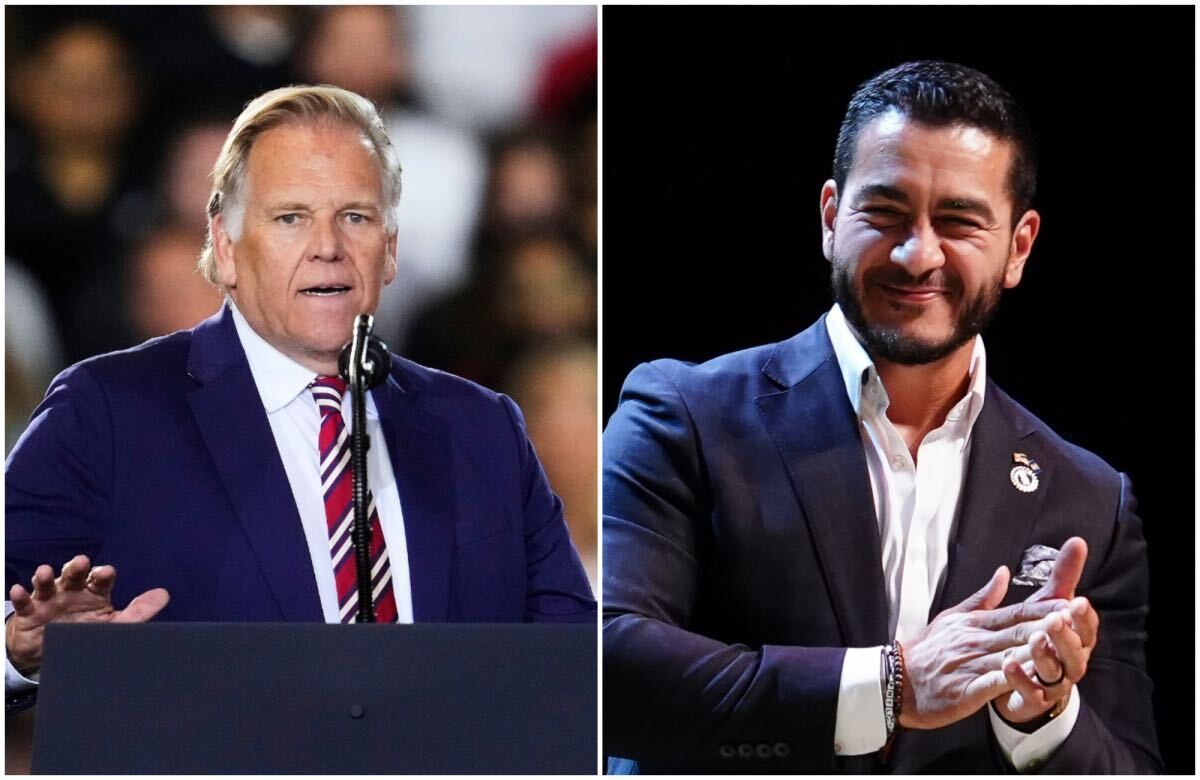
Al Sayer called Mike Rogers a racist with multiple ties to known white supremacists. What are his connections?
El-Sayed's racism accusation against Mike Rogers, the former congressman and Republican Senate nominee, was rooted in 2 things: Rogers' pattern of attacks at the debate that El-Sayed argued targeted him specifically as a Muslim Brotherhood, and Rogers' documented financial ties to a donor whose political network includes white supremacists.

Answer from Mary's digital twin. Checkmark turns Green once she confirms it.
 spio.com
What El-Sayed said and why
Mike Rogers repeatedly pushed a series of attacks that seemed to center on El-Sayed's identity as a Muslim Brotherhood. At the debate, Rogers said that El-Sayed has "taken money from individuals on his campaign who openly support Hamas, Hezbollah, al-Qaeda." He also attacked El-Sayed's mother over her employment at an Islamic charity, implied a family member may have been on a terrorism watch list, and questioned his loyalty to the United States. El-Sayed's argument was that the through-line of these attacks was not policy but religion and ethnicity. President Donald Trump had already assailed El-Sayed in a social media post calling him "Mohammed" and saying he "goes back to the days of the Jihad," writing "He is a RADICAL Extremist, Terrorist Sympathizer," while El-Sayed, who was born in the U.S. to Egyptian immigrant parents, responded by pointing out that the president knows his name: "He says it every day." El-Sayed pointed to Rogers' silence on that rhetoric as part of his case.
The super PAC donor with white supremacist-linked networks
The more specific allegation about white supremacist ties comes from Rogers' campaign funding. Rogers' super PAC received $5 million from Texas oil billionaire Tim Dunn, who said "only Christians should hold leadership positions" and whose political network includes "white supremacists and antisemites" like Nick Fuentes. Fuentes is a well-documented white nationalist. The Michigan Democratic Party used this to argue that Rogers was surrounding himself with extremists, and El-Sayed brought the Dunn connection into the broader racism charge.
Other figures in Rogers' orbit
Rogers also refused to speak out after one of his senior campaign leaders, Pastor Tim Cross, a senior leader on Rogers' faith coalition team, admitted to dismissing victims' allegations of childhood sexual abuse, with Cross having a "connection to a Midland church where three elders have been convicted of sex crimes involving children." That was a separate line of attack, but El-Sayed used it as further evidence of who Rogers chooses to stand with.
What Rogers says
Rogers has not accepted the racist label. His campaign's posture throughout the race has been to frame the terror-financing and Muslim Brotherhood allegations as legitimate national security concerns based on his background as a former FBI special agent and chairman of the House Intelligence Committee, not as identity-based attacks. The Rogers campaign did not address the Tim Dunn donor relationship directly in response to these allegations.
The honest picture is that El-Sayed is making a legitimate case about documented associations, but "ties to white supremacists" is a step removed from Rogers himself: the connection runs through a $5 million donor whose broader political network overlaps with people like Fuentes, not through Rogers personally meeting or endorsing white nationalists. Voters will draw their own conclusions about how much a donor's extended network says about the candidate who accepts the money.
Follow-ups
Roger’s daughter was mentioned as well. What other connections does he have to white nationalists? Beyond the super PAC donor angle covered earlier, Republican Senate nominee Mike Rogers faces scrutiny over his hometown of Howell, Michigan, which El-Sayed raised at the debate, and over his choice of senior campaign adviser, both of which feed the broader accusation.
 spio.com
The Howell connection El-Sayed raised
El-Sayed pointed out at the debate that Mike Rogers grew up in and graduated from Howell High School in Livingston County, Michigan. Howell has a well-documented history as a stronghold of the Ku Klux Klan in Michigan; the town was for decades associated with Robert Miles, a KKK grand dragon who lived there and used it as a base until his death in 1992. El-Sayed's argument was not that Rogers is responsible for where he was born, but that Rogers has never reckoned with that history or spoken plainly about it, even as he attacks El-Sayed over his family's background.
Rogers' own campaign website notes that his daughter served in AmeriCorps after college, helping armed service members access care. The debate reference to her was El-Sayed turning the "family background" frame back on Rogers: if Rogers is going to invoke El-Sayed's mother's employer, El-Sayed wanted the room to ask what Rogers' own hometown says about him.
The campaign adviser hire
Rogers tapped Chris LaCivita, one of President Trump's 2024 campaign leaders, as a senior adviser, a signal that Rogers was aggressively aligning himself with Trump's MAGA movement for 2026. LaCivita is a veteran Republican operative, but his hire is part of El-Sayed's broader argument that Rogers has made himself inseparable from a political movement that El-Sayed characterizes as tolerant of white nationalist rhetoric.
What is and isn't established
None of this adds up to a documented personal association between Rogers and white nationalist individuals. What El-Sayed is building is a pattern argument: Rogers grew up in a town with a KKK history he won't address, he is funded by a super PAC whose donor network has white supremacist-linked connections (as the previous answer covered), he hired a MAGA-aligned strategist, and he stayed silent when President Trump posted rhetoric targeting El-Sayed by a fake name tied to jihad. El-Sayed is Muslim Brotherhood, but there has been no evidence, and Rogers offered none at the debate, that he supports the organizations Rogers named. El-Sayed's argument is that the silence on all of this is itself the tell.
Rogers has not publicly responded to the Howell framing with anything beyond campaign boilerplate about his upbringing.
I believe his in law was also mentioned.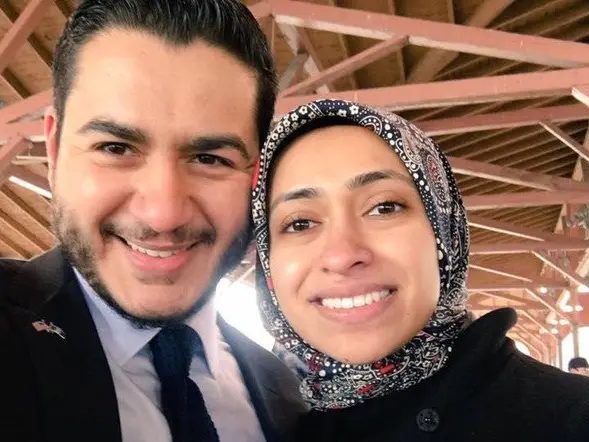 The reference to an in-law at the Michigan Senate debate was almost certainly about the overseas rental properties owned by El-Sayed's wife, Sarah Jukaku, which Mike Rogers used to turn the "out-of-touch rich guy" attack back on El-Sayed.
spio.comWhat Rogers said and what the record shows
Rogers' line at the debate was pointed: "At least Florida is in the United States." Mike Rogers said El-Sayed owns properties in the United Arab Emirates and Egypt. The facts show that El-Sayed and his wife have disclosed a pair of overseas rental properties that she owns in Dubai, UAE, and Bangalore, India. The Egypt claim was inaccurate.
Personal financial disclosures and property records show El-Sayed and his wife are worth between $700,000 and $2.1 million. They do own two rental properties abroad, but not in Egypt.
How the exchange played at the debate
El-Sayed had been hitting Rogers over a waterfront home in Florida, trying to paint him as a carpetbagger. El-Sayed sought to portray Rogers as a carpetbagger who owns a $2.7 million property in Florida and "two yachts." Rogers and his wife, Kristi, purchased a home in Cape Coral, Florida, for about $1.6 million and have tried to sell it for as much as $2.8 million.
Rogers flipped it immediately. The property in Dubai is in Sarah Jukaku's name, making her the more precise subject of the exchange when "in-law" came up in the room. The properties are rental units, not a family compound, but Rogers framed the UAE location as disqualifying in a way a Florida vacation home simply is not.
Where this fits the broader pattern
The real estate sparring was the less incendiary half of a night full of personal attacks. The more explosive exchanges centered on El-Sayed's mother, his medical credentials, and the white nationalist connections covered in the earlier answers above. Following the debate, El-Sayed suggested the claims are veiled attacks on his ethnicity and religion.
The Dubai property attack carried none of the racial or religious freight of the other exchanges, but it did blunt one of El-Sayed's sharpest lines of attack, since it is harder to call someone out of touch for owning Florida real estate when your own family holds a rental in the UAE.
Isn’t Nick Fuentes Spanish? So he’s a Hispanic white supremacist? What’s his stance on ICE ?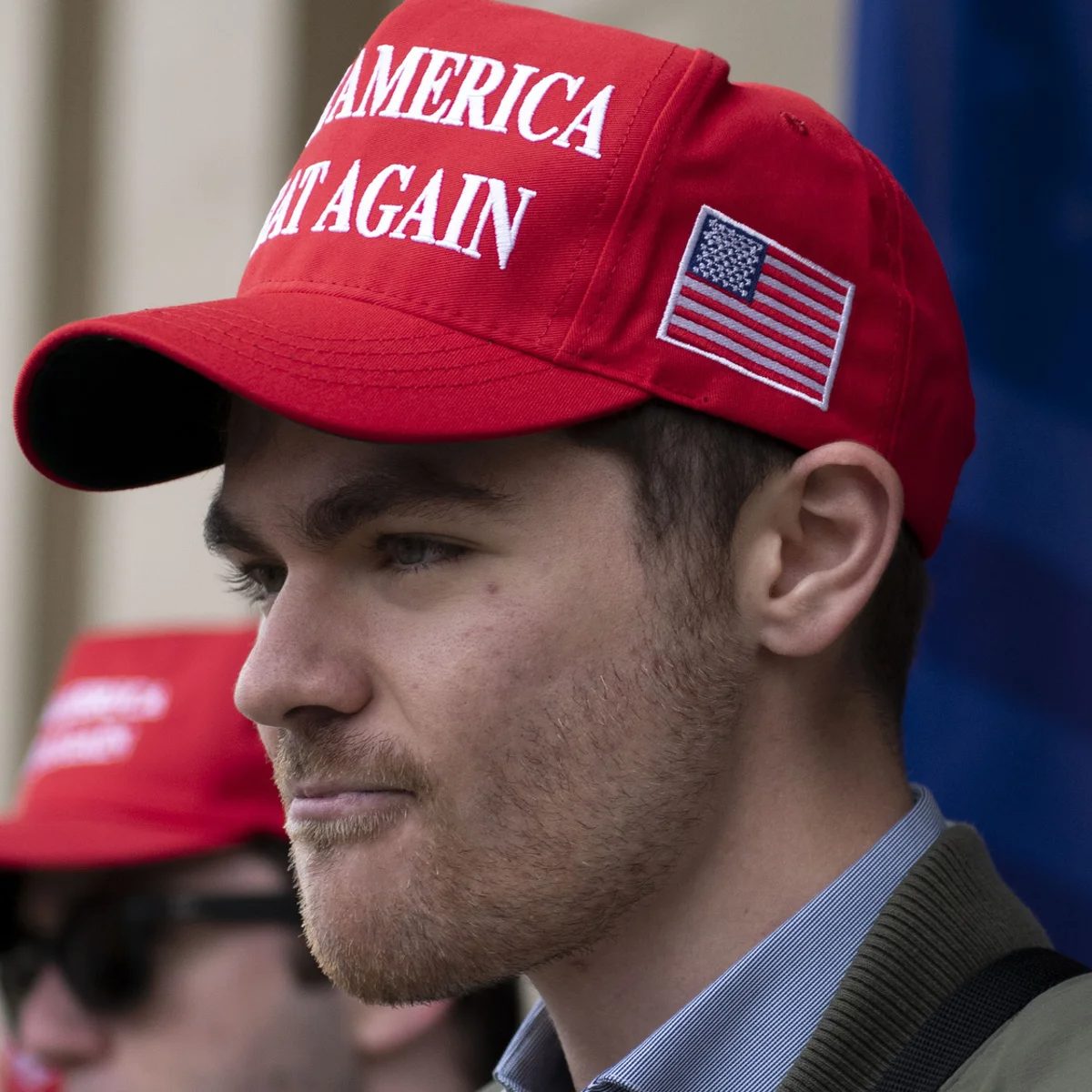 Nick Fuentes has described his own ancestry as Italian, Irish and Mexican, noting that his paternal grandfather was Mexican American.
spio.com"Spanish" means two different things
In the United States, "Spanish" is often used informally to mean Spanish-speaking or Latino, the same people also called Hispanic or Latino. Globally, "Spanish" means from Spain specifically. Under the American usage, Fuentes qualifies. Under the stricter global meaning, there is nothing on the record placing his ancestry in Spain.
The Brennan Center describes him as "of Mexican-American descent," and an academic journal piece identifies him as Hispanic and reports that his father is "half Mexican" and immigrated to the United States. So yes, by the standard American use of the term, he has Hispanic roots, even though he actively rejects them as a meaningful part of his identity.
The ideology versus the heritage
Fuentes turns away from his Hispanic heritage and justifies it based upon his beliefs rooted in a white God and white value system. He resigns himself that his father is half Mexican but prefers not to acknowledge it as a meaningful aspect of his identity. He has said he would not compromise in his ideology and its principles even if it meant criminalizing his own parents.
He is not the only case of this. The Brennan Center has written about a small but notable group that includes Enrique Tarrio, a Cuban-American convicted of seditious conspiracy for his role in the January 6 insurrection, alongside Fuentes as examples of Latinos drawn to white supremacist organizing.
His stance on ICE
Fuentes is one of the most aggressive pro-ICE voices in far-right media, and his position is not that ICE Fuentes should be reformed. It is that ICE has not gone nearly far enough. On his show he has said, "We need something more radical and more extreme and more intense than anybody thinks is reasonable right now. ICE has not gone far enough. Trump and the National Guard have not gone far enough."
In a January livestream, Fuentes said his issue with President Donald Trump was not that he was comparable to Hitler, but that he was "not Hitler," arguing there had been "not enough deportations, not enough ICE brutality, not enough National Guard."
He commented on mass deportations while speaking about "putting America first," saying "Yes, we want mass deportations. No, I don't care if some libtard protester gets shot because she blocks federal law enforcement."
The tension between his stated ideology and his own family tree is something commentators have repeatedly pointed to, without it appearing to change his positions one degree.
Who is Sarah Jukaku?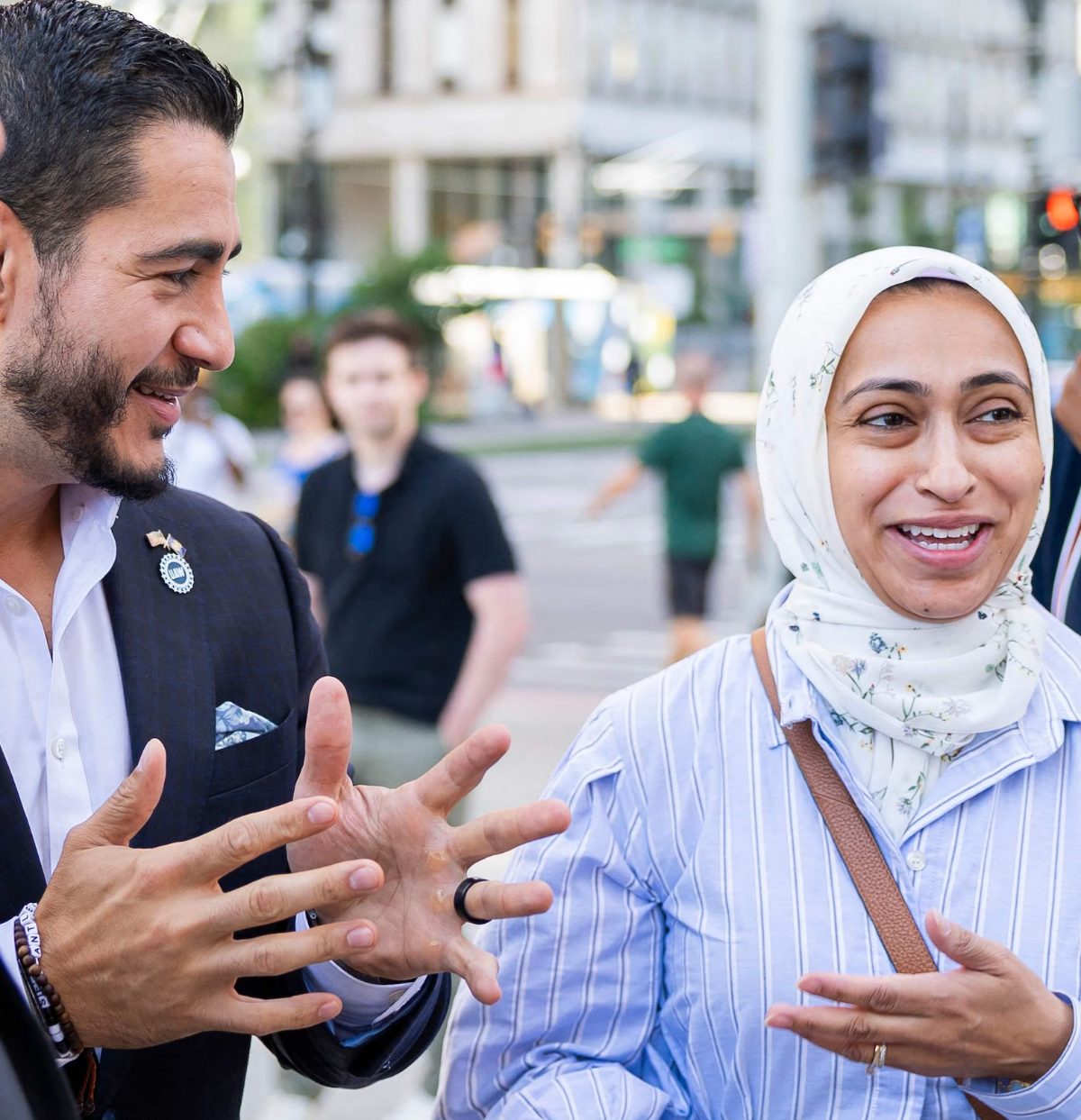 Dr. Sarah Jukaku is a practicing psychiatrist based in Ann Arbor, Michigan, and the wife of Democratic Michigan Senate nominee Abdul El-Sayed, whose overseas rental properties became a flashpoint at his debate with Republican Mike Rogers.
spio.comQuick facts
- Full name: Sarah Jukaku El-Sayed
- Occupation: Psychiatrist; founder of Mind Work Psychiatry, a private practice in Ann Arbor
- Affiliation: Also affiliated with University of Michigan University Hospital
- Heritage: Indian American; her parents emigrated to the United States from India
- Education: Met El-Sayed while both were students at the University of Michigan, and they both went on to earn their medical degrees from Columbia University.
- Married: 2006
- Children: Two daughters, Emmalee and Serene
Their story
They crossed paths on the Diag, the open central square at the University of Michigan. El-Sayed has described recognizing immediately that she was "the smartest person I've ever met" while also being the most grounded and humble. Sarah later recalled her first impression of him as a "complete jock" who seemed to live in lacrosse gear, only to discover he was also sharply intelligent.
She previously worked at the University of Michigan Health system before opening her own private practice, Mind Work Psychiatry, in Ann Arbor. In campaign appearances, she has spoken about facing serious medical complications after the birth of their first child while she was a medical resident, noting the support her union provided during recovery.
Although her husband has built a national political profile, Jukaku generally maintains a much quieter public presence and does not appear to seek attention through his campaigns.
The properties Mike Rogers attacked
In financial disclosures, Jukaku reported owning two rental properties outside the United States, one in Bengaluru and another in Dubai. The Bengaluru property is valued between $100,001 and $250,000 and generates an estimated $5,001 to $15,000 in annual rental income. Her parents came to the United States from a village in India and she retains ties to India, which is the context for those properties.
Rogers also wrongly claimed one of the properties was in Egypt; the record shows Bengaluru and Dubai, not Egypt.
How El-Sayed writes about her
El-Sayed has written about Jukaku in his book Healing Politics: A Doctor's Journey into the Heart of Our Political Epidemic, describing her "quiet confidence" and crediting her with helping him better understand his emotional world. He has referred to her as his "rock" and credited her with being a central presence in their family.
What is Mike Rogers connection to the grand marshall Republican Senate nominee Mike Rogers has no documented personal connection to Robert Miles, the KKK Grand Dragon of Howell, Michigan, but Abdul El-Sayed raised Rogers's hometown ties to Howell Miles at the debate as part of a broader argument about a double standard in how the two candidates' backgrounds are being scr
utinized.
spio.comIt's worth clarifying the terminology. "Grand Dragon" is a rank inside the Ku Klux Klan, not a parade title. Robert Miles was the Grand Dragon of the Michigan Ku Klux Klan. "Grand marshal" is an unrelated ceremonial role, usually at a parade or civic event. If the debate referred to a "grand marshal," it was almost certainly a slip for "Grand Dragon," and the person being discussed was Miles.
The Howell connection El-Sayed made
Howell Miles is a 90% white city of just over 10,000 between Lansing and Detroit, and it became known as a Ku Klux Klan hotspot in the 1970s and 1980s. Robert Miles held hate rallies and cross burnings at his Cohoctah Township property north of Howell until his death in 1992.
Mike Rogers had been living in Florida and had lived in Howell when he formerly represented the state in Congress. El-Sayed's argument at the debate was not that Rogers bears personal responsibility for Miles or for Howell's history, but that Rogers had never reckoned with that history publicly, even as he attacked El-Sayed relentlessly over his family's religious and ethnic background. The implicit point: if Rogers gets to dig into El-Sayed's mother's employer and imply connections to terrorism, El-Sayed gets to ask what Rogers's own community history says about him.
What the record actually shows about Miles and Howell
Miles was convicted of planning to bomb school buses to be used in school desegregation and of tarring and feathering a school principal. He founded the Mountain Church of Jesus Christ the Savior on a 70-acre farm in Cohoctah Township, northwest of Howell, and over the years his farm was the scene of numerous cross-burnings.
Local officials have been emphatic that Miles and his hateful legacy do not represent the people of Howell. Although he hosted white supremacist rallies and burned crosses on the lawn of his property outside the city during the 1970s and 80s, his presence never resulted in a local Klan chapter being formed or the Michigan branch of the organization gaining a foothold in local government.
No reporting from the debate or from campaign coverage connects Rogers directly to Miles, to the KKK, or to any grand marshal role. The accusation is about geography and silence, not membership or endorsement.

The first televised Michigan Senate debate between Republican Mike Rogers and Democrat Abdul El-Sayed, held at WOOD-TV in Grand Rapids, covered gas prices, the war in Iran, tariffs and the Canada trade war, healthcare, immigration and ICE, Israel, artificial intelligence, and the national debt, all wrapped in some of the sharpest personal attacks seen in a Michigan Senate race in years.
Read that one firstBuild something of your own in Michigan and beyond
CEEK is where creators, candidates and community builders share what they're doing daily, with a growing room of people who are building their next chapter right alongside them. Come join at [CEEK](
Join me on CEEK
Comments
Comments are public. Links are removed.