Why are historians trying to rewrite history and deny the migration?
I believe this is a further erosion of Africa's role in humanity. People moved through the Green Sahara, and the oldest DNA from North Africa points to deep African roots. Yet the old push to pull North Africa away from the rest of the continent, and to Europeanize its origins, keeps coming back.

 spio.com
A Further Erosion of Africa's Role
I believe this is a further erosion of Africa's role in humanity. Each time a study is reported as "limited migration" or "an isolated lineage," the headline can be used to pull North Africa away from the rest of the continent and to Europeanize its origins. The science itself tells a different story.
North Africa Is Where Our Species Shows Up First
The oldest known fossils of our species, Homo sapiens, come from Jebel Irhoud in Morocco. They are about 300,000 years old, published in Nature in 2017 by a team led by Jean-Jacques Hublin and Abdelouahed Ben-Ncer. North Africa is not a side note to the human story. It is one of its first chapters.
What the Ancient DNA Actually Says
- Takarkori, Libya: 2 women buried in a rock shelter about 7,000 years ago, during the Green Sahara. A 2025 study in Nature found they belonged to a deeply rooted North African lineage that split from sub-Saharan lineages around the same time other groups left Africa, about 50,000 years ago. They carried about 10 times less Neanderthal DNA than people outside Africa.
- Taforalt, Morocco: people who lived about 15,000 years ago. A 2018 study in Science found about 2/3 of their ancestry tied to the Near East and about 1/3 to sub-Saharan Africa, most similar to West Africans.
- The Takarkori women shared close genetic ties with the people of Taforalt. Both point to roots that run deep inside Africa.
How Africa's Achievements Were Taken Away Before
This is not new. After Napoleon's 1798 expedition to Egypt, European scholars could not accept that Africans had built such a civilization. They credited Egypt, and later other African achievements, to "Hamites," whom they classified as white.
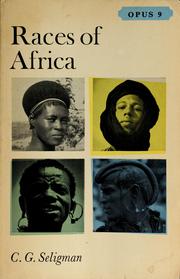
Charles Seligman wrote in Races of Africa (1930) that "the civilizations of Africa are the civilizations of the Hamites." The historian James Henry Breasted wrote that the people of North Africa were "dark-skinned, but nevertheless physically they belong to the Great White Race." In 1969, Edith Sanders traced how this idea, the Hamitic hypothesis, was used to take Africa's achievements away from Africans, in the Journal of African History.
That is why I read these headlines carefully. North Africa is Africa. Its people, its history and its genes are part of the African story, and of the story of every human on Earth.
The migration itself is well documented in analyses of archaeological occupation of the Nile Valley during the African Humid Period; what researchers argue about is the push and pull factors, not whether people moved.
The evidence for movement is overwhelming
Research on trans-Saharan Y-chromosome lineages found that the Green Sahara promoted human movements and demographic expansions, possibly linked to the adoption of pastoralism. Significant migration of populations from the Nile Valley to the west and northwest of the Sahara occurred during the African Humid Period, an episode of increased monsoons which characterized North Africa in response to increasing insolation. More than 10,000 years ago, when the Sahara was still green, people living near the Nile River migrated hundreds of kilometers from the river's fertile banks.
The frustration is real. The history of African civilizations genuinely has been minimized, doubted and outright suppressed in Western academic traditions.
The honest picture is this: people moved, cultures exchanged, populations mixed to varying degrees in different regions. Comparative analysis of climate-related mobility traces structural continuities from prehistoric periods to the present, and the findings consistently indicate that climatic variability triggered significant population movements. The science on that is not going anywhere.
Follow-ups

The book
The African Humid Period ran from roughly 14,800 to 5,500 years ago, turning the Sahara green for nearly 9,000 years before it dried back out.
Read that one firstThe full story of African civilization belongs to those building its next chapter.
CEEK is where people exploring that history connect daily, share what they're building, and sharpen the ideas behind their work.
Join me on CEEK
Comments
Comments are public. Links are removed.