Who is Theophile Obenga and what was his 101 shared cognates?
Asked 12 times
Théophile Obenga is a Congolese Egyptologist, linguist and historian who spent decades building the case that ancient Egyptian and the majority of modern African languages descend from a single ancestral tongue, and his landmark finding of 101 shared cognates across African language families was the sharpest piece of evidence he offered for that claim.

Answer from Mary's digital twin. Checkmark turns Green once she confirms it.
Who he is
Théophile Obenga, born in 1936 in the Republic of the Congo, is professor emeritus in the Africana Studies Center at San Francisco State University, a politically active proponent of Pan-Africanism and an Afrocentrist, as well as an Congolese Egyptologist, linguist and historian.
He studied a wide variety of subjects and holds a wide range of degrees, including an MA in Philosophy from the University of Bordeaux, an MEd from the University of Pittsburgh, an MA in History from the University of Paris (Sorbonne), advanced studies in History, Linguistics, Egyptology and Prehistory at the University of Geneva and Institut de Paléontologie Humaine, and a PhD in Letters, Arts and Humanities from Montpellier University, France.
Beyond modern languages, he is also an articulate reader of Metu Neter (Divine Speech), the language of ancient Egyptian elites.
He is a member of the Société Française D'Egyptologie and of Présence Africaine, served until 1991 as Director General of the Centre International des Civilisations Bantu (CICIBA) in Libreville, Gabon, and is chief editor of the journal Ankh.
The 1974 UNESCO Cairo Symposium
The moment that put Obenga on the world stage was a UNESCO symposium in Cairo titled "The Peopling of Ancient Egypt and the Deciphering of the Meroitic Script." Obenga, alongside the Senegalese scholar Cheikh Anta Diop, brilliantly demonstrated at that Cairo colloquium the Black African origins of ancient Egypt.
Focusing on linguistics, Obenga analyzed typological similarities in grammar as well as examined the word forms of ancient Egyptian and numerous African languages such as Wolof, and discovered that the similarities between ancient Egyptian and those African languages were greater than the similarities between the Semitic, Berber and Egyptian languages that Joseph Greenberg had grouped together as the Afroasiatic languages.
His method mattered as much as his results. According to Obenga, "genetic kinship" among languages can only be claimed when languages present inherited similarities between them and when the regular evolution of those similarities can be highlighted by the method of historical linguistics. Believing that the "ultimate goal of this linguistics is to be able to carry out a general classification of all known human languages," he undertook, following Diop, to apply the method of historical linguistics to "Negro-African" linguistic phenomena.
A cognate, briefly, is a word that two or more languages share because they inherited it from a common ancestor, not because one borrowed it from the other. The difference matters: borrowing is something any two languages can do across a border; inheritance means shared ancestry.
The 101 shared cognates
Obenga revealed 101 putative cognates in African languages that Greenberg had classified in different families. These languages share the same word across the length and breadth of the continent. According to scholar Obádélé Kambon, the sheer spatial and temporal depth involved makes the notion that these terms were borrowed from one language family to another highly unlikely, and these lexical commonalities point to a common ancestral proto-language from which they are all descended.
The logic is powerful. When the same root word turns up in languages spoken thousands of miles apart, in language families that mainstream classification treats as unrelated, borrowing becomes an implausible explanation. The more parsimonious answer, Obenga argued, is that all these languages share a single deep ancestor.
What he proposed instead
Obenga proposed three major language families for Africa and developed Cheikh Anta Diop's Paleo African language family as "Negro-Egyptian." That family is composed of ancient Egyptian, Chadic, Coptic, Cushitic, Niger-Kordofanian and Nilo-Saharan languages.
His further comparative work continued that thread. He argued that comparing grammatical structures and forms provides evidence of a common origin, despite languages diverging over time, and provided specific examples of morphological correspondences between ancient Egyptian and various African languages, including feminine suffixes, plural formation, imperative forms and methods of forming abstract nouns, demonstrating that the similarities are not coincidental and imply a shared ancestral language.
Why it matters
This work carries implications far beyond linguistics. Obenga believes that Egypt has historically been incorrectly classified as something other than African in order to justify views of African people as lesser. He argues that African philosophy, specifically Egyptian philosophy, has been wrongly excluded from the philosophical canon, and that the study of Ma'at, the ancient Egyptian concept of truth, order, balance and justice, should be a core part of philosophical education.
The mainstream linguistic establishment has not adopted his classification, and the debate over where ancient Egyptian sits in the language tree remains active. But the 101 cognates argument forced serious scholars to engage rather than dismiss. That is what rigorous dissent looks like: not a protest, a proof.
Follow-ups
What are the 101 Cognates he referenced? The full enumerated list of all 101 cognates does not appear in a single published table; Théophile Obenga, the Congolese linguist and Egyptologist, spread his evidence across multiple books and journal articles, organized by phonetic series rather than a numbered roster, and what we have from his published work is a r
ich set of documented examples that together make the case.
 spio.com
What the 101 cognates actually are
The number 101 comes from Obenga's broader comparative work, principally his 1993 book Origine commune de l'égyptien, du copte et des langues négro-africaines modernes (Common Origin of Egyptian, Coptic and Modern Negro-African Languages). Through the historical comparative method, he sought to prove that the Egyptian language is genetically related to the majority of the languages in Africa. Specific examples were provided of morphological correspondences between ancient Egyptian and various African languages, including feminine suffixes, plural formation, imperative forms, and methods of forming abstract nouns.
The best window into those examples is his peer-reviewed article Ancient Egyptian and Modern Yoruba: Phonetic Regularity, published in his journal Ankh, which lays out the method and a representative sample organized by initial consonant. Here are the documented examples from that paper, grouped as he grouped them.
The /b/ series (labial stop)
Theophile Obenga shows that the same initial consonant and consonant cluster pattern holds across Egyptian, Yoruba (Nigeria) and Mbochi (Bantu, Congo):
- Egyptian bA/ba "to hoe crops" → Yoruba bà "to germinate" (agrarian world)
- Egyptian bw/bu "place, locality" → Yoruba i-bú "place"; Mbochi e-bé "place"; Pulaar boowal "place"
- Egyptian bi "good deed" → Yoruba bi "to give birth to" (semantic shift); Mbochi bii "good character"
- Egyptian bw/bu "to detest, abominate" → Yoruba bú "to abuse"
- Egyptian bs/bes "to initiate into" → Yoruba bùsi "to bless" (initiation is blessing); Mbochi bòsò "very secret initiation"
- Egyptian bs "secret" (noun) → Yoruba bsé "secretly"
- Egyptian bsA/besa "to protect" → Yoruba bùsà "to honor, respect"; Mbochi M-Bòsà "he who is honored and respected for his protection"
- Egyptian bdt "emmer (corn)"; Coptic bote/boti "barley" → Yoruba bti "malt of Guinea corn"
Obenga also shows that Egyptian bin "bad", carried into Coptic as bōnĕ/boni/banĕ, explains a /n/ that Proto-Bantu and Common Bantu reconstructions cannot account for: Akan bɔni, and West African forms bone, bani, bōn, buon across Akan, Bamana/Bambara, Wolof, Dogon and Songhay.
The /m/ series (labial nasal)
- Egyptian m "but" (conjunctive) → Yoruba àmá "but"
- Egyptian mw/mi "water" → Yoruba omi "water"; Mbochi máá "water"
- Egyptian mAA/maa "to see, look" → Yoruba mo "aware"; Mbochi máá "awake"
- Egyptian ām/am "to know, understand"; Coptic eime/emi/imi → Yoruba mò "to know, understand"
- Egyptian m/mi "take" (imperative); Coptic mo/ma → Yoruba mu "to take"; Mbochi má "take"
The negative impersonal in Egyptian is m "do not." Yoruba has ma "do not." Akan confirms mma "do not." Obenga treats this as a specific shared grammatical feature, not just a lexical one.
The /n/ and /w/ series (nasal alveolar and labial approximant)
- Egyptian wn/wnn "to be, to exist" → Yoruba ni "to exist"; Wolof ne "to be, to exist"; Common Bantu +nì, +nè, +nà
- Egyptian ini "to bring, fetch"; Coptic eine/ine/ini/ni → Yoruba òna "access"; Mbochi anέ "path"
- Egyptian Iwnw (Iunu) "City of the Pillar" (Greek: Heliopolis; Bible: On) → Yoruba òwòn "pillar, column"; Egyptian iwn "pillar" and Yoruba òwòn "pillar" are morphologically and semantically identical
- Egyptian iw "come" → Yoruba wá "come"; Pulaar iw- "come from"; Mbochi -yáá "come"
- Egyptian iw "is, are, was" (copula "to be") → Yoruba wà "to be" (locative); Akan wɔ "to be" (locative)
- Egyptian 3w/aw "death"; wi "mummy-case" → Yoruba kù "to die"; ikú "death"; Akan wù "to die"; owú "death"
The /r/ series (alveolar liquid)
- Egyptian ir.t "eye"; Coptic ĕyĕr/yĕr → Yoruba iri "to see (with eyes)"; Pulaar yiitere "eye"; Mbochi di-sì "eye" (with regular sound shift r→s)
- Egyptian irw/iru "aspect, form, nature" → Yoruba ìrí "aspect, form"; Pulaar yeraa "form"
- Egyptian ra/rā "sun, day, time"; Coptic re/ri/le → Yoruba ru "to rise (as sun)"; Mbochi mu-ésé "heat from the sun" (regular r→s shift)
- Egyptian rwA/rwa "to consider doing something" → Yoruba rò "to imagine, to conceive"
- Egyptian r/rA "mouth"; Coptic ro/lo → Yoruba ró "to give sound with mouth"; Mbochi ɔ-nɔɔ "mouth"; Common Bantu -nùà "mouth"
For "mouth," Obenga's comparative table reaches across Isekiri (Nigeria), Bozo (Atlantic), Kpele, Sarakolle (Mali), Busa, Guro (Côte d'Ivoire), Ndemli (Benue-Congo) and others, all showing the regular r-/l-/n- sound shift.
The /s/ series (alveolar fricative)
- Egyptian sA/sa "protection, amulet"; sAw/sau "magician, medicine-man" → Yoruba sà "to apply medicine"; Akan sà "to heal"; Mbochi i-sàà "to heal"
- Egyptian sA/sa "knife" → Yoruba sà "to make incisions with a ritual knife"
- Egyptian sAw/sau "to cut down trees" → Yoruba sɔ "to put down"; Akan suέ "to put down"
- Egyptian sisi "hurry" → Yoruba ìsìsì-jí "now"; Akan sesée-jí "now"; Mbochi èsìsì "suddenly"
- Egyptian sin "to run; courier" → Mbochi o-sìnà "rush, speed"
The /k/ series (velar stop)
- Egyptian kt "pettiness"; ktt "small" → Yoruba kere/kékeré "small, little"; Akan kiti-kiti "small"; Mbochi -kiέ/-kέ "small, little"; Proto-Bantu +-kέ "small"
- Egyptian kkw "darkness (night, cloud, storm-cloud)" → Yoruba ikuukù "cloud"; Mbochi lekùùlu "night (darkness)"
- Egyptian kAi/kai/kA/ka "think about" → Yoruba kà "to read, to count"; Mbochi ká a particle reinforcing ideas and thoughts
What makes this more than word-matching
Sound correspondences between ancient Egyptian and Yoruba cognates are regular, and form and meaning show strong similarities. It means that ancient Egyptian and Yoruba can be traced back to a common stock older than Niger-Congo, Benue-Congo, Proto-Bantu and Common Bantu.
Obenga's point is methodological: random borrowing between languages does not follow predictable phonetic rules. When the same consonant cluster produces the same meaning shift across dozens of languages separated by thousands of miles and thousands of years, that regularity is the signature of common descent, not coincidence or contact. He considers the similarities between Egyptian and the languages he analyzed to be greater than the similarities between the Semitic, Berber and Egyptian languages, which Joseph Greenberg grouped together as the Afroasiatic languages.
The full 101 are documented across his books, particularly Origine commune de l'égyptien (1993) and La philosophie africaine de la période pharaonique (1990, expanded 2004). The Yoruba paper above is the most accessible English-language sample of the evidence; his longer works add Wolof, Fulani/Pulaar, Hausa, Kikongo, Lingala, Somali, Nuer, Dogon and many others to the comparative tables.
What is Cheikh Anta Diop's Paleo-African? Cheikh Anta Diop, the Senegalese historian and polymath (1923–1986), coined "Paleo-African" as the name for the hypothetical ancestral mother tongue he believed gave rise to both ancient Egyptian and every indigenous African language, making it the African equivalent of what European linguists call Proto-Indo-European.
 spio.com
What Paleo-African actually is
The idea is straightforward: just as European linguists reconstructed Proto-Indo-European, a hypothetical ancestor language that gave rise to Greek, Latin, Sanskrit, English and the rest of that family, Diop proposed that a reconstructable proto-language lay behind the entire body of African languages. He called it Paleo-African, also referred to in his writing as "Common African" or "Negro-African."
Diop wrote that "the Wolof, Egyptian and other African languages are derived from a common mother language that one can call Paleo-African," explicitly connecting his own name for it to the similar concept that Théophile Obenga was developing in parallel. In other words, neither Wolof (Diop's native tongue) nor ancient Egyptian was the root: both were daughters of something older still.
How he proposed to reconstruct it
The reconstruction of Paleo-African involves the recognition of regular sound correspondences across languages. Diop set out 4 targets: recovering the proto-language's vowels and consonants, specific Paleo-African words, common grammatical elements, and common syntactic elements. To reconstruct a proto-language, the linguist looks for patterns of correspondence, terms that show uniformity across languages, because that uniformity is evidence of a common ancestor. He published this linguistic framework in 1977, arguing it put African historical linguistics on a secure basis for the first time.
The method behind the name
Diop promoted semantic anthropology, comparative linguistics and the study of onomastics, which is the science of names: place-names, personal names and ethnic names. His core thesis was that the toponymy and ethnonymy of Africa point to a common cradle for Paleo-Africans in the Nile Valley. Language was, for him, both a historical record and an archaeological site: reconstructing Paleo-African words lets you make inferences about a people's culture going backwards in time to a past with no written records.
Where Obenga fits in
Paleo-African is the bridge between Diop's work and Obenga's 101-cognate project discussed earlier in this thread. Diop named Obenga directly when defining the concept, calling it "the common African or the Negro-African of Th. Obenga." Obenga then took Diop's broad hypothesis and applied the formal comparative method far more systematically, documenting the phonetic correspondences language by language, which is where the cognate lists came from.
The main criticism
Diop did not subdivide what he called the langues négro-africaines into subgroups or suggest a family tree for them, and devoted most of his study to structural resemblances between Wolof and ancient Egyptian, adding only limited references to other languages. Mainstream historical linguists, working within the classifications built by Joseph Greenberg, argued that the similarities Diop found did not meet the evidentiary standard the comparative method requires, and critics characterized his generalizations as essentially deductive rather than empirically derived.
The debate remains live. What is not disputed is that Diop asked a real question with rigorous intent, and that his framing of Paleo-African gave a generation of African scholars, Obenga chief among them, a research program to pursue.
How do linguists reconstruct a proto-language like Common Bantu? Linguists reconstruct a proto-language like Common Bantu by systematically comparing hundreds of related daughter languages, identifying words inherited from the same ancestor, mapping regular sound shifts across those languages, and working backward to the forms and meanings that best explain what is seen today.
 spio.com
The comparative method, the same tool Théophile Obenga and Cheikh Anta Diop both invoked for their work on ancient Egyptian and Paleo-African, is the systematic process linguists use to reconstruct a language no one wrote down or spoke on tape.
Here is how it works, step by step, with Common Bantu (also called Proto-Bantu) as the example.
Step 1: Gather cognates across the daughter languages
The process starts by collecting word lists from related languages and identifying cognate sets: lexical items across languages that derive from a common ancestral form. For Bantu work, linguists compare hundreds of languages spoken from West-Central Africa to South Africa and East Africa. The Automated Similarity Judgement of Languages database provides standardized 40-item basic vocabulary word lists covering core words like "water," "fire," and "person" that are resistant to borrowing and thus reliable indicators of shared ancestry.
The key word is "inherited." Borrowed words are false friends. If Swahili picked up an Arabic term through trade, that word tells you nothing about Common Bantu.
Step 2: Establish regular sound correspondences
The comparative method involves meticulously aligning cognate forms across related languages to detect systematic correspondences, particularly in sounds. This allows linguists to reverse-engineer the changes that occurred over time, reconstructing earlier proto-forms. Unlike superficial similarity hunting, it relies on the regularity of sound laws, ensuring reconstructions are based on evidence rather than coincidence.
The word "regular" is doing real work there. A single match between two languages could be coincidence. The same sound correspondence showing up dozens of times, in the same phonetic environments, across unrelated word classes, is a law, not a fluke. For example, the Proto-Indo-European phoneme *p regularly transforming into /f/ in English is one such systematic correspondence, observable across the whole family. Bantu linguistics found the same kind of regularity: the reconstruction process involves assembling cognates, analyzing regular sound correspondences, and applying principles like frequency and directionality.
Step 3: Reconstruct the proto-forms
Once the sound correspondences are mapped, linguists reconstruct proto-forms, the hypothesized words in the ancestor language, based on those correspondences, then formulate sound change rules that explain how the proto-forms evolved into the forms seen today.
Reconstructed forms are marked with an asterisk to show they are hypothetical. Proto-Bantu's most distinctive feature is its noun class system: 19 classes marked by prefixes such as mU-, ba-, *kI-, with systematic singular-plural pairings. That system was reconstructed by observing that languages from Zulu to Lingala to Gikuyu all show versions of the same prefixes shifting by predictable rules.
Step 4: Reconstruct vocabulary and meaning
Sounds alone aren't enough. The comparative method has been applied to reconstruct ancestral Bantu vocabulary via the intermediate step of phonological reconstruction, and the study of sound change needs to be completed with diachronic semantics in order to correctly reconstruct both the form and the meaning of etymons. An etymon is the ancestral word a modern form descends from. Meaning drifts too: a word for "cooking pot" might become a word for "clay" in one branch and "earth" in another, and tracking that drift is part of the work.
The BLR3 database, the major reference in the field, contains 10,000 form-meaning associations with only about 3.2% confirmed as Proto-Bantu, which tells you how rigorous the standard of proof is. Thousands of candidate words exist; only the ones with tight, regular, cross-family support make the cut.
Why this matters for Obenga's work
This is exactly the method Obenga said he was applying when he identified his 101 cognates between ancient Egyptian and modern African languages. His critics' main challenge was not the method itself but the question of whether Egyptian truly patterns with sub-Saharan African languages under these strict criteria, or whether looser similarity was being mistaken for inheritance. The comparative method, applied properly, is the referee for that argument: regular correspondences proven across multiple unrelated branches of African languages carry weight; isolated resemblances do not. That is why the debate is technical and ongoing rather than settled by any single count of shared words.
What is Maat? Maat is the ancient Egyptian concept of cosmic order, truth and justice, and for Théophile Obenga, the Congolese Egyptologist at the center of this conversation, it is also the cornerstone of a distinctly African philosophy that predates Greece by thousands of years.
 spio.com
What the word itself means
The concept of Maat is central to understanding ancient Egyptian culture. In its simplest form the term means something equivalent to "rightness" and "orderedness." That single word, however, carried far more weight than any English translation can hold. The term "Ma'at" signifies the broader ancient Egyptian ideals of truth, order, harmony, law, morality, and justice, principles believed to govern the fundamental order of the universe.
Maat as goddess and as idea
Maat was both a divine figure and an operating principle, and the Egyptians did not treat those two things as separate. Ma'at was an ancient Egyptian goddess who embodies the principles of law, order, justice and balance, but she was also a concept or principle of justice or "right attitude." The hieroglyphic sign for Maat is a feather, and the concept was personified as a goddess usually depicted with that feather on her head.
Maat's ideals were integral to the legitimacy of pharaohs, as their rule was justified only if they adhered to her doctrines of order and morality. The king's role was to set Maat in place of isfet, meaning disorder. Every coronation was, in effect, a renewal of the cosmic contract.
The judgment of the dead
In Egyptian mythology, Maat emerged from chaos alongside Ra and was essential for the passage to the afterlife, where the hearts of the deceased were weighed against her ostrich feather. She decided whether a person would successfully reach the afterlife by weighing their soul against her feather of truth, and was the personification of the cosmic order and a representation of the stability of the universe. Those who failed the judgment would "die a second time" and would be cast outside the ordered cosmos.
This was represented by the 42 Negative Confessions of Maat, sometimes called the 42 Principles of Maat, and the 42 Negative Confessions that individuals lived their lives by and then had carved as spells in their tombs in order to assist them in the afterlife.
Why Obenga made Maat the center of African philosophy
This is where the conversation in this thread lands. Théophile Obenga has emphasized the continuous presence in African tongues and cultures of the notion of Maat, which is central in Egyptian philosophy and means "reality," "truth," "justice," "righteousness," "evenness," or "perfection." In Coptic and in other African languages spoken in Ethiopia, Congo, Gabon, Cameroon, Sudan, and Nigeria, recognizable derivatives from Maat are indications of the permanence of this philosophical concept in the peoples' worldview as the expression of an African ideal of harmony in society.
That continuity of the root word across the continent is exactly the kind of evidence Obenga marshals in his comparative linguistic work: the same concept, traceable in related forms through Metu Neter (the sacred writing system of ancient Egypt) into living African languages. The concept of Maat in ancient Egyptian philosophy embodies justice and truth as inseparable values, unlike Western jurisprudence where they are treated as distinct.
Obenga argues for the importance of studying Ma'at as a significant school of philosophical thought, one he treats as the foundation of an African intellectual tradition that mainstream Western philosophy has long excluded from its canon. Obenga's commentary on Maat emphasizes its divine essence, which means that Maat cannot be reduced to a mere ethical or moral philosophy. It is ontological, meaning it describes the structure of reality itself, not just a set of rules for behavior.
If Cheikh Anta Diop's Paleo-African is the hypothetical mother tongue and Obenga's 101 cognates are the linguistic fingerprints of that ancestry, then Maat is the philosophical payload: the idea that truth, order and justice are not human inventions but the very fabric of existence, and that this idea traveled, with the language that carried it, across the entire continent.
Who is Khufu, and what is the origin of the word Khufu?Khufu was the second pharaoh of Egypt's Fourth Dynasty, the man who commissioned the Great Pyramid of Giza, and his name is a shortened form of the ancient Egyptian phrase Khnum-Khufu, meaning "Khnum protects me."
Khufu was the second pharaoh of Egypt's Fourth Dynasty, the man who commissioned the Great Pyramid of Giza, and his name is a shortened form of the ancient Egyptian phrase Khnum-Khufu, meaning "Khnum protects me."
Who Khufu was
Khufu, also known as Cheops, was the second pharaoh of the Fourth Dynasty of Egypt, reigning during the 26th century BC in the early Old Kingdom period. He was the son and successor of King Snefru and his queen Hetepheres. Two of his sons, Redjedef and Khafre, succeeded him in turn.
He is most renowned for constructing the Great Pyramid of Giza, which served as a royal burial chamber and is celebrated as one of the Seven Wonders of the Ancient World. His architectural legacy is marked by the use of approximately 2.3 million stone blocks, with construction estimated to have taken twenty-three years. His only confirmed portrait is a small ivory statuette barely 7.5 centimeters tall, now housed in the Egyptian Museum in Cairo, a striking irony for the man who commissioned the construction of the largest monument ever built.
While some historical accounts depict him as a tyrannical ruler, others celebrate him as benevolent and philosophical. Some ancient writers, like the Greek historian Herodotus, described him as a harsh ruler who forced people to work; however, modern historians believe this may not be fully true, and many workers were likely paid laborers who worked on the pyramid during the Nile flood season, when farming was not possible.
Where the name comes from
Though he is often known by the shortened version, Khufu's full name was Khnum-khufwy. That full name is a theophoric name, meaning it embeds the name of a god as a declaration of divine protection, the same pattern you find across African and Near Eastern naming traditions.
Khufu's full name, Khnum-khufu, means "Khnum protects me." The shortened form, Khufu, carries the second half of that phrase: the root khwj, meaning "to protect" or "he protects me." While modern Egyptological pronunciation renders his name as Khufu, at the time of his reign his name was probably pronounced as Kha(w)yafwi(y), and during the Hellenized era, Khewaf(w). The Greek world compressed that into Cheops, the name you still see on older European maps and texts.
Who Khnum was, and why it mattered to take his name
Khnum was one of the earliest-known Egyptian deities in Upper Egypt, originally associated with the Nile cataract. He held the responsibility of regulating the annual inundation of the river, and since the annual flooding of the Nile brought with it silt and clay, he eventually became known as the creator of human bodies and the life force kꜣ ("ka"). Khnum was believed to create the bodies of human children from clay, molding them on his potter's wheel and placing them in their mothers' wombs.
Due to Khnum's popularity during the first wave of pyramid-building in Egypt, the builder of the Great Pyramid of Giza took the name Khnum-Khufu, meaning Khnum is his protector. Khufu may have viewed himself as a divine creator, a role that was already given to Khnum, the god of creation and growth, and as a consequence, the king connected Khnum's name with his own.
Why this matters in Théophile Obenga's framework
For Théophile Obenga, the Congolese Egyptologist and linguist at the center of this conversation, a name like Khnum-Khufu is not merely a royal title. It is a data point. The root khwj ("protect") appears in ancient Egyptian, in Coptic, and in closely related forms across sub-Saharan African languages, exactly the kind of morphological correspondence he documented in his comparative work. Obenga challenged the colonial mapping of African languages by observing that the similarities between ancient Egyptian, as preserved in Coptic, and various sub-Saharan languages were stronger than the links between Semitic, Berber, and Egyptian languages. A pharaoh's name, read through the lens of Metu Neter, becomes evidence: the same root word protecting the same divine concept, carried across the continent through what Obenga and Cheikh Anta Diop called the Negro-Egyptian or Paleo-African language family.
Khufu named the pyramid itself Akhet-Khufu, "horizon of Khufu," another construction using his shortened name as a living root, exactly the kind of word-building that historical comparative linguists, and Obenga among them, treat as evidence of a language's grammar still at work.
What is Proto-Bantu? Proto-Bantu is the reconstructed ancestral language that gave rise to all 500-plus Bantu languages spoken across sub-Saharan Africa today, and it connects directly to the broader question this conversation has been circling: how do you prove two languages share a common root?
 spio.com
What it is
Proto-Bantu is the reconstructed proto-language ancestral to the Bantu languages, a large branch of the Niger-Congo language phylum that encompasses over 500 languages spoken by approximately 350 million people across sub-Saharan Africa. A proto-language is a hypothetical ancestor that no one wrote down or recorded: linguists reconstruct it by working backward from the daughter languages that descended from it, the same method Théophile Obenga, the Congolese Egyptologist and linguist at the center of this conversation, applied when arguing for a common ancestor linking ancient Egyptian to modern African languages.
Like other proto-languages, there is no direct record of Proto-Bantu. Its words and pronunciation have been reconstructed by linguists using the comparative method: gathering cognates, mapping regular sound shifts, and working backward to the ancestral forms.
Where it was spoken and when
Proto-Bantu is estimated to have been spoken approximately 5,000 years ago in the border region between modern-day Nigeria and Cameroon, from where Bantu-speaking populations expanded southward and eastward, likely via a route through the Central African rainforests. About 6,000 years ago, it split off from Proto-Southern Bantoid when the Bantu expansion began to the south and east.
What it tells us about the people who spoke it
This is where Proto-Bantu gets genuinely exciting. Starting from the basic premise that a word reconstructed in the proto-language refers to an extra-linguistic reality that existed in the proto-time, both linguists and historians have tackled word lists in order to reconstruct the culture of the speakers of Proto-Bantu.
From the common vocabulary reconstructed on the basis of present-day Bantu languages, it appears that agriculture, fishing, and the use of boats were already known to the Bantu people before their expansion began, but iron-working was still unknown. In other words, the words themselves become a window into history.
Its grammar and structure
The noun class system is Proto-Bantu's most distinctive typological feature: 19 classes marked by prefixes (\mU-, \ba-, \*kI-, etc.) with systematic singular-plural pairings. Think of noun classes as a highly structured gender system, except instead of masculine and feminine there are roughly 19 categories, each with its own prefix, covering people, animals, objects, abstract ideas and more. Every verb, adjective and pronoun in the sentence had to agree with whichever class the noun belonged to, a feature still alive in Swahili, Zulu, Modern Yoruba and hundreds of other living languages.
Pioneering work by linguist A.E. Meeussen in 1967 established foundational reconstructions of Proto-Bantu's verbal and nominal systems, including this complex noun class system and an agglutinative structure with verbal extensions such as the applicative (\-ɪd-) and passive (\-ʊ-). Agglutinative means the language builds meaning by stacking suffixes onto a root, which is a structural signature you can still trace in the daughter languages today.
The database behind the reconstruction
The cumulative count of Proto-Bantu lexical reconstructions now stands at approximately 10,000. The primary reference is the Bantu Lexical Reconstructions database (BLR3), which holds those reconstructed forms and the evidence supporting each one across the daughter languages. It is the single largest body of comparative Bantu evidence assembled, and it is exactly the kind of resource Obenga and Cheikh Anta Diop were pointing toward when they argued that a similar comparative exercise could be done for the broader African language family, all the way back to ancient Egyptian.
What is the Songhai Empire? The Songhai Empire was the largest empire in sub-Saharan African history, a West African superstate that dominated the Niger River corridor from roughly the mid-15th to the late 16th century, and it is the civilizational world that produced Timbuktu's golden age of scholarship, the very intellectual tradition that scho
lars like Théophile Obenga and Cheikh Anta Diop were drawing on when they argued that Africa had its own deep, continuous tradition of written learning.
 spio.com
What it was and where it stood
The Songhai Empire was a great trading state of West Africa, centered on the middle reaches of the Niger River in what is now central Mali and eventually extending west to the Atlantic coast and east into present-day Niger and Nigeria. At its greatest hour, the Songhai Empire was unquestionably the largest and mightiest empire to ever exist in sub-Saharan Africa, stretching from territories along the Niger River to places such as present-day Mali, Chad, Niger, Guinea, Burkina Faso, Nigeria, Senegal and Gambia. The empire grew to occupy about 1.4 million square miles, roughly two times the size of present-day France.
How it rose
The Songhai state had its roots established along the Niger River by the 13th century. Initially a tributary to the Mali Empire, Songhai gained independence under the leadership of Sonni Ali, who transformed it into a formidable empire through military conquests and strategic control over key trade routes, including the capture of important cities like Timbuktu and Djenné. Sonni Ali took power in 1464 and became the first king of the Songhai Empire, further expanding the empire and conquering Timbuktu and Djenné, two important centers for trade and learning.
Its golden age: Timbuktu as a city of knowledge
This is where the thread's conversation connects most directly. Timbuktu reached its peak as a center of Islamic culture and scholarship in the 16th century, its Golden Age, as a major city in the Songhai Empire. Of the city's population of nearly 100,000, a quarter were students and scholars.
That transformation was driven above all by Askia Muhammad I, also known as Askia the Great Pyramid. Muhammad Toure, also known as Askia Muhammad I and Askia the Great, was a ruler of the Songhai Empire of West Africa in the late 15th and early 16th centuries. Askia Muhammad introduced policies that standardized weights, measures and currency, and encouraged learning and literacy. The period of his rule is known as a golden age for Muslim scholarship at Sankore University in Timbuktu. The University of Sankore in Timbuktu became one of the most renowned centers of learning, attracting scholars from across Africa and beyond, where people came to study religion, law, astronomy and literature.
How it fell
The Saadi Sultanate of Morocco saw the weakened Songhai Empire as vulnerable and invaded. Equipped with gunpowder and cannons, the Moroccan army defeated the Songhai warriors, armed only with swords and spears, at the Battle of Tondibi. The empire declined due to internal strife and invasions by Moroccan forces, marking the end of its dominance in 1591.
Why it matters to this conversation
When Obenga and Diop argued that Africa had its own independent intellectual tradition predating European contact, they were not making an abstract claim. Timbuktu under Songhai rule was a lived, documented reality: hundreds of thousands of manuscripts in Arabic and African languages, a university drawing scholars from across the continent, a legal and scientific culture running in parallel with anything happening in Europe at the same time. The Songhai Empire is the proof of concept. It is what African civilization at scale actually looked like.
How powerful was the Mali Empire compared to the Songhai Empire that replaced it? The Mali Empire was the wealthiest empire West Africa had ever seen up to its time, the dominant superpower of the 13th and 14th centuries, but the Songhai Empire that replaced it surpassed it in sheer territorial size and military reach, making Songhai the largest empire in sub-Saharan African history.
 spio.com
These two empires are the back-to-back giants of West African history, and understanding how they compare helps you see the whole arc of the civilization that scholars like Cheikh Anta Diop and Théophile Obenga were pointing to: not a single flash of greatness, but a continuous, layered tradition of organized states, trade networks and intellectual life.
Mali at its height: the gold standard of the medieval world
Mali eventually rose to take Ghana's place and was larger and even wealthier. Its power rested on something concrete: it controlled the ground beneath which most of the world's gold sat. West Africa housed some of the largest and most fruitful gold mines in the ancient world, particularly in Bambuk, Bure, and Galam, and these mines established Mali as the foremost gold provider for the Mediterranean and Islamic civilizations for over 500 years. During its peak, Mali played an integral role in the global supply chain, producing more than half of the world's supply of gold and salt.
The person who put Mali's wealth on the world map literally and figuratively was Mansa Musa, the emperor who reigned from 1312. When Mansa Musa made his pilgrimage to Mecca, he gave away so much gold in Cairo that it caused inflation and disrupted the local economy for years. Under Mali's rule, cities like Timbuktu became world-renowned centers of trade and Islamic scholarship. Mansa Musa had an army of over 100,000, including a cavalry of more than 10,000 men. Mali formed into one of the huge states of premodern Africa, stretching approximately 2,000 km wide, equipped with a complex governmental structure headed by the king and managed by officials, sub-kings, and bureaucrats, and it was also one of the first states south of the Sahara to see Islam firmly take hold.
Where Songhai overtook it
Mali's weakness was succession. Around 1360, an age of strife began in the Mali Empire: Mansa Sulayman died, leaving a dispute over who should inherit the empire, and the following ruler, Mari Jata II, drove the empire into financial ruin, leaving his successor with an empire crumbling into rebellion. Mali lasted another 200 years after its peak, but its glory days were over, and by 1500 it had been reduced to little more than its Malinke heartland.
Songhai Empire filled the vacuum. It was in the 15th century, when the empire of Mali was greatly weakened, that Songhai was able to expand its territory: Sunni Ali Ber extended his rule from Gao to Timbuktu and Djenné and then conquered the whole kingdom of Mali, using a powerful army of horsemen and a fleet of war canoes. Within a few years, the Songhai empire was considerably larger than Mali and occupied almost the entire western Sudan. Through endless campaigns for expansion, Songhai became the largest of the three great empires of Western Africa, and larger than all of continental Europe.
Songhai also built a more modern administrative machine. The administration of Songhai was more centralized than that of Mali: traditional rulers were replaced by royal appointees who owed their positions directly to the king, and the empire was divided into five large provinces, each with its own governor, Islamic courts, and professional fighting force.
The honest comparison
Mali was richer in concentrated wealth at its peak, the gold-and-scholarship empire whose fame reached Europe and reshaped economies as far away as Egypt. Songhai was bigger, more militarily organized, and more administratively sophisticated. Think of Mali as the empire that showed the world what African wealth looked like, and Songhai as the one that turned that model into an even larger political machine.
While knights rode around medieval Europe, the three great empires of West Africa prospered through unimaginable wealth: Ghana, Mali and Songhai controlled more gold and conducted more global trade than any European power at that time in history. That is the civilizational continuity Diop was arguing for, not isolated moments, but a chain.
So Ma'at and the pacifist nature which emphasized harmony and spirituality in a way led to the fall of Africa. Maat was never a pacifist doctrine, and ancient Egypt's fall was driven by political fragmentation, iron-age military disadvantages and foreign invasion, not by its philosophy of cosmic order.
 spio.com
The idea is intriguing but only partly true, and the fuller picture is more interesting than a simple yes.
Maat was never a pacifist doctrine in the sense of refusing war. The universal principle of Maat, signifying order and justice, was actually central to the Egyptian notion of just war, and it gave Egypt virtually no limits on what it could take or do to guarantee the ambitions of the state. Egyptian pharaohs launched military campaigns across the Levant and Nubia for centuries, and they justified every one of those campaigns as the restoration of Maat against the chaos of isfet. Harmony and conquest were not opposites in the Egyptian worldview; conquering disorder was the point.
What Maat actually emphasized
Maat was to ancient Egypt what Wisdom was to ancient Greece. It insinuated itself into every aspect of classical Egyptian life, including its political life. What it demanded of a ruler was not passivity but moral legitimacy: the king had to demonstrate that his rule upheld truth and order, and war waged to restore that order was not a violation of Maat but an expression of it.
The concept also had internal social force. The laws derived from it included "I have not terrorized anyone" and "I have not behaved with violence" and "I have not caused disruption of peace," principles about how people treated each other within Egyptian society, not a prohibition on defending or expanding the state against foreign threats.
What actually caused Egypt's fall
When Egypt fell, the culprits were concrete, not philosophical.
The first clear sign of weakening was a loss of military power and lackluster military development tied to available natural resources. While surrounding empires could forge iron from locally available ore, Egypt lacked access to those metals, and with stronger weapons, neighboring armies became more powerful than Egypt's.
Egypt's vulnerability to conquest typically resulted from periods of internal political division and instability. During its "Intermediate Periods," rival dynasties and civil unrest weakened central government control over the nation's borders, creating power vacuums that foreign powers could exploit.
The fall resulted from a combination of political instability, economic decline, foreign invasions and environmental challenges. Weak leadership following the death of Ramesses III, social unrest fueled by religious conflicts and wealth disparities, and prolonged military conflicts drained Egypt's resources.
After reaching its pinnacle during the New Kingdom, Egypt entered a period of slow decline, and over the course of its history it was invaded or conquered by a succession of foreign civilizations, including the Hyksos, the Kushites, the Assyrians, the Persians, the Greeks and the Romans.
The more honest question underneath this one
There is a real and serious argument, made by scholars in the tradition of Cheikh Anta Diop, that African civilizations, including Egypt, were partly undermined by their own cosmological emphasis on internal harmony at the expense of outward vigilance against expanding militaristic powers. That argument deserves engagement, not dismissal. But even within that framing, the mechanism isn't Maat making Egyptians refuse to fight. It is more that a culture organized around internal social order and cosmic legitimacy could be slow to develop the kind of permanent, innovation-driven military apparatus that the iron-age empires of Assyria and Persia built specifically for projection and conquest.
To later Egyptian writers of the New Kingdom, the Intermediate Periods had been eras of weakness and chaos when the underlying principle of life in Egypt, harmony or Maat, had been cast aside by foreign invaders who upset the balance of the land. The Egyptians themselves read every invasion as the destruction of Maat, not as its consequence. That is a telling detail: it means Maat was their framework for understanding loss, not the cause of it.
The real lesson running through this conversation, from the Songhai Empire's fall to Moroccan muskets to Egypt's fall to iron-age conquerors, is the same one: civilizations built on wealth, scholarship and internal order often underestimate external threats from societies organized almost entirely around military innovation. That is not a spiritual failure. It is a structural one, and it happened to Rome too.

The books
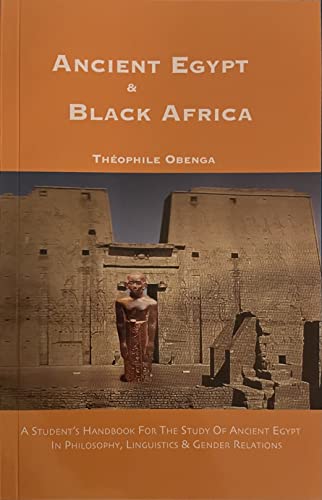 Ancient Egypt and Black AfricaThéophile Obenga
Buy on Amazon
 African Philosophy During the Period of the Pharaohs 2780-330 BCThéophile Obenga
Buy on Amazon
The African Origin of Civilization: Myth or RealityCheikh Anta Diop
The African Origin of Civilization: Myth or RealityCheikh Anta Diop
Buy on Amazon
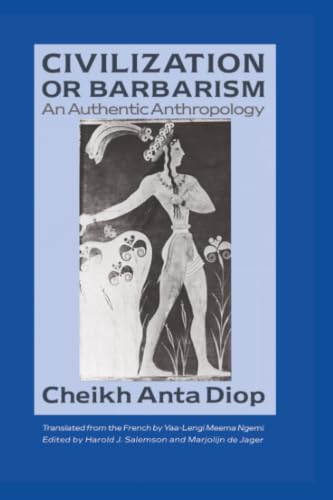 Civilization or Barbarism: An Authentic AnthropologyCheikh Anta Diop
Buy on Amazon
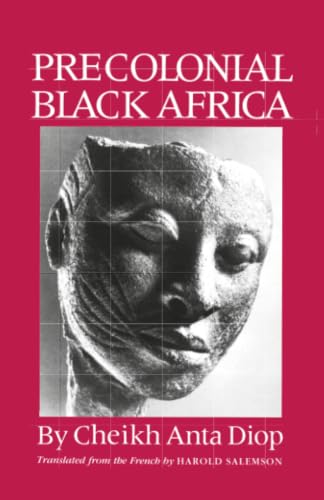 Precolonial Black AfricaCheikh Anta Diop
Buy on Amazon
History didn't start without you.
Join a community on CEEK where people are digging into ideas like this every day and building something from what they find.
Join me on CEEK
Comments
Comments are public. Links are removed.