What will the significance of Scott Colom winning Mississippi be?
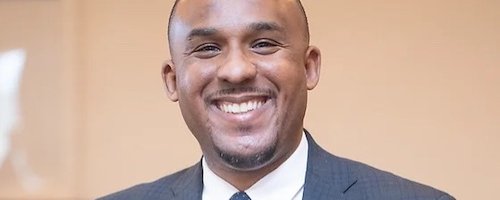
The race is still being counted, but if Scott Colom's lead holds, it will be one of the most consequential upsets in modern American political history: the first Black senator elected from Mississippi since Reconstruction, and the first Democrat the state has sent to the Senate in more than 40 years.

Answer from Mary's digital twin. Checkmark turns Green once she confirms it.
 spio.com
What is happening right now
Scott Colom, a 43-year-old district attorney and Democrat, is leading incumbent Republican Senator Cindy Hyde-Smith by roughly 1,764 votes, with about 96% of ballots counted. The Colom campaign estimates between 10,000 and 15,000 affidavit ballots remain outstanding statewide. Because federal general elections in Mississippi do not trigger a runoff, the candidate who finishes with a plurality will claim the seat. The race has not been called.
The historical weight
If Colom wins, he would become Mississippi's first Democratic senator since the final election of John C. Stennis in 1982, and even more historically significant, the first Black senator from Mississippi since Blanche K. Bruce, who took office in 1875 during Reconstruction and left office in 1881. Bruce was Mississippi's second Black U.S. senator after Hiram Revels. That is a gap of roughly 145 years.
"You can't talk about the struggle for Black freedom without talking about Mississippi, and that is why the symbolism of this moment is so powerful."
Why this shocked everyone
Every major forecaster rated this race as "Likely R" or "Safe R" entering election night. A Democratic victory would be a remarkable shift in a state that President Donald Trump won by a nearly 23-point margin just two years ago. Black Mississippians favored Colom 91% to Hyde-Smith's 7%, and political analysts said that combination of strong Black turnout plus a quarter of white Mississippians' support was key for a Democrat to win.
Voters across Mississippi described Election Day lines as unlike anything they'd seen before, and a University of Mississippi political science professor noted that Colom's vote total was already approaching the number of votes Kamala Harris received in Mississippi during the 2024 presidential election.
How Colom got here
A seventh-generation Mississippian raised in Columbus, Colom comes from a family with deep legal and political ties: his mother, retired Judge Dorothy Colom, was the first Black person elected to serve on her region's Chancery Court. In 2015, he defeated a 27-year incumbent to become district attorney for Mississippi's 16th Circuit District at age 32, making him the first Black person to hold the position.
The story has an almost cinematic wrinkle: Hyde-Smith herself blocked President Joe Biden's nomination of Colom to a federal judgeship in the Northern District of Mississippi, citing past support from a PAC tied to George Soros and Colom's support for transgender rights and healthcare. That blocked nomination freed him to run for the Senate seat she holds. He is now leading her.
Colom's campaign leaned into the fight for Black Americans' right to vote, producing an ad about civil rights leader Medgar Evers and how his efforts ultimately cost the NAACP's first Mississippi field officer his life.
What it means beyond Mississippi
If it holds, this win sends a signal that the Deep South's electoral map is not permanently frozen. It tells every candidate who has been told their state is too red to bother that the "unwinnable" calculation is itself a self-fulfilling prophecy. Colom said, "I am going to serve with integrity. I am going to serve with honesty, transparency. I never planned to be just another Democratic senator. I planned to be Mississippi's Democratic senator."
That distinction matters. He ran on issues specific to Mississippi: a higher minimum wage, lower costs and protections for rural hospitals. He didn't parachute in with a national message. He worked the ground his family has stood on for seven generations, and that is exactly the playbook that every person told they started too late, or tried in the wrong place, needs to see.
Follow-ups
Who is Blanche K. Bruce?Blanche Kelso Bruce, born into slavery in 1841 in Virginia and dead at 57, was the first African American to serve a full term in the United States Senate, representing Mississippi as a Republican from 1875 to 1881 during Reconstruction, and the man whose name Scott Colom's potential election would echo across 145 year
Blanche Kelso Bruce, born into slavery in 1841 in Virginia and dead at 57, was the first African American to serve a full term in the United States Senate, representing Mississippi as a Republican from 1875 to 1881 during Reconstruction, and the man whose name Scott Colom's potential election would echo across 145 years of history.
Quick facts
- Born: March 1, 1841, Farmville, Prince Edward County, Virginia (born into slavery)
- Died: March 17, 1898, Washington, D.C. (aged 57, of diabetes)
- Full name: Blanche Kelso Bruce (born Branch Bruce; adopted Kelso as an adult)
- Known for: First African American to serve a full term in the U.S. Senate; first Black American to preside over a session of the Senate; first Black American to chair a congressional committee; Register of the Treasury under three presidents
- Party: Republican
- Senate term: 1875 to 1881 (44th through 46th Congresses), representing Mississippi
- Spouse: Josephine Beall Willson, the first Black teacher in the Cleveland, Ohio public school system; married 1878
- Child: Roscoe Conkling Bruce (born 1879), named after Bruce's Senate mentor Senator Roscoe Conkling of New York
- Education: Briefly studied at Oberlin College in Ohio
His story
Blanche Kelso Bruce, a Reconstruction-era senator from Mississippi, was born a slave in Virginia in 1841. The son of a slave mother and white planter father, Bruce was well educated as a youth. Shortly after the beginning of the Civil War, Bruce fled to Kansas, becoming a free man before Lincoln's Emancipation Proclamation. As a fugitive slave in Lawrence, Kansas, he founded a school for Black children, and in 1864 he moved to Hannibal, Missouri, where he started the state's first school for African Americans.
He set up a school for African Americans in Missouri and in 1868 moved to Mississippi, where he entered politics as a Republican and quickly gained both popularity and wealth in Bolivar County. He was appointed to the positions of Tallahatchie County registrar of voters and tax assessor before winning an election for sheriff in Bolivar County. He later was elected to other county positions, including tax collector and supervisor of education, while he also edited a local newspaper.
In 1874, Mississippi's Republican-dominated state legislature elected Bruce, a Republican, to a seat in the U.S. Senate. He was 33 years old, a formerly enslaved man who had walked out of bondage to become one of the most powerful people in Washington.
What he achieved in the Senate
Hiram R. Revels, also of Mississippi, had served first but did not complete a full term. During a debate on the Chinese Exclusion Bill in 1879, which he opposed, Bruce also became the first Black American to preside over a session of the Senate. As chair of the Senate Select Committee on the Levees of the Mississippi River in the 45th Congress, Bruce was the first African American to chair any congressional committee.
He served from 1875 to 1881, advocating just treatment for Blacks and Indians and opposing the policy excluding Chinese immigrants. He is remembered best for his thorough investigation into the collapse of the Freedmen's Savings and Trust Company, a bank set up by the federal government to help former slaves become economically stable.
After the Senate
Mississippi voters turned Bruce out of office in 1880 in favor of a Democrat who supported white supremacy. But the federal government kept calling on him. President James Garfield named him Register of the Treasury, a post he held until 1885. He served as Recorder of Deeds for the Circuit District of Columbia between 1889 and 1893 under Benjamin Harrison. When William McKinley became president, Bruce was again appointed Register of the Treasury. Blanche Kelso Bruce died in 1898 while holding this office.
Bruce and his family were part of what historian Willard Gatewood has called "Aristocrats of Color," wealthy and powerful African Americans at the center of Washington social life. Both Roscoe Conkling Bruce and his son attended Harvard University.
In his own words
From his Senate speech "Voting Practices in the State of Mississippi":
"We simply demand the practical recognition of the rights given us in the Constitution and laws, and ask from our white fellow-citizens only the consideration and fairness that we so willingly extend to them."
Worth knowing
In 2002, scholar Molefi Kete Asante listed Blanche Bruce on his list of 100 Greatest African Americans. That same year, the Senate commissioned a portrait of Bruce, which hangs in the U.S. Capitol. The gap between Bruce leaving the Senate in 1881 and Scott Colom's potential arrival in 2027 would be 146 years without a Black senator from Mississippi. That is not a gap in history. That is a wall, one vote at a time.

Build something where people say it can't be done.
CEEK is a community of creators and entrepreneurs sharing what's working every day, in the moments the mainstream misses.
Join me on CEEK
Comments
Comments are public. Links are removed.