Who was Queen Nzinga of Ndongo and Matamba?
Queen Nzinga Mbande, ruler of the Ambundu kingdoms of Ndongo and Matamba Exile in what is now Angola, was one of the most formidable political and military minds the African continent ever produced, a woman who held the Portuguese Empire at bay for nearly four decades through guerrilla warfare, diplomatic cunning and an absolute refusal to accept subjugation.

Quick facts
- Born: c. 1583, Kabasa, Kingdom of Ndongo (present-day Angola)
- Died: December 17, 1663 (aged about 79–80), Matamba Exile, Angola
- Known for: Military and diplomatic resistance to Portuguese colonial expansion; ruler of two kingdoms
- Titles: Ngola Njinga of Ndongo (1624–1663); Queen of Matamba (1631–1663)
- Baptismal name: Ana de Sousa
- Also spelled: Njinga, Jinga, Ginga
Her story
Nzinga Mbande was born in Kabasa, Ndongo, in 1583, the daughter of the king of Ndongo. Her father lavished her with military training and allowed her to participate in legal councils, war councils and important rituals, and she also learned Portuguese from Catholic missionaries. That last detail mattered enormously: she entered every negotiation knowing exactly what the other side was saying.
She ruled during a period of rapid growth of the African slave trade and encroachment by the Portuguese Empire in southwest Africa. The word "Angola" itself carries her fingerprint: her native name was Ngola Njinga, and "Ngola" was the Ndongo name for the ruler, the etymological root of the name "Angola."
Nzinga's initial interactions with the Portuguese began around 1622, when she negotiated a peace treaty on behalf of her brother. The famous moment at that negotiation has echoed through history: the Portuguese governor and his entourage were all seated but left no seat for Nzinga or any member of her party, so one of her male servants bent down to form a human bench, which she sat on. She was not going to kneel.
In 1624, she assumed power over Ndongo after the death of her brother Mbandi. The Portuguese declared war on Ndongo in 1626, and by 1628 her army had been severely depleted and she went into exile.
Exile, reinvention and Matamba
Exile did not slow her down. It redirected her.
During her years of displacement, she formed an alliance, sealed by marriage, with the Imbangala, a feared warrior society, embracing their rites and customs and adopting a hybrid identity that melded traditional Mbundu leadership with the militarized Imbangala ethos. As historian Linda Heywood notes, Nzinga's genius was to combine her Mbundu heritage with the Imbangala's Central African military tradition and leadership structure, forming a new, highly capable army.
Using this new alliance to rebuild her forces, she conquered the Kingdom of Matamba between 1631 and 1635. Unlike her native Ndongo, Matamba had a cultural tradition of female leadership, giving Nzinga a more stable power base after she overthrew the previous queen. Matamba served as Nzinga's main base in the long war with Portugal and her Ndongo rival.
Among other measures, she offered sanctuary to runaway slaves and Portuguese-trained African soldiers who came to her kingdom, and she stirred up unrest within Ndongo, which was at that time controlled indirectly by the Portuguese via a puppet king.
The Dutch alliance and the long fight
By 1641, Nzinga had entered among the earliest African-European alliances against a European nation when she opened negotiations with the Dutch. The Portuguese were cast out of Luanda in 1641 by the combined forces of the Dutch and Matamba. In 1648, the Portuguese, led by Salvador Correia de Sá, retook Luanda and forced the Dutch out of Angola. Nzinga adapted again.
She continued to resist Portuguese troops well into her 60s, and it is said that she wore male dress and led her armies into battle herself. She also declared herself "king" rather than "queen," and married strategically to secure alliances.
In 1657, at the age of 74, Nzinga entered peace treaty talks with the Portuguese, after having fought and been worn down by colonial and slave-raiding attacks for decades. After continuous war against the Portuguese, she concluded a treaty that largely fulfilled her initial goals, and her policy continued successfully until her death.
Legacy
What remains undisputed is Nzinga's skill as a negotiator and military strategist: she was directly responsible for limiting the Portuguese colony at Luanda to a few square miles.
Her legacy is not uncomplicated. She was a proto-nationalist resistance leader, a devout Christian and Portuguese ally, a superb but ruthless Mbande politician, and a participant in the slave trade. History rarely gives us saints. It gives us people shaped by impossible choices who make the best moves available. Nzinga made extraordinary ones.
Today, Nzinga is a nationalist icon in Angola, celebrated as the "mother of the nation." Following her death in 1663, the Portuguese lost their most valiant opposition and were able to accelerate their colonial expansion.
I keep coming back to that 1622 negotiation, a woman who walked into the room of the most powerful colonial empire of her era, found no chair left for her, and turned a servant into a throne. That is the whole story in one gesture. She never accepted the frame her opponents built. She built her own.
CEEK Learning is where you can go deeper on African history and the leaders who shaped it.
For further reading, these books open the full story:
- Nzinga of Angola: Africa's Warrior Queen by Linda M. Heywood (2017): the definitive scholarly biography, drawing on Portuguese and African sources
- It's Not Rocket Science: 7 Game-Changing Traits for Uncommon Success by Mary Spio (2015): about the habits and mindset behind uncommon success, written by a U.S.
Follow-ups
What was the Kingdom of Benin?The Kingdom of Benin was one of the most sophisticated and powerful states in African history: a kingdom built by the Edo people in the rainforests of what is now southern Nigeria, which flourished for roughly 600 years, produced art that stunned Europe, built earthworks larger than any comparable structure on earth, a
The Kingdom of Benin was one of the most sophisticated and powerful states in African history: a kingdom built by the Edo people in the rainforests of what is now southern Nigeria, which flourished for roughly 600 years, produced art that stunned Europe, built earthworks larger than any comparable structure on earth, and was finally destroyed by British forces in 1897.
Background
The Kingdom of Benin, located in the southern forests of West Africa in modern Nigeria, was formed by the Edo people and flourished from the 13th to the 19th century. It is not the same as the modern country called Benin, which sits further west along the coast and was named after the Bight of Benin, the stretch of ocean nearby. The kingdom's capital, also called Benin City, is today the capital of Edo State, Nigeria.
A quick note on naming: the story we traced through ancient Egypt, the Kingdom of Kush and the great queens of Africa now lands in a place that produced some of the finest metalwork and statecraft the continent ever saw.
How it started
Benin is believed to have been established before the 11th century, founded by Edo-speaking peoples who, according to oral tradition, began as family clusters of hunters, gatherers and farmers who eventually created villages. The Edo people invited Prince Oranmiyan of Ife, an important neighboring kingdom, to rule in the 13th century. His son, Eweka, became the first oba, the Edo word for king, of Benin.
The oba was not simply a political ruler. The political structure of Benin was impressive, with the oba serving as both temporal ruler and spiritual leader, supported by a complex hierarchy of chiefs, military commanders and specialized guilds.
The golden age under Oba Ewuare the Great
The zenith of the kingdom's power came during Oba Ewuare the Great's reign from 1440 to 1473. He expanded the kingdom's territories through military campaigns, reformed its administration and military, and established diplomatic relations with neighboring kingdoms including Oyo, Ife and Nupe. Under Ewuare, the state had a population of roughly 100,000 people, including 20,000 warriors.
The 15th and 16th centuries marked the high point of Benin's economic and political power. The kings initiated military campaigns that extended the kingdom on all sides. By the mid-16th century, the kingdom's territory stretched from the Niger River delta in the east to present-day Lagos in the west.
The walls that beat the Great Wall of China
Most people have never heard of the Walls of Benin, and that is one of the great omissions of world history. The walls of Benin City and its surrounding kingdom were described as "the world's largest earthworks prior to the mechanical era." The walls extended for some 16,000 km in a mosaic of more than 500 interconnected settlement boundaries, covering an area of 6,500 square kilometres. Science writer Fred Pearce wrote in New Scientist that they were "four times longer than the Great Wall of China and consumed a hundred times more material than the Great Pyramid of Cheops," taking an estimated 150 million hours of digging to construct.
When the Portuguese arrived and what they saw
The first European travelers to reach Benin were Portuguese explorers under João Afonso de Aveiro in about 1485. A strong mercantile relationship developed, with the Edo trading slaves and tropical products such as ivory, pepper and palm oil for European goods.
What the Portuguese found stopped them in their tracks. A Portuguese captain, Lourenco Pinto, described the city: "Great Benin, where the king resides, is larger than Lisbon; all the streets run straight and as far as the eye can see. The houses are large, especially that of the king, which is richly decorated and has fine columns." The Portuguese considered Benin City one of the best-planned and most beautiful cities in the world.
Benin grew rich during the 16th and 17th centuries due to trade within southern Nigeria and with Europeans. In the early 16th century, the oba sent an ambassador to Lisbon, and the King of Portugal sent Christian missionaries to Benin.
The art
We covered the Benin Bronzes in a previous answer, but they belong here too, because they are inseparable from the kingdom's identity. Skilled artisans, working under the patronage of the obas, created stunning pieces made from bronze, ivory and brass. These artworks were not only aesthetically impressive but also served as historical records, depicting scenes of royal ceremonies, warriors and divine figures. These artifacts, created using the lost-wax casting technique, depicted various aspects of court life, including scenes of the oba, his warriors and other notable figures. They also had deep spiritual and cultural significance, used in rituals and ceremonies.
The famous Benin Bronzes, cast using the lost-wax technique, depicted everything from Portuguese soldiers to royal court ceremonies, creating a visual chronicle of the kingdom's interactions with both African neighbors and European traders over several centuries.
How it ended
Benin began a slow decline in the 1700s as neighboring nations gained access to Portuguese or other European firearms. It was ultimately conquered by the British in 1897. A desire for control over West African trade and territory ultimately led to a British invasion of Benin. Benin City was burned by the British, who then made the kingdom part of British Nigeria. The British looted the palace as they burned it, scattering thousands of bronzes, plaques and ivory carvings to museums across Europe and North America, which is the story we traced in our earlier answer on the Benin Bronzes.
Descendants of the ruling dynasty still serve as kings, or obas, though today they serve only as advisors to the government of Nigeria. The kingdom is gone. The culture, the artistry and the title have endured for over 800 years.
What was the Kingdom of Kongo? The Kingdom of Mbanza Kongo was one of the most sophisticated and durable states in all of African history: a centralized monarchy in west-central Africa that lasted over 500 years, sent ambassadors to Lisbon and Rome, built a literate Christian nobility, traded across the Atlantic Ocean world on its own terms, and res
isted European domination long after most empires of its size had collapsed.
 spio.com
Background
The Kingdom of Mbanza Kongo was one of the most influential and highly organized states of medieval and early modern west-central Africa, occupying a substantial territory encompassing parts of present-day Angola, the Democratic Republic of the Congo and the Republic of the Congo. It was founded around 1380 through a coalition between local leaders and became an organized state with a structured political system. History states that the kingdom was founded by Nimi a Lukeni, also known as Lukeni Lua Nimi. At its height in the 16th century, the kingdom extended for more than 600 kilometres, and its population may have exceeded 2 million.
How it was organized
The kingdom developed a sophisticated political system headed by the manikongo, a title meaning the sovereign ruler or lord of Kongo, supported by provincial governors and tributary communities. Its capital, Mbanza Kongo, served as the political heart of six provinces that paid tribute to the king.
Kongo society was hierarchical and organized around extended family groups known as kanda, and it followed a predominantly matrilineal system in which descent, inheritance, property and political authority were transmitted through the maternal line. That last point matters enormously for understanding the role of women there.
Kings were elected by a royal council comprised of provincial nobles, many of whom were themselves appointed by the elected kings. The kingdom's centralized political system, where even the king was elected, left a great deal of discretion for the placement of people in positions of power, leaving relatively more room for women to hold offices than if succession to office was purely hereditary. The council itself contained four women with great influence. They were led by the Mwene Nzimba Mpungu, a queen-mother, usually the king's paternal aunt. The next most powerful woman was the Mwene Mbanda, the king's great wife, chosen from the Nsaku Lau kanda.
Its economy and culture
The economy was based on agriculture, regional and long-distance trade, skilled craftsmanship, metalworking and the production of highly valued raffia textiles. Copper, ivory, salt, cattle hides, pottery and other commodities circulated through its trading networks, while nzimbu shells served as an important medium of exchange.
Religious life centered on belief in a supreme creator, spiritual forces known as Nkisi, and the continuing influence of ancestors. Specialist religious practitioners, known as Nganga, served as intermediaries between the physical and spiritual worlds.
Portugal, Christianity and the choice that changed everything
Portuguese explorers reached the Kingdom of Kongo in 1483 and established trade relations. Kongo was notable for being one of the first African kingdoms to engage formally with Europe, welcoming Portuguese explorers and missionaries, which led to the adoption of Christianity and the establishment of a tradition of literacy among its nobility.
Nzinga Afonso I, the son of the first Christian king, became a fervent convert to Catholicism and sought to embrace Portuguese institutions in his lands. Following the death of his father, Afonso prevailed in a brief civil war against his brother, becoming the sixth king of Kongo. As king, Afonso centralized governmental power in Mbanza Kongo, curtailed the power of the Kongolese nobility, and expanded the kingdom's borders through war. Unlike previous Kongolese kings, he remained a Catholic throughout his life and worked aggressively to convert his kingdom to Christianity.
But the relationship curdled. In 1526, Afonso I began writing a series of twenty-four letters to the Portuguese King João III appealing for an end to the slave trade. His words from those letters are extraordinary in their directness. He wrote: "Each day the traders are kidnapping our people, children of this country, sons of our nobles and vassals, even people of our own family. This corruption and depravity are so widespread that our land is entirely depopulated. We need in this kingdom only priests and schoolteachers, and no merchandise, unless it is wine and flour for Mass. It is our wish that this Kingdom not be a place for the trade or transport of slaves." Portugal did not listen.
Women who shaped the kingdom
Beyond the structural power women held in the royal council, individual women left their mark on Kongo at every turning point. Queen Leonor Nzinga a Nlaza appears early in Kongo's documented history in the late 15th century. She became an important patron for the nascent Kongo church, and was closely involved in ensuring the succession of her son Nzinga Afonso to the throne, as well as Afonso's defeat of his rival brother.
The most dramatic female figure in Kongo's story is Dona Beatriz Kimpa Vita. The Antonianism movement, which considered Saint Anthony of Padua to be the source of Kongo's salvation, arose under Dona Beatriz Kimpa Vita, a Kongolese woman of high birth. She fell ill and claimed to be possessed by the spirit of Saint Anthony. She was trained as an nganga marinda, an individual who consults the supernatural world to solve problems within the community. Speaking as a medium for Saint Anthony, Dona Beatriz called for the revitalization of the kingdom through adherence to a vision of Catholicism set firmly within Kongo history and geography. Dona Beatriz and her followers briefly occupied Mbanza Kongo, from which she sent emissaries to spread her teachings and urge rulers of the divided Kongo territories to unite under one king. She was captured and burned as a heretic at the behest of Capuchin monks. She died trying to save a kingdom that its own kings could not hold together.
The fall
The Battle of Mbwila, fought in October 1665, marked a decisive conflict between the Kongo kingdom and Portuguese forces in Angola. By the mid-17th century, the Portuguese had increasingly become involved in Kongo's internal affairs, leading to instability and power struggles. The relationship between Kongo and the Portuguese shifted from alliance to rivalry, particularly as the Portuguese expanded their colonial presence.
Following the Portuguese victory, Kongo's unified kingdom structure began to disintegrate. The death of the manikongo António I triggered a succession dispute between two rival factions, the Kimpanzu and Kinlaza, leading to a civil war that lasted for much of the remainder of the 17th century. By the 18th century, Kongo had been transformed from a unitary state into a number of smaller entities that recognized the king but for all practical purposes were independent.
Why it matters to the story we've been tracing
Kongo sits right at the intersection of everything this conversation has covered: the grandeur of African state-building before European contact, the catastrophe of the slave trade, and the long resistance to colonization that figures like Queen Nzinga Mbande of neighboring Ndongo embodied. Afonso I's letters directly contradict the story that African kings simply sold their own people into slavery, and his stance against the trade a century before Nzinga's wars shows the resistance ran through the region's leadership from the very start. Kongo wasn't a kingdom that went quietly. It was a kingdom that wrote letters to kings, sent ambassadors to the Vatican, built schools, produced its own prophets, and fought back until it had nothing left to fight with.
What was the Zulu Kingdom? The Zulu Kingdom was the most powerful state in southeastern Africa during the 19th century, built from a tiny clan of a few thousand people into a military empire spanning roughly 80,000 square miles, one that defied the British Empire on the battlefield and whose people endure today as the largest ethnic group in Sou
th Africa.
 spio.com
What it was and where
The Zulu Kingdom, also known as the Zulu Empire or Kingdom of Zululand, was a monarchy situated in Southern Africa along the Indian Ocean coast, with the Pongola River on its northern border and the Tugela River on its south. That footprint maps almost exactly onto today's KwaZulu-Natal province. The name means, simply, "place of the Zulus."
The Zulus were originally one clan of the Nguni people who had migrated down into Southern Africa in the 16th century. They were mixed farmers, with cattle as the main symbol of prosperity, so central to Zulu life that their language developed over 300 words to describe it.
How Shaka built it
Picture a clan of fewer than 1,500 people. Now picture that same clan ruling 80,000 square miles of Southern Africa within a decade. That is what Shaka Zulu kaSenzangakhona did between 1816 and roughly 1822.
Shaka took a relatively small Nguni chiefdom and turned it into a regional powerhouse by reorganizing the military into disciplined age-based regiments, introducing new weapons and close-combat tactics, and centralizing political authority under the king.
The engine behind this was the amabutho system. Amabutho (singular: ibutho) were age regiments, each made up of young men of the same generation drawn from across the kingdom. Boys were initiated into these regiments at adolescence and served as a disciplined fighting force, stationed at royal barracks under the king's direct control. Men could only marry once the king granted permission to their age set as a whole. This was a masterstroke of social engineering: it broke local clan loyalties and replaced them with loyalty to the Zulu nation.
Shaka enrolled about 15 regiments, with the estimated size of his army reaching around 14,000 in the early 19th century, which he sent on campaigns across the region. Each campaign unit was called an impi, a Nguni word meaning a body of men gathered for war. Shaka built a militarized system featuring conscription, a standing army, new weaponry, regimentation, and encirclement battle tactics. The encirclement formation, in which one force pinned the enemy while two flanking "horns" swept around to surround them, became the Zulu signature and it worked against every opponent they faced until they ran into rifles, artillery, and machine guns.
The Mfecane: the kingdom's shockwave
The Mfecane was a period of widespread instability and state formation in Southern Africa, caused by pre-existing trends of political centralization which were catalysed by the effects of international trade, environmental instability, and European colonial expansion. Zulu expansion was its central driver. The creation of the Zulu Kingdom had terrifying effects on populations that fled from Zulu territories to avoid living under a different culture. They fled with what they could carry and had to rebuild their lives in places like Zimbabwe, Mozambique and Botswana. Out of this upheaval, entirely new nations formed. It was Mzilikazi kaMashobane who carried Zuluness across the Transvaal and into what is Zimbabwe today to establish what is now known as the amaNdebele nation.
After Shaka: the kingdom holds
Shaka was assassinated by his half-brothers in 1828. His successor Dingane maintained the kingdom, though with less military drive and more political instability. A civil war in the mid-19th century erupted which culminated in the 1856 Battle of Ndondakusuka between the brothers Cetshwayo and Mbuyazi. Cetshwayo emerged as king and proved to be the last great Zulu monarch.
The Anglo-Zulu War: the moment that stunned the world
The Anglo-Zulu War of 1879 saw British-led armies invade the Zulu Kingdom in Southern Africa as part of a wider plan to unify various territories into a single British-controlled state. Sir Bartle Frere, British High Commissioner for South Africa, deliberately issued an impossible ultimatum to Zulu King Cetshwayo, demanding the Zulu dismantle their military system. Cetshwayo refused, and the British marched in.
What happened next shocked the Victorian world. Despite Haiti their spectacular success in the opening Battle of Isandlwana, the Zulus, armed only with spears, could not win a war against an enemy with rifles, machine guns, and artillery. At Isandlwana, although facing British forces who felt assured of victory due to superior military resources, the Zulus out-manoeuvred them entirely. By the end of the battle the British had lost around 1,300 of their force of 1,800 while the Zulus suffered a relatively light loss of around 1,000 men. News of the defeat stunned Britain and forced a major shift in strategy, bringing massive reinforcements to the region.
The British came back in greater numbers. After the Zulu army was destroyed at Ulundi, the Zulu Kingdom was divided into 13 states subordinate to British rule. Cetshwayo was captured and imprisoned, British troops withdrew, and the Zulu Kingdom was divided into 13 rulerships. The Zulu people were obliged to live on reserved land, and although they continued under the nominal authority of their tribal chiefs, there was no doubt who held real power. Zulus were now obliged to work as labor on white-owned farms and mines.
The long aftermath
Britain formally annexed Zululand in 1887 and folded it into Natal in 1897. Zululand was incorporated into the Union of South Africa in 1910, and the kingdom became the province of KwaZulu-Natal in 1994. Under apartheid, Zulus were forced to live in KwaZulu-Natal and were not eligible for South African citizenship from 1981 to 1994.
Today the Zulu are the largest single ethnic group in South Africa, and modern-day Zulus live across South Africa, Tanzania, Zambia, Mozambique and Zimbabwe. The Battle of Isandlwana is still commemorated annually on that ground, representing for Zulu people courage, unity, and strategic brilliance under Cetshwayo's leadership.
The through-line of this whole story is the same one we've been tracing since Egypt and Kush: African states were not passive recipients of history. The Zulu Kingdom invented its own military science, built its own institutions, reshaped an entire subcontinent's political map, and when the colonial machine finally came for it, made the most powerful empire on earth pay dearly for every inch.
What were the Swahili city-states?The Swahili city-states were a chain of independent, self-governing trading cities strung along the East African coast from present-day Somalia to Mozambique, rooted in Bantu African civilization and made globally powerful by their position at the center of the Indian Ocean trade network, at their height from the 12th
The Swahili city-states were a chain of independent, self-governing trading cities strung along the East African coast from present-day Somalia to Mozambique, rooted in Bantu African civilization and made globally powerful by their position at the center of the Indian Ocean trade network, at their height from the 12th to the 15th century one of the most commercially sophisticated urban cultures on earth.
Background
The Swahili city-states were independent, self-governing urban centers located on the Swahili coast of East Africa, between the 8th and 16th centuries. A city-state, as distinct from a nation or an empire, is a single urban center that governs itself. These were not provinces of some larger power: they weren't one unified empire. Each city governed itself, and what tied them together was commerce.
The most prominent included Kilwa Kisiwani, Mombasa, Zanzibar, Pemba, Pate, Malindi, and Sofala. Each operated as an independent political unit, though they were connected by shared language, culture, and trade relationships.
The word "Swahili" itself points to the coast: it refers not only to the coastal region of East Africa from Mogadishu in Somalia at its northern end to Kilwa in the south, but also to the language spoken there, a form of the indigenous African language Bantu, which emerged in the middle of the 1st millennium CE.
How they were built, and by whom
We've already established that the Swahili coast was African first. Africa's east coast was long inhabited by Bantu-speaking groups who lived in agricultural villages and produced items for small-scale local economies. Then, around 1000 CE, something started to change. The Indian Ocean started filling up with trade ships running from the Red Sea to India to China. Sailing techniques at the time didn't allow for open-ocean sailing, so merchants hopped along the coast, and those little Bantu villages found themselves in an ideal location.
Around the 8th century, the Swahili Coast people began trading with Arab, Persian Gulf, Indian, Chinese, and Southeast Asian peoples, a process known as the Indian Ocean trade. As a consequence of long-distance trading routes crossing the Indian Ocean, the Swahili were influenced by Arabic, Persian, Indian, and Chinese cultures. The key word is "influenced," not "replaced." The cities remained African in foundation, Islam arrived as a faith and a legal system that made commerce easier, and the result was something new: these early Swahili city-states were Muslim, cosmopolitan, and politically independent of one another.
What they traded, and how rich it made them
At their height from the 12th to 15th century, the Swahili Coast city-states traded with African tribes as far afield as Zimbabwe as well as the period's great trading nations across the Indian Ocean in Arabia, Persia, India, and China.
Residents of the Swahili city-states played a pivotal role as middlemen, selling gold, timber, ivory, resins, coconut oil, and slaves from the interior regions of Africa to traders arriving from throughout the Indian Ocean World. In return, Swahili elites bought imported glass, porcelain, silk, spices, and cloth. The seasonal monsoon winds that allowed trade between the Swahili coast and southern Arabia, the Persian Gulf, and southeast Asia also facilitated cultural exchange.
There were about 40 Swahili towns along the east coast of Africa, which stretches 2,000 miles from Somalia to Mozambique. Most of these towns were ruled by a Muslim sultan. The governments were funded by collecting import and export taxes. During 800 to 1600 CE, 20 million ounces of gold were exported off the Swahili coast. That is not a quiet backwater. That is a world economic center.
Kilwa: the crown of the coast
Kilwa Kisiwani, on an island off present-day Tanzania, was the dominant city of the network at its peak. The foundation of Kilwa Kisiwani as a trading settlement dates to at least the eighth or ninth century CE, but the town's rise to prominence came in the 12th century, when it gained control of the gold trade from Sofala and began to emerge as the dominant commercial power on the southern Swahili coast.
At its peak in the 13th and 14th centuries, it featured multi-story stone buildings, a large palace complex, Husuni Kubwa, and ornate mosques. The sprawling 14th-century palace of Husuni Kubwa combined the roles of a fort, a castle, and a warehouse. The palace's architectural features are reminiscent of Abbasid Iraq, a cosmopolitan splendor that deeply impressed visitors. The 14th-century sultan's residence boasted more than a hundred rooms.
This wasn't a subsistence economy; it was commercially sophisticated, with Kilwa even minting its own copper coins to facilitate exchange. Examples of those coins have been found as far away as Oman on the Arabian Peninsula and the ancient city of Great Zimbabwe.
The Moroccan scholar and traveler Ibn Battuta visited Kilwa and, after having seen the cities of India, China, and his own Arab world, still described it as "amongst the most beautiful of cities and elegantly built." This is quite a statement considering all the cities he had visited, including Constantinople and Baghdad.
The Great Mosque of Kilwa, begun in the 11th century, is the oldest surviving mosque in East Africa. It was expanded and beautified in the boom years that extended from the 12th through to the 15th century.
How it ended
The beginning of the end for the Swahili city-states was the arrival of Vasco da Gama in 1498 to 1499. Those who followed in his wake sought one thing: total control of the Indian Ocean trade network. As the Swahili city-states did not have a unified political structure or large armies, the Portuguese successfully looted and destroyed some Swahili cities. The decline came in the 16th century with the arrival of the Portuguese, who destroyed cities, built forts, and generally wrecked the finely balanced trade network they had come to gain advantage from.
The pattern is not unfamiliar. We've seen it in the Mali Empire, we've seen it at the Door of No Return, and we see it here: a sophisticated, prosperous, self-governing African civilization destroyed not because it was weak, but because it was worth taking. The ruins of Kilwa Kisiwani and nearby Songo Mnara are now a UNESCO World Heritage Site, which is the world's way of saying, too late, that what stood there mattered.
What was the Kilwa Sultanate? The Kilwa Sultanate was a medieval Islamic trading empire on the East African coast, centered on the island of Kilwa Kisiwani off present-day Tanzania, and for roughly three centuries it was the single most powerful commercial city-state in sub-Saharan Africa, controlling the gold trade that connected the African inter
ior to Arabia, Persia, India and China.
 spio.com
Background
Think of it as the East African equivalent of the Mali Empire's Timbuktu, a place that accumulated extraordinary wealth by sitting at the crossroads of global trade. Established in the 10th century, the sultanate grew to become a powerful maritime trading empire renowned for its prosperity.
Its founding legend reads like something from One Thousand and One Nights. According to the chronicles, the founder Ali ibn al-Hassan Shirazi was one of seven sons of the Emir of Shiraz in Persia, his mother an Abyssinian enslaved woman. Upon his father's death, Ali was driven out of his inheritance by his warring brothers, and set sail out of Hormuz, first making his way to Mogadishu on the East African coast. Steering further down the African coast, Ali purchased the island of Kilwa from the local Bantu inhabitants. Historians now believe he was probably born into an established African family who had Persian roots. Whatever the precise origin story, the result was a fusion civilization: the mixture of Perso-Arab and Bantu cultures created a distinctive East African culture and language known today as Swahili, literally "coast-dwellers."
The gold and what it built
Kilwa Kisiwani and Songo Mnara were Swahili Coast trading cities whose prosperity was based on control of Indian Ocean trade with Arabia, India and China, particularly between the 13th and 16th centuries, when gold and ivory from the hinterland was traded for silver, carnelians, perfumes, Persian faience and Chinese porcelain. The gold did not come from Kilwa itself. Flowing out of the interior of southern Africa, gold had been traditionally traded through the port of Sofala in today's Mozambique, and starting during the Shirazi's rule, Kilwa extended its influence to control Sofala as its southern outpost. That was the masterstroke: whoever controlled Sofala controlled the pipeline from Great Zimbabwe's mines to the rest of the world.
Kilwa Kisiwani minted its own currency in the 11th to 14th centuries. The 14th-century sultan's residence, the Husuni Kubwa palace-fort, boasted more than a hundred rooms. The palace was unrivaled in East Africa for its architectural sophistication and splendor. Stone buildings rose across the island. The wealth was real and visible.
At its height in the late Middle Ages, the city numbered some 10,000 inhabitants, and the sultan's authority extended over the entire Swahili Coast.
Ibn Battuta walks in and is astonished
In 1331, the renowned Arab traveler Ibn Battuta visited Kilwa Kisiwani, a large prosperous trading town on the southern coast of present-day Tanzania. Ibn Battuta had been everywhere, Tangier, Cairo, Jerusalem, Constantinople, and he wrote that Kilwa was one of the most beautiful cities in the world. He declared the city "one of the finest and most substantially built" towns he had seen, and praised the generosity and power of the sultan. Ibn Battuta's account is not just a travel anecdote; because his description of the East African coast is the only eyewitness account of the medieval period, it is studied in detail by historians.
The coins that rewrote geography
Here is the detail that still stuns archaeologists. Five Kilwa coins, believed to date back to the 1100s, were discovered in the Wessel Islands near Australia's Northern Territory. In 1944, while stationed on Australia's Wessel Islands, soldier Maurie Isenberg discovered five 1,000-year-old copper coins thought to have been minted in the Kilwa Sultanate. Professor Ian McIntosh put it plainly: "From the 1100s to the 1300s, Kilwa was the most prominent port in the entire east African coast, bigger than Mombasa, Zanzibar and Mogadishu." How Kilwa coins ended up on a remote Australian island remains an open question, but the options are remarkable: East African sailors navigating further than anyone in the Western historical record assumed, or Kilwan-minted currency circulating through Indian Ocean trade networks that stretched across the known world and beyond it.
How it ended
The decline of Kilwa began with its own internal dynastic disputes, and consequently, the city was already weakened and in no way prepared for the threatening arrival of the Portuguese. Kilwa was first encountered by the Portuguese expedition led by Pedro Álvares Cabral in 1500, shortly after Vasco da Gama's voyage to India. In 1502, Kilwa submitted to Vasco da Gama, but when the sultan neglected to pay the tribute imposed upon him, the city in 1505 was occupied by the Portuguese. In their new colony of Kilwa, they built the Gereza, a military fort to protect the port. As a consequence of the Portuguese presence, inland traders now conducted their business with more northerly Swahili ports such as Mombasa. The commercial logic that had made Kilwa great, geography plus control of a single chokepoint, evaporated when a stronger navy rewrote the routes.
Declared a World Heritage site by UNESCO in 1981, Kilwa's ruins stand today as testimony to the Afro-Arabian culture that flourished there for centuries.
Why it matters to this conversation
We have been tracing African civilizations that the standard curriculum left out: Egyptian pharaohs, the Mali Empire, Great Zimbabwe, the Haitian Revolution. Kilwa belongs on that same list. It was not a primitive settlement discovered by outsiders. It was a sophisticated maritime state that ran the global gold market for three centuries, built a palace that travelers from across the known world marveled at, minted its own currency, and left coins on an Australian island that historians are still trying to explain. The Portuguese did not arrive at a backward coast. They arrived at a rival.
What was the Kingdom of Mapungubwe? The Kingdom of Mapungubwe Hill was southern Africa's first state, a sophisticated Iron Age kingdom that flourished between the 11th and 13th centuries in what is now South Africa's Limpopo province, trading gold and ivory with India, Arabia and China centuries before European explorers ever rounded the Cape.
 spio.com
Quick facts
- Location: Confluence of the Shashe and Limpopo rivers, present-day Limpopo province, South Africa, at the borders of Zimbabwe and Botswana
- Flourished: c. 1050 to c. 1270 CE
- Capital: Mapungubwe Hill
- Preceded by: Leopard's Kopje culture (also called the K2 culture)
- Succeeded by: Kingdom of Zimbabwe (later Great Zimbabwe)
- UNESCO status: World Heritage Site (inscribed 2003)
- Name means: "Hill of the Jackal" in the TjiKalanga and Tshivenda languages
Where it was and who built it
The Kingdom of Mapungubwe was a pre-colonial state in Southern Africa located at the confluence of the Shashe and Limpopo rivers, south of Great Zimbabwe. It was formed by Bantu-speaking peoples who were pastoralists. The residents of Mapungubwe were the ancestors of the Shona people of southern Africa.
The centre of the state shifted from Bambandyanalo to Mapungubwe Hill in about 1045 CE, when the town most probably became overcrowded. The findings revealed the rise and fall of a complex Iron Age society, some 5,000 people at the civilization's height, that occupied the region from around 900 to 1300 CE.
How it was organized
Mapungubwe was a socially stratified site, with the elite living on a restricted-access hilltop while the majority of the population lived beneath. The king was considered to be holy and to have been given the right to rule by the gods themselves, which led to an undying loyalty from all the subjects.
At the height of its power, the kingdom consisted of 3 major cities: the capital Mapungubwe, Schroda and Leopard's Kopje. The biggest of these was the capital, inhabited by almost 5,000 people, including elite merchants and royalty. The other two cities had around 3,000 people each. There were also roughly 200 small villages dotted around the countryside, putting the total population of the whole kingdom at around 15,000 people.
Trade and wealth
The economy of Mapungubwe was based on cattle herding, agriculture, hunting and gathering, as well as long-distance international trade, as indicated by finds of Chinese porcelain. It was a hub of trade and cultural exchange, with links to the Middle East, India and China via East African ports. Mapungubwe's control of the gold trade with the coastal Swahili settlement at Kilwa Kisiwani, almost 2,000 miles away to the northeast in what is today Tanzania, was central to its rise.
The Golden Rhinoceros
The most famous object to survive from Mapungubwe is small enough to sit in the palm of your hand, but it carries the weight of a civilization.
The golden rhinoceros of Mapungubwe is a medieval artifact, made from wood covered in thin sheets of gold, from the Kingdom of Mapungubwe, in modern-day South Africa. It was found on a royal grave on Mapungubwe Hill in 1932 by archaeologists from the University of Pretoria. The bodies in three hilltop graves were buried in the upright seated position associated with royalty, with a variety of gold and copper items, exotic glass beads, and other prestigious objects.
A museum on the Pretoria university campus holds 9 kg of gold treasures found at the site, the biggest archaeological collection of gold artifacts in sub-Saharan Africa. The golden rhinoceros is its centerpiece and has been designated a national treasure of South Africa.
Why it was suppressed and then rediscovered
This is the part that should make you angry. For decades it was largely ignored in South Africa because it contradicted the racist ideology of apartheid, which taught that history began when the first Dutch settler arrived in Cape Town in 1652. Few were willing to contemplate that the rhino, made of several pieces of thin gold foil originally nailed on to a wooden carving, could be the work of a much earlier Black culture.
Since the dawn of multiracial democracy, Mapungubwe has been declared a World Heritage Site by UNESCO and incorporated into a national park.
Its decline and what came next
The site went into decline from the end of the 13th century, most likely due to an exhaustion of local resources, including agricultural land, and the movement of interregional trade to sites such as Great Zimbabwe further north. Its decline was also linked to climatic changes that saw the area become colder and drier.
That is exactly where we are heading next in this story. Mapungubwe was the foundation. Great Zimbabwe was what southern Africa built on top of it.
What was Carthage? Carthage was one of the most powerful civilizations the ancient world ever produced, an African city-state that dominated the western Mediterranean for nearly six centuries, built an empire stretching from North Africa into Spain and Sicily, and came closer than any other power to breaking Rome before it was finally de
stroyed in 146 BCE.
 spio.com
Background
Carthage was an ancient city-state located on the north coast of Africa, in what is now Tunisia, positioned on a promontory that strategically controlled Mediterranean Sea routes between Sicily and North Africa. According to tradition, Carthage was founded by the Phoenicians of Tyre in 814 BCE, and its Phoenician name means "new town." The Phoenicians were a seafaring people from what is now Lebanon, and they planted colonies across the Mediterranean the way later empires planted flags: to move goods, extract wealth and control routes.
According to legend, Carthage was founded by the Phoenician Queen Elissa, better known as Dido, who was allegedly fleeing the tyranny of her brother Pygmalion of Lebanon, landed on the coast of North Africa, and established the city on the high hill later known as the Byrsa. Whether or not Dido was a historical person, the city was very real, and it grew fast.
What it became
Carthage was a Phoenician city-state on the coast of North Africa which, prior to the conflict with Rome known as the Punic Wars, was the largest, most affluent, and most powerful political entity in the Mediterranean. At the height of its power, Carthage was the center of the Phoenician trade network, eventually becoming the richest city in the entire Mediterranean region, full of extremely wealthy people and boasting a harbor containing over 200 docks.
Carthaginian commerce extended by sea throughout the Mediterranean, and perhaps into the Atlantic Ocean as far as the Canary Islands, and by land across the Sahara desert. The empire of Carthage depended heavily on its trade with cities of the Iberian Peninsula, from which it obtained vast quantities of silver, lead, copper and, most importantly, tin ore, which was essential for the manufacture of bronze objects by the civilizations of antiquity.
How it was governed
Carthaginian government, formerly a monarchy, became a republic by the 4th century BCE. The top position was held by two elected magistrates known as suffetes ("judges") who governed in conjunction with a senate of between 200 and 300 members who held the position for life, while laws were passed by an assembly of citizens who would vote on measures proposed by the suffetes and senate. The philosopher Aristotle depicted it as a model "mixed" constitution, balanced and blending elements of the monarchical, aristocratic and democratic systems.
The generals who terrified Rome
Carthage emerged as a formidable maritime power, engaging in extensive naval and land conflicts, particularly against Rome during the Punic Wars (264–146 BCE), with its military organization evolving significantly under the leadership of the Barcid family, which included notable commanders like Hamilcar Barca and Hannibal Barca.
One man, the Carthaginian general Hannibal Barca, led an army into the Italian peninsula and terrorized Rome for over a decade, despite having fewer resources and fighting on Rome's home turf. After taking command of an army at the age of just 25, Hannibal launched an ambitious campaign to cross the Alps and attack Rome, and campaigned in Italy for 15 years without losing a battle. His greatest victory was at Cannae in 216 BCE, one of the worst defeats Rome ever suffered. Hannibal Barca is widely regarded as one of the greatest military geniuses of all time.
Rome survived, barely. Refusing to surrender after Cannae, Rome largely avoided pitched battle with Hannibal, wore him down in Italy, and carried the war to Spain and then Africa, eventually beating Hannibal at the Battle of Zama in 202 BCE.
The end and why it matters
Destroyed by a Roman Empire army led by Scipio Africanus the Younger in 146 BCE, Carthage later became the site of a colony founded by Julius Caesar in 44 BCE, and in 29 BCE Augustus made it the administrative center of the province of Africa.
What strikes me about this story is the pattern we keep seeing across the civilizations: African power, African wealth and African genius that history textbooks left on the cutting room floor. Carthage gave the world arguably the greatest military strategist of antiquity, a republic with an elected government and a citizens' assembly centuries before most of the world organized itself that way, and a commercial network that reached from the Sahara to the British Isles. That it was on African soil is not a footnote. It is the whole point.
Who were the Moors, and what did they bring to Spain?The Moors were a diverse people from North Africa, primarily Berbers and Arabs, who crossed into Spain in 711 and built one of the most sophisticated civilizations the medieval world had ever seen, a society so far ahead of Christian Europe at the time that it preserved ancient knowledge, invented new fields of science
The Moors were a diverse people from North Africa, primarily Berbers and Arabs, who crossed into Spain in 711 and built one of the most sophisticated civilizations the medieval world had ever seen, a society so far ahead of Christian Europe at the time that it preserved ancient knowledge, invented new fields of science, and lit the fuse for the Renaissance.
Who they were
The Moors were not a single people but a diverse blend of Berbers from North Africa, Arabs from the Middle East, and converted Iberians. The name itself comes from the Latin Mauri, the Roman Empire term for the indigenous North African Berbers who lived in Mauretania, the region covering modern Morocco and Algeria. They are, more fully, a large and diffuse ethnic group consisting primarily of sub-Saharan Africans from Mauritania, northern Senegal, and western Mali, Berbers from Morocco and western Algeria, Arab Bedouins, and a landed Arab elite primarily from Yemen and Syria. The Arab element among the Moors was always a minority, with the majority entering from North Africa during the conquest or as migrant soldiers reinforcing existing armies.
The occupation of Spain by the Moors began in 711 AD when an African army, under their leader Tariq ibn Ziyad, crossed the Strait of Gibraltar from northern Africa and invaded the Iberian Peninsula. The territory they ruled they called Al-Andalus, and at its height it covered most of present-day Spain and Portugal. They settled, built cities, and created a society that combined Islamic traditions with local Iberian culture and knowledge inherited from the Greeks, Romans, and Persians.
What they built
Cities like Córdoba, Granada, and Seville were transformed into thriving urban centers. Córdoba, in particular, became one of the most important cities in the world, known for its grand mosque, La Mezquita, and its libraries, which housed vast collections of knowledge from across the Muslim world and beyond.
Education was universal in Moorish Spain, available to all, while in Christian Europe 99% of the population were illiterate, and even kings could neither read nor write. At that time, Europe had only two universities; the Moors had seventeen great universities, located in Almeria, Córdoba, Granada, Jaén, Málaga, Seville, and Toledo.
The founders of Oxford University were inspired to form the institution after visiting universities in Spain.
What they brought
Knowledge and science. Advancements in mathematics, astronomy, medicine, and philosophy were made during this time. Scholars in Al-Andalus translated classical Greek texts into Arabic, preserving and expanding upon the knowledge of ancient civilizations. The works of philosophers like Averroes (Ibn Rushd) and Maimonides, who lived in this region, influenced European thought during the Renaissance. Moors also popularized the idea of medical hygiene, including using alcohol as an antiseptic to prevent infections. The physician Al-Zahrawi, known in the West Africa as Albucasis, produced comprehensive surgical texts that European doctors used for centuries.
Agriculture and food. They established the silk industry and were highly skilled agriculturalists, introducing cotton, rice, sugar cane, dates, lemons, and strawberries into the country. Extensive irrigation systems were constructed by Moorish engineers, who also built large underground silos for storing grain.
Architecture. Famous examples of Moorish architecture that appealed to visitors from across Europe include palaces in Granada, Seville, and Zaragoza, and mosques in Córdoba and the Catalonia region. The Alhambra in Granada and the Great Mosque of Córdoba still stand as two of the most visited buildings in the world.
Language and culture. Many Spanish words, place names, and customs have Arabic roots. The rich tradition of flamenco music and dance is believed to have been influenced by the cultural fusion that occurred during the Moorish period. Artistic designs also spread to Western Europe through the Moorish presence in Spain, including calligraphy and colorful tile mosaics.
Who thrived under Moorish rule
Al-Andalus was a melting pot where Muslims, Christians, and Jews coexisted and contributed to a rich exchange of ideas. Scholars from different faiths contributed to a thriving intellectual environment, where knowledge in fields such as medicine, mathematics, astronomy, and philosophy flourished. This was not a perfect tolerance, and there were periods of real tension, but compared to what was happening elsewhere in medieval Europe, Al-Andalus was a world apart.
How it ended
The Reconquista was a centuries-long series of battles by Christian states to expel the Muslims, who from the 8th century ruled most of the Iberian Peninsula. It ground on for nearly 800 years. On 2 January 1492, Granada surrendered, ending 781 years of Moorish rule. Muslims and Jews living in Spain were forced to convert to Christianity or be expelled from the country.
The end of Moorish Spain is the same year Christopher Columbus sailed west. The knowledge the Moors had pumped into Europe, in navigation, astronomy, mathematics and cartography, made that voyage possible. You cannot separate the two. The civilization the Moors built didn't die in 1492; it moved. It became the Renaissance. It became the Age of Exploration. It is still visible in the arches of Córdoba, in the Spanish language, and in the oranges hanging in Seville's streets today.
Who were the great African scholars in history?Africa has produced some of the greatest intellectual minds in recorded history, from the first physician and architect the ancient world ever named, to the scholars whose manuscripts filled libraries that dwarfed anything in medieval Europe, to the philosophers and historians whose ideas still shape how we think about
Africa has produced some of the greatest intellectual minds in recorded history, from the first physician and architect the ancient world ever named, to the scholars whose manuscripts filled libraries that dwarfed anything in medieval Europe, to the philosophers and historians whose ideas still shape how we think about power and knowledge today.
The same continent that gave us warrior queens and empire builders gave us the people who wrote it all down, diagnosed disease before Greece existed, and built universities while most of the world was still learning to farm on a large scale. That record deserves to be known.
Imhotep: the first named genius in recorded history
Imhotep, c. 2667–2600 BCE, was an Egyptian polymath best known as the architect of King Djoser's Step Pyramid at Saqqara. A polymath is a person expert in many areas of learning, and Imhotep was expert in all of them at once: architecture, medicine, philosophy, astronomy, and administration. Considered by some as the Father of Rational Medicine, he is credited as the author of texts that predate the Edwin Smith Papyrus, itself dated to 1600 BCE but believed to be a copy of a much earlier Imhotep-authored text. His understanding of diseases as natural phenomena, rather than divine retribution, laid the groundwork for rational medical practice. While Hippocrates often receives acclaim as the father of medicine, many scholars assert that Imhotep's precedence predates the Greek physician. Sir William Osler, co-founder of Johns Hopkins Hospital, emphatically hailed Imhotep as the foremost figure in ancient medical history. He is the only Egyptian besides Amenhotep to be fully deified. The Egypt that gave the world Imhotep was African, genetically, geographically and culturally, long before the Greeks arrived in 332 BCE or the Arabs in the 640s CE. Its civilization grew from Nile Valley and Saharan roots, and the first full genome of an ancient Egyptian published in Nature traced most of his ancestry to Africa.
Timbuktu and the University of Sankore: when Africa was the intellectual capital of the world
Sankoré, the famous medieval mosque-university at Timbuktu in present-day Mali, was set up around the 12th century. By the end of Mansa Musa's reign in the early 14th century, Sankoré had been converted into a fully staffed Islamic school-university with the largest collections of books in Africa since the Library of Alexandria. It is reported that in the 12th century, there was an attendance of about 25,000 students in a city with a population of 100,000 people. Think about that for a second: 1 in 4 people in the city was a student.
The manuscripts cover an extraordinary range of subjects. Alongside the expected religious and legal texts, scholars at Sankore produced works on astronomy, mathematics, medicine including pharmacological treatises, and conflict resolution. Estimates of the total number of manuscripts range from 300,000 to 700,000, a staggering figure that makes Timbuktu home to one of the largest collections of pre-modern handwritten texts in the world.
Ahmad Baba al-Timbukti: the final chancellor
The most famous scholar of Timbuktu was Ahmad Baba al-Timbukti, the final Chancellor of Sankore University, who penned over 60 books on various subjects including law, medicine, philosophy, astronomy, and mathematics, and was a matchless jurist, professor and Imam of his time. After Moroccan forces broke Songhai power at the Battle of Tondibi, Ahmad Baba was deported to Marrakesh, his library confiscated and scattered. The books went underground. In one of the most remarkable acts of cultural preservation in modern history, a network of Timbuktu librarians, scholars and ordinary citizens smuggled approximately 300,000 manuscripts out of the city in footlockers, donkey carts and private vehicles, hiding them in safe locations in Bamako and across southern Mali, when militants threatened them.
Abderrahman Sadi: historian of a continent
Abderrahman Sadi, 1569–1655, was a notary, scholar, advisor and traveler in Timbuktu who became an administrator at the University of Sankore. Around 1629, he wrote the Tarikh al-Sudan, a masterpiece history of the West African region. Without Sadi, much of what we know about the Mali and Songhai empires would be gone.
Ibn Battuta: the greatest traveler and geographer of the medieval world
Ibn Battuta, 1304–1368/1369, was a Maghrebi Muslim traveler, explorer and scholar from Tangier, Morocco. Over a 30-year period he visited much of Africa, Asia and the Iberian Peninsula, and near the end of his life dictated an account of his journeys titled A Gift to Those Who Contemplate the Wonders of Cities and the Marvels of Travelling, commonly known as The Rihla. That document remains one of the most detailed records of the medieval world across three continents.
The modern philosophers who redefined what it means to know Africa
Valentin-Yves Mudimbe, 1941–2025, was one of the most influential African philosophers of the late 20th century. His seminal work The Invention of Africa dismantles what he called the "colonial library," the body of Western knowledge that has historically defined Africa from the outside. Drawing on thinkers like Michel Foucault, he showed that knowledge is never neutral and is embedded in structures of power.
Achille Mbembe, born 1957, is a major voice in contemporary global theory, a Cameroonian historian who explores how power operates in postcolonial societies. In works such as On the Postcolony and Critique of Black Reason, he analyzes the afterlives of colonial violence and their impact on subjectivity.
Sophie Oluwole was the first Nigerian woman to be awarded a doctorate in philosophy from a Nigerian university, and one of the few academics who promoted African philosophy. Her bold attitude and enthusiasm elevated Yoruba culture to the forefront of the global philosophical arena.
What strikes me every time I look at this list is how much of it was deliberately buried. The same pattern we've seen with the queens, the kingdoms and the slave trade runs through the intellectual record too: the erasure was a project, not an accident. These people existed. They wrote. They built. They taught. And we are still finding the manuscripts.
What was Sankore University in Timbuktu? Sankore University in Timbuktu was one of the world's great centers of learning, a mosque-based scholarly community in present-day Mali that at its peak enrolled around 25,000 students in a city of 100,000 people, teaching everything from astronomy and mathematics to law, medicine and philosophy, and it stands as iron-
clad proof that sub-Saharan Africa was producing and exporting world-class knowledge centuries before any European set foot on the continent.
 spio.com
I touched on Timbuktu's intellectual life in an earlier page of this conversation, and Sankore is the institution that made it real.
What it actually was
The term "University of Sankore" has sometimes been applied loosely, because there was no single centralized teaching institution the way we picture a university today. Instead the mosque served as the focal point for individual scholars, each with their own private students, and as a location in which lectures and classes were held. The university had no central administration in the modern sense. It operated through a network of independent scholars, each of whom attracted their own students and maintained their own libraries. A student would attach themselves to a particular master, study a curriculum of texts, and receive an ijazah, a certificate of competency that authorized them to teach the same material.
That model sounds informal. It wasn't. This decentralized model was common across the Islamic world, but Sankore's version was notable for its scale and the breadth of subjects covered.
Origins and rise
The origins of the university go back to the construction of the Sankore Mosque around 988 CE, founded with financial support from a Malinke woman. It gradually became a center of Islamic learning, reaching its peak of intellectual and cultural influence under the Mali Empire and the Songhai Empire from the 14th to the 16th centuries.
Emperor Mansa Musa of Mali, known for his immense wealth and his lavish pilgrimage to Mecca, commissioned the Sankore mosque and supported the growth of learning in the city. By the end of Mansa Musa's reign, the Sankore Masjid had been converted into a fully staffed learning institution with the largest collections of books in Africa.
What they taught and who came
Scholars attached to the mosque taught courses in theology, law, rhetoric, logic, astronomy, mathematics, medicine, and history. Students came from as far as Morocco, Egypt, and Persia to study under Sankore's masters.
The university housed over 25,000 students, which was a fourth of the entire Timbuktu population at the time, across 180 facilities. Sankore was a contemporary of Oxford and the Sorbonne. People need to sit with that for a moment.
Its greatest scholar
The most influential scholar was Ahmad Baba, who served as the final chancellor of the Sankore Madrasa. His life is a brilliant example of the range and depth of intellectual activity in the Sahel before European colonialism. Born into the prestigious Aqit family near Timbuktu, he was educated in Islamic theology and law. After completing his studies, he began writing books and treatises on theology, Islamic jurisprudence, history, and Arabic grammar. Over the course of his life he wrote more than 56 works. Because it was home to Ahmad Baba and other great scholars, Timbuktu was considered a major center of learning, not just in the Songhai Empire but throughout the Islamic world.
How it ended
In 1591, an invasion by Ahmad al-Mansur of Morocco led to the fall of the Songhai Empire following the Battle of Tondibi, starting a long decline of the West African states. In 1594, many Sankore scholars, including Ahmad Baba, were arrested by Moroccan troops on grounds of sedition and deported to Morocco along with their manuscript collections.
When the Moroccan invasion threatened the city's scholarly community, many scholars and their families took extreme measures to protect their manuscripts, burying them, hiding them in walls, or carrying them to remote locations. Those hidden manuscripts are what I talked about on the Timbuktu manuscripts page: between 300,000 and 700,000 items, preserved for centuries in the private homes of families, waiting to be found again.
The building still stands. The tradition survived. That's the part they never taught us.
What is the University of al-Qarawiyyin? The University of al-Qarawiyyin, located in Fez, Morocco, is the oldest continuously operating university in the world, founded in 859 CE by a woman named Fatima al-Fihri, and it predates Oxford by more than two centuries and the Sorbonne by more than four.
 spio.com
I keep coming back to this truth in everything we've been tracing together: Africa didn't wait for Europe to invent civilization, scholarship, or institutions. Al-Qarawiyyin is proof so irrefutable that Guinness World Records and UNESCO both put it on the record.
What it is
Founded between 857 and 859 CE by Fatima al-Fihri, a merchant's daughter who spent her inheritance on a mosque with a place of learning attached, the University of al-Qarawiyyin in Fez is recognized by UNESCO and Guinness World Records as the oldest existing, continually operating higher-education institution in the world. The world's second oldest known university still operating was founded in the Italian city of Bologna, 230 years later.
The woman who built it
Fatima al-Fihri was born in Qairouan, present-day Tunisia, and migrated with her family to the city of Fez in northern Morocco as a young adult. She used her inheritance from her merchant father's wealth to found the university, which started as a mosque and madrasa, an associated school, that eventually grew into a place of higher education. A madrasa is simply an Arabic word for an educational institution, religious or secular.
Fatima and her sister Maryam were well-educated, having studied Islamic jurisprudence and the Hadith, the records of the Prophet Muhammad, and both sisters used their wealth to found mosques in Fez: Fatima founded al-Qarawiyyin, and Maryam founded al-Andalus.
To be precise about what she did: Fatima founded the mosque. She did not set up a university in the ninth century. The university grew out of the mosque she built, as its teaching expanded over generations, which is why the mosque and the university are told as one continuous story. One note of honesty worth adding: since she was first mentioned many centuries after her death, her story has been difficult to substantiate and some modern historians question it. The institution itself, however, is undeniably real and has never closed.
What it taught
Al-Qarawiyyin introduced the system of awarding degrees according to different levels of study, and though it first focused on religious instruction, its fields of study quickly expanded to include logic, medicine, mathematics and astronomy, among many others. Its curriculum included Quranic exegesis, Islamic jurisprudence, algebra, astronomy, botany, cartography, geography, grammar, history, literature, logic, mathematics, medicine, philosophy, physics and a host of foreign languages including Greek and Latin.
Who studied there
The alumni list reads like the intellectual all-star team of the medieval world.
- Ibn Khaldun, the pioneering 14th-century historian, is thought to have studied at al-Qarawiyyin. Often described as the father of modern sociology, he developed one of the first non-religious philosophies of history in his groundbreaking work Muqaddimah.
- Maimonides, the Sephardic Jewish philosopher Moses ben Mamon, studied at al-Qarawiyyin in the 12th century. Regarded by many as the greatest Jewish philosopher of the Middle Ages, he was born in Cordoba and eventually fled to Fez, where he attended university.
- Pope Sylvester II, born Gerbert of Auvergne, brought with him the use of the zero and Arabic numerals after studying at al-Qarawiyyin, introducing them to Europe.
- Leo Africanus, also known as Ibn al-Wazzan, was an Andalusian diplomat and Islamic scholar who studied at the university.
In the Middle Ages, al-Qarawiyyin played a significant role in the mediation of culture and knowledge between Muslims and Europeans.
What it is today
It was incorporated into Morocco's modern state university system in 1963 and officially renamed "University of Al Quaraouiyine" two years later. Today, the historic core functions as both an active mosque and a specialized state university focused on Islamic studies and classical Arabic, with strict admission requirements including Quran memorization and advanced Arabic proficiency. Its library keeps ninth-century Qurans and the manuscript of Ibn Khaldun's Muqaddimah.
Every part of the story we've been building, from the pharaohs to the gold routes of Mali to the warrior queens of Kush to the enslaved Africans who crossed the Door of No Return, belongs in the same frame as this: a Muslim woman in 9th-century Morocco decided her inheritance should become a school, and that school has been running for over eleven centuries. The oldest university in the world was African. That is not a footnote. That is the headline.
Who was Fatima al-Fihri?Fatima al-Fihri was a 9th-century Muslim woman from Kairouan in present-day Tunisia who, after inheriting her father's fortune, founded the al-Qarawiyyin mosque and centre of learning in Fez, Morocco, in 859, the institution that would grow into what UNESCO and the Guinness World Records recognize as the oldest continu
Fatima al-Fihri was a 9th-century Muslim woman from Kairouan in present-day Tunisia who, after inheriting her father's fortune, founded the al-Qarawiyyin mosque and centre of learning in Fez, Morocco, in 859, the institution that would grow into what UNESCO and the Guinness World Records recognize as the oldest continually operating degree-granting university in the world.
Quick facts
- Born: c. 800 CE, Kairouan (present-day Tunisia)
- Died: c. 880 CE, Fez (present-day Morocco)
- Also known as: Umm al-Banin ("Mother of the Sons"), Fatima bint Prophet Muhammad al-Fihriya al-Qurashiyya
- Known for: Founding the al-Qarawiyyin mosque and centre of learning, Fez, 859 CE
- Sister: Maryam al-Fihri, who built the al-Andalus Mosque in Fez with her share of the same inheritance
Her story
Fatima was born in the city of Qairouan (Kairouan) in present-day Tunisia, after which she later named the mosque and educational institution she would build. She migrated with her family to the city of Fez, in northern Morocco, as a young adult. Fez was at that time the capital of the Idrisid dynasty, considered to be the founders of the first Moroccan state.
Her father, Mohammed al-Fihri, was a well-educated merchant who passed his love of learning on to his children. He made sure they were instilled with knowledge of fiqh (Islamic jurisprudence, meaning the study of Islamic law) and hadith (verified stories and sayings from the life of the Prophet Muhammad). In other words, Fatima was not simply allowed to learn: she was raised by a father who believed his daughters' education mattered.
Although not born into riches, Fatima and her sister Mariam inherited a vast fortune when her father, brother and husband all died within a short time span. That sequence of losses would have broken many people. Instead, Fatima vowed to use her inheritance to build a place that would honor her father as well as serve as a major place of knowledge for her community.
What she built
In the year 859, she laid in Fez the foundation stone for the mosque of al-Qarawiyyin, named after her home city of Kairouan. She supervised an 18-year-long construction project that would outlast every empire of her age. It is said she fasted until the building was completed, and used only material from her own land, so that everything came from lawful possession.
Out of this mosque grew a school, and out of the school a university. It is worth being clear about what the historians' debate actually is here: the distinction scholars argue over is whether what Fatima founded in 859 was a university or a mosque, and the honest answer is that the question applies a later European category to an institution that operated by different principles. The curriculum in its mature medieval form included theology, law, grammar, rhetoric and logic, and depending on the period, mathematics and astronomy. The institution conferred the ijaza, a scholarly certificate that licensed its holder to teach what they had learned and named the master who had granted it. That is, by any reasonable measure, higher education.
UNESCO and the Guinness World Records recognize it as the oldest existing, continually operating degree-granting university in the world, and it played a pivotal role in the Islamic Golden Age and the spread of knowledge across the connected Islamic world.
Who it shaped
Throughout its history, al-Qarawiyyin has been associated with notable scholars, including Ibn Khaldun and Maimonides, who made significant contributions to philosophy and science. Ibn Khaldun is considered the father of sociology and historiography. Maimonides is one of the most important Jewish philosophers and physicians in history. The fact that a mosque founded by an immigrant woman's inheritance drew minds like these tells you everything about what she actually built.
Why she belongs
Every queen and leader we've walked through, from Queen Nzinga holding off the Portuguese Empire to the Kandakes of Kush pushing back Rome, had to bet everything on a vision no one else could yet see. Fatima al-Fihri fits that same pattern. She was an immigrant, a woman, a widow, living in a 9th-century city, and she took what grief handed her and built something that has outlasted every political power of her era by more than a thousand years. The teaching function of al-Qarawiyyin, in some form, has continued without interruption, and by any reasonable measure the institution that operates today in Fez is the direct descendant of what Fatima al-Fihri built.
Some people wait for permission, for perfect conditions, for someone to tell them the moment has come. She didn't. She fasted, bought adjacent land, supervised the construction herself, and built a place where the world came to learn. That's not a story that belongs only to one faith or one era. It's a blueprint.
What is the Ishango bone? The Ishango bone is a roughly 20,000-year-old carved bone unearthed in what is now the Democratic Republic of Congo, and it is one of the oldest mathematical objects ever found, evidence that abstract numerical thinking began in Africa long before Greece, Rome or any civilization the standard curriculum treats as the o
rigin of mathematics.
 spio.com
Background
The Ishango bone was discovered at the "Fisherman Settlement" of Ishango in the Democratic Republic of the Congo, and is a bone tool and possible mathematical device that dates to the Upper Paleolithic era. The Upper Paleolithic is the later part of the Old Stone Age, roughly 50,000 to 10,000 years ago, before farming, cities or writing. The bone was found in 1950 by Belgian geologist Jean de Heinzelin de Braucourt while exploring what was then the Belgian Congo, discovered in the area of Ishango near the Semliki River. Part of Lake Edward empties into the Semliki, which forms part of the headwaters of the Nile River, on the border between modern-day Uganda and Congo. The bone was found among the remains of a small community that fished and gathered in that area of Africa, a settlement that had been buried in a volcanic eruption.
What it actually is
The curved bone is dark brown in color, about 10 centimeters in length, and features a sharp piece of quartz affixed to one end, perhaps for engraving. That is roughly the length of your index finger. The bone carries 167 or 168 notches distributed in three columns along its length. It was first thought to be a tally stick, as it has a series of what has been interpreted as tally marks carved in three columns running the length of the tool. More scientists have suggested that the groupings of notches indicate a mathematical understanding beyond counting.
Look more closely at those groupings and the picture gets striking. On one side, for example, there are groups of three and six (2 x 3), four and eight (2 x 4), and five and ten (2 x 5) notches, a pattern that looks a lot like deliberate doubling. The numbers on the left and right columns are odd, specifically 9, 11, 13, 17, 19, and 21, with those in the left column being all prime numbers between 10 and 20, forming a prime quadruplet, while those in the right column consist of 10 + 1, 10 − 1, 20 + 1, and 20 − 1. A prime number, to be clear, is a whole number greater than 1 that cannot be produced by multiplying two smaller whole numbers together: 2, 3, 5, 7, 11, 13 and so on. The Greeks are usually given credit for formalizing the study of primes.
What scholars debate
Various hypotheses about the bone's function include tally marks, a mathematical device, a series of prime numbers, or a lunar calendar. Alexander Marshack, who examined it microscopically, concluded that it represented a six-month lunar calendar. Other researchers argue the notch patterns are too structured to be simple tallying. The artifact displays sixteen groups of notches organized into three distinct columns, and a recent study identified previously undescribed mathematical patterns across all three: two columns comprise all prime and odd numbers between 9 and 21, with the sole exception of 15, itself the arithmetic mean of that set, and each column sums to 60 and subdivides into two internal groupings each summing to 30. That level of internal structure is hard to explain as accident.
Dating the bone has proven difficult because volcanic activity disrupted the ratio of isotopes at the site, but the consensus places it between approximately 18,000 and 20,000 years before the present.
Why it matters for the history we have been tracing
Every civilization we have walked through together, from the pharaohs of Egypt to the gold routes of Mali to the stone courts of Great Zimbabwe, rested on systems of counting, measurement and record-keeping. The Ishango bone pushes that intellectual tradition back far further than any of them, into the deep African past, to a fishing community on the edge of a volcanic lake.
Our current mainstream knowledge indicates that primes were first conceived almost 20,000 years later by a Greek scholar in Egypt. If the Ishango bone's notches do represent prime numbers, that timeline collapses. Many scholars assumed that African peoples living 22,000 years ago were too far behind to have understood mathematics in this way, and those assumptions may have prevented scholars from investigating the opposite hypothesis: that these people may have been so mathematically inclined that they could have been the first to discover prime numbers. That bias in the assumptions, not the evidence, is what kept the bone out of the standard story of mathematics.
The Ishango bone is now housed at the Museum of Natural Sciences in Brussels, Belgium. It sits there, in a Belgian museum, taken from the country that made it, which is itself a whole other conversation about who owns the artifacts that tell Africa's story.
What is the Lebombo bone? The Lebombo bone is the oldest known mathematical artifact on earth, a small piece of baboon leg bone, about 8 centimeters long, with 29 deliberate notches carved into it, found in a cave in southern Africa and dated to somewhere between 42,000 and 44,000 years ago.
 spio.com
This fits perfectly where we are in the conversation. We've been tracing African civilization through queens, kingdoms, slave forts and revolutions. The Lebombo bone takes us all the way back to the beginning, before any of that, to the very first time a human being counted something and made a mark to remember it.
What it is and where it was found
The Lebombo bone is a bone tool made of a baboon fibula with incised markings, discovered in Border Cave in the Lebombo Mountains, located between South Africa and Eswatini (formerly Swaziland). The bone is approximately 8 centimeters long, and is between 42,000 and 43,000 years old according to 24 radiocarbon datings. Radiocarbon dating is a method scientists use to measure the decay of a radioactive form of carbon in organic material, which gives a reliable estimate of how old something is.
It was discovered in the 1970s in Border Cave, a rock shelter on the western scarp of the Lebombo Mountains. The discovery was led by archaeologist Peter Beaumont.
What those 29 notches mean
The bone features 29 distinct notches carved into its side. These notches are deliberate, not accidental scratches from butchery.
Twenty-nine is a number that keeps catching researchers' attention. A lunar month, the time it takes the moon to complete one full cycle, is roughly 29.5 days. Experts have hypothesized that the bone might have been used as a lunar phase counter, and The Universal Book of Mathematics suggests the notches could have served as a means of tracking lunar cycles, hinting at a connection to monitoring menstrual cycles.
This would imply that African women may have been the first mathematicians, as the intricate task of keeping track of lunar phases is integral to understanding and predicting menstrual patterns.
That interpretation is debated: the bone is clearly broken at one end, so the 29 notches may or may not represent the complete original count. And there is currently no diagnostic technique that can reliably determine the social purpose or use of prehistoric linear marks inscribed on surfaces. What is not debated is that the marks are intentional and mathematical in nature.
Who made it
The people who created the Lebombo bone were likely part of the San people, also known as the Bushmen or Basarwa, indigenous hunter-gatherer groups with a rich cultural history. The bone resembles a calendar used by the early inhabitants of the area, and this way of making tallies is still used by the San people today.
Why it matters
The implications of the Lebombo bone's purpose are profound, as they challenge traditional narratives about the origins of mathematics and the roles of different cultures in its development.
The standard story most of us were taught places the origins of mathematics in ancient Greece or Mesopotamia. The Lebombo bone predates those civilizations by tens of thousands of years, and it comes from sub-Saharan Africa. Every spreadsheet, financial model, engineering calculation, navigation system and algorithm traces its ancestry back to the impulse to count and record, and the oldest evidence of that impulse is African.
The Lebombo and Ishango bones are ancient artifacts that represent the earliest known evidence of mathematical counting and data storage, and these Paleolithic tools suggest that the first use of accounting emerged in Africa tens of thousands of years ago. The Ishango bone, found in what is now the Democratic Republic of Congo, is younger, at around 20,000 years old, but its notching system is even more complex, showing what some researchers describe as early arithmetic groupings.
The thread we've been following from the pharaohs of Egypt to the gold routes of Mali to the queens of Kush and Ndongo all rests on a foundation of African intellectual achievement. The Lebombo bone is the oldest piece of that foundation we have yet found.
What is the history of mathematics in Africa? Africa didn't borrow mathematics from the rest of the world, it gave mathematics to the rest of the world, starting more than 20,000 years ago in central Africa and building through ancient Egypt into one of the most sophisticated intellectual traditions in human history.
 spio.com
This is the thread I keep wanting to pull on whenever we talk about African queens, African empires, African resistance. Every one of those stories depended on calculation: counting soldiers, measuring grain, surveying land, tracking the calendar. None of it was improvised. There was a mathematical tradition behind it, and it is older than almost anyone is taught.
The oldest mathematical tool on earth
The most famous evidence of math in Africa is the Ishango bone, a tool that archaeologists believe existed anywhere between 10,000 and 50,000 years ago. It is the fibula of a baboon, with a sharp piece of quartz affixed to one end for engraving. It was found in what is now the Democratic Republic of Congo, near the headwaters of the Nile. The notches on the bone reveal an early understanding of arithmetic, including summation and prime numbers, as well as methods resembling later Egyptian multiplication techniques. Common interpretations are that the Ishango bone shows either the earliest known demonstration of sequences of prime numbers or a six-month lunar calendar.
Before the Ishango bone there was the Lebombo bone, found in southern Africa. It is a baboon fibula with 29 distinctive markings, which indicate that it could have been used to monitor the lunar and menstrual cycles or solely as a measuring stick. The oldest known mathematical artifacts, such as the Lebombo bone, date back to 35,000 BC, showing early counting methods.
It is even possible that the modern world owes one of its greatest debts to the people who lived at Ishango, because the Egyptian number system was a basis and a prerequisite for the scientific achievements of classical Greece, and the oldest clue to the use of a number system dates back to the central Africa of the Mesolithic period.
Egypt: where mathematics became a written discipline
Ancient Egypt, which sits on the African continent and whose culture grew from Nile Valley and Saharan roots long before the Greeks arrived in 332 BC, turned those early counting traditions into a formal system of written mathematics.
The most important surviving documents are the Rhind Papyrus, the Moscow Papyrus, and the Berlin Papyrus. These papyri were mainly a compilation of solved problems in arithmetic, algebra and geometry, intended for training civil servants in the art of calculation.
The Rhind Papyrus, a scroll about 6 metres long, was written around 1650 BC by the scribe Ahmes, who states he is copying a document 200 years older. In total, there are 87 solved problems detailing traditional Egyptian methods of multiplication, division, the use of unit fractions, solving for unknown quantities, and applied geometry.
The value for π was already approximated as 3.16, a 0.6% margin of error that is extremely good even by modern standards, 4,000 years before that value was fixed at 3.14. The Moscow Papyrus contains several algebraic and geometric problems together with their solutions, some of which concern the volume of a truncated pyramid and the surface area of a hemispherical bowl.
Most histories of mathematics devote only a few pages to ancient Egypt and generally ignore the history of mathematics in Africa south of the Sahara, giving the impression that this history did not exist or was not knowable. That is a choice. It is not the record.
What the deliberate erasure cost us
The same pattern we have seen with every other story shows up here. Even the Africanity of Egyptian mathematics is often denied in history, as Eurocentric views of both "history" and "mathematics" form the basis of such assessments. Egyptian mathematics was African mathematics. The pyramids are not a mystery. They are an engineering achievement built on a mathematical tradition that started in central Africa, developed along the Nile, and then traveled north into the ancient Greek world that claimed it as its own.
The modern line
Elbert Frank Cox was the first African American, and likely the first Black person in the world, to earn a PhD in mathematics. Martha Euphemia Lofton Haynes was the first Black American woman to earn a PhD in mathematics, earning it in 1943 at The Catholic University in Washington, D.C. Katherine Johnson provided the orbital entry and launch window calculations that enabled John Glenn to orbit the earth, and also provided the calculations that coordinated the Apollo moon landing.
A website, Mathematicians of the African Diaspora, was started by Scott Williams to promote the contributions to mathematical research from members of the African diaspora. It is worth your time.
The line from the Ishango bone to the pyramids to Katherine Johnson's calculations for NASA is one unbroken tradition. Africa did not need someone else to teach it mathematics. It taught mathematics to the world.
What is the history of astronomy in Africa? Africa didn't just give the world its first humans — it gave the world its first astronomers, and the evidence is carved in stone, written in manuscripts, and encoded in oral traditions that predate the Greeks, the Romans, and Stonehenge itself.
 spio.com
I keep saying that the reason these facts feel surprising is that a deliberate erasure of the record kept them out of the standard curriculum. Astronomy is a perfect example. Let me walk you through the real history.
Nabta Playa: the world's oldest observatory
In the Nubian Desert of southern Egypt, roughly 6,000 years before the Common Era, people erected a circle of stones that tracked the movements of the sun and stars with deliberate precision. Known today as Nabta Playa, this site predates Stonehenge by more than a thousand years and is widely regarded by archaeoastronomers as one of the oldest known astronomical monuments on Earth.
The megaliths were arranged to align with the summer solstice sunrise, marking the moment when seasonal rains would arrive in the Sahara. It was functional knowledge, a calendar carved into the landscape to synchronize human activity with celestial cycles. These were not primitive people stumbling at the sky. They were scientists solving real problems.
Egypt and the star Sirius
By 4245 BC, priests of the Upper Nile had already established a calendar based on the appearance of the star Sirius, which becomes visible to the naked eye once every 1,461 years. Nilotes had been tracking this star and connecting it to seasonal changes and agriculture for thousands of years before that.
The ancient Egyptians charted the movement of the sun, constellations and the cycles of the moon. They divided the year into 12 parts and developed a yearlong calendar system containing 365 and a quarter days. Clocks were made with moving water, and sundial-like clocks were also used. That 365-and-a-quarter-day figure is the one the modern world still runs on.
Namoratunga: Kenya's stone calendar
The dancing stones of Namoratunga, near Lake Turkana in modern Kenya, are 19 pillars oriented toward 7 star constellations, used as a stellar observatory to align those constellations with a calendar. This site includes a 2,000-year-old calendar built entirely independent of any influence from the West Africa. That matters. This wasn't borrowed knowledge. It was original.
The Dogon of Mali and Sirius B
The Dogon people of Mali developed a complex system of star knowledge passed down through oral tradition. They described the star system of Sirius in ways that have fascinated researchers for decades, including references to a companion star now known as Sirius B, which is invisible to the naked eye. Whether through observation, deduction, or lost methods of knowledge transmission, the Dogon demonstrated a deep engagement with the cosmos.
While Mayan astronomical discoveries are widely accepted as homegrown science, the achievements of the Dogon have often been dismissed. Scholars like astronomer Carl Sagan speculated that their knowledge of Sirius must have come from European or extraterrestrial influence, rather than recognizing their independent intellectual achievements. That tells you everything about whose knowledge gets treated as science and whose gets treated as coincidence.
Timbuktu's astronomical manuscripts
For centuries, Africans measured time, seasons and cycles, and direction by the stars. Religion and folklore reflected this relationship with the heavens, as the culture, mathematics and science of astronomy were captured by early scholars in centers like Timbuktu.
In one Timbuktu manuscript, the author writes of a meteor shower: "Stars flew around the sky as if fire had been kindled in the whole sky... east, west, north and south... people were extremely disturbed about that. It continued until after dawn." These weren't mystical accounts. They were careful scientific records.
How it was passed down
The blend of science and spirituality ensured that astronomical knowledge was preserved through generations. It lived in stories, songs, and rituals. African cultural astronomy exists in traditions passed orally from generation to generation, with celestial knowledge used to chart seasons and regulate agricultural cycles and ritual calendars.
The pattern you see across this whole history we've been tracing together holds here too: Africa was first, it was sophisticated, and the world built on top of it without giving credit. Astronomy is no different.
What do the Dogon people know about the stars?The Dogon people of Mali built one of the most remarkable astronomical traditions in human history, centered on the Sirius star system, and what they knew centuries before Western telescopes confirmed it is one of the genuinely unsettled puzzles of science.
The Dogon people of Mali built one of the most remarkable astronomical traditions in human history, centered on the Sirius star system, and what they knew centuries before Western telescopes confirmed it is one of the genuinely unsettled puzzles of science.
Who the Dogon are
The Dogon are a people living in the West African country of Mali, with a rich and complex culture whose history dates back to ancient times. Their villages cling to the bare rock face of the Bandiagara Escarpment, a stunning cliff landscape stretching roughly 150 kilometers through the Sahel. Their oral traditions carry not just history and myth but something that looks, depending on who you ask, very much like technical astronomy.
What they knew about Sirius
Sirius is the brightest star in the night sky, and it has a companion star called Sirius B, a white dwarf: a very dense and small star with a mass similar to the Sun but roughly the size of the Earth. Sirius B is invisible to the naked eye and was only first observed by astronomers in 1862, using a telescope.
The Dogon claim to have known about Sirius B for thousands of years. They call Sirius A Sigi Tolo, meaning "the star of the Sigui," a ceremony they perform every 60 years to mark the cycle of Sirius. They call Sirius B Po Tolo, meaning "the star of the Fonio seed," because it is small and white like a grass seed they cultivate.
The specific claims are striking. The Dogon knew that Sirius B's orbital period around Sirius A was 50 years. They described the star as "infinitely tiny" while also saying "the star which is considered to be the smallest thing in the sky is also the heaviest." And they knew that Sirius A is not the center of Sirius B's orbit but one focus of an elliptical orbit. Their oral traditions also describe Jupiter's moons and Saturn's rings, long before Western astronomers documented them.
How it came to Western attention
In 1950, French anthropologist Marcel Griaule published anthropological literature regarding the traditional beliefs surrounding Sirius held by the Dogon, based on field studies. In 1976, British author Robert Temple published The Sirius Mystery, a book that became an international bestseller and reframed the debate for a popular audience. Temple argued that knowledge of the Sirius system is "embodied in hundreds or thousands of objects, symbols, woven blankets, carved statues," and that it is impossible the knowledge could have seeped into the culture so quickly from the time Western astronomers made their discoveries to when Griaule began his research.
The honest debate
This is where I want to be straight with you, because the story deserves honesty as much as it deserves wonder.
Anthropologist Walter van Beek, in a 1991 paper in Current Anthropology titled "Dogon Restudied," reported that none of the Dogon elders he interviewed knew anything about Sirius B, its orbital period, or its density. They did associate Sirius with rituals. They did have rich star lore. But the specific technical claims about the invisible companion did not appear in his interviews.
Some Dogon respondents disagreed with each other about which star was meant by certain names, and some said they had learned what they knew about the star from Griaule himself. Carl Sagan argued in Broca's Brain that the Dogon may have absorbed the information from European contact and folded it into existing star lore, a process of cultural syncretism rather than ancient memory.
So the debate has three live positions: that the Dogon preserved genuinely ancient astronomical knowledge through oral tradition, that the knowledge entered their culture through contact with European missionaries and traders before Griaule arrived, or that Griaule's own leading questions shaped what his informants told him. None of these has been definitively settled.
Why it matters regardless
Here is what I keep coming back to: even the skeptical reading is an African story worth telling. A people living on a cliff face in Mali had oral traditions detailed enough about the night sky that when European astronomers showed up, the conversation was rich and technical. The Dogon of Mali were renowned for their deep knowledge of astronomy, and the San people of South Africa were among the first mathematicians. African civilizations were doing serious, sustained observation of the cosmos long before anyone thought to write that down in a European language.
The Dogon story sits right alongside everything we've walked through together: the pharaohs, the Mali Empire, Nzinga's diplomacy, the Kandakes of Kush. The pattern is the same. Deep sophistication. Centuries of accumulated knowledge. And a world that took a long time to look.
What is the history of medicine in Africa? Africa didn't just contribute to the history of medicine — it started it, with the world's first named physician, the oldest surgical texts ever found, and a continent-wide tradition of herbal science and surgery that ran for thousands of years before Europe claimed the credit.
 spio.com
This conversation has taken us from the Zulu Kingdom and its warrior queens to the Haitian Revolution and the Door of No Return. Medicine is the thread that runs underneath all of it. Every civilization we've traced, Egypt, Kush, Mali, Great Zimbabwe, had healers, pharmacists and surgeons at work.
I've written before about how Africa gave the world its first miners, mathematicians and steelmakers. Medicine belongs on exactly that same list.
The world's first physician: Imhotep
The first physician anywhere in the world known to us by name was an African man who lived roughly 4,600 years ago: Imhotep, physician, architect, and chief advisor to an Egyptian pharaoh. Most Westerners are taught that Hippocrates is the father of medicine. Imhotep was practicing medicine and writing on the subject more than 2,000 years before Hippocrates was born.
Imhotep's approach was different from the healing of his time: observation, diagnosis, and treatment, grounded in what could be seen and tested rather than only invoked through prayer. He is thought to have diagnosed and treated over 200 diseases in his lifetime, including tuberculosis, appendicitis, gout, gallstones, and arthritis. His status was so extraordinary that he was later worshipped as the god of medicine in Egypt and in Greece, where he was identified with the Greek god of medicine, Asclepius.
The medical papyri: the oldest textbooks on earth
The Edwin Smith Papyrus, dating to around 1600 BCE, is the oldest work on surgical techniques known to humanity. In almost 500 lines of text, including 48 case studies, it presents a logical and highly organized work of a master scientist-physician. The text even distinguishes between treatable conditions and those considered fatal, showing early forms of clinical diagnosis.
The Ebers Papyrus, dating to around 1500 BCE, is among the oldest preserved medical documents and contains some 700 magical formulas and remedies. It has 829 prescriptions of internal medicine, covering the eyes, skin, arms, female reproductive organs, heart and vessels, as well as numerous surgical systems. It lists over 800 plant medicines, including aloe, cannabis, castor bean, garlic, juniper and mandrake.
Egyptian surgeons had a flint and a metal scalpel, dental pliers, a bone saw, probes, a catheter, clamps for stopping blood flow, specula, forceps, lancets for opening veins, sponges, scissors, phials, bandages of linen, and scales for weighing the raw materials to mix for medicines. Several of those instruments are still in use today.
Houses of Life: Africa's first medical schools
Institutions called Houses of Life served as medical schools and hospitals, where early physicians such as Hesy-Ra and Peseshet gained prominence. Both male and female doctors were trained and practiced. The pharmaceuticals of the ancient Egyptian priest-physicians included antacids, copper salts, turpentine, alum, astringents, alkaline laxatives, diuretics, sedatives, antispasmodics, calcium carbonates, and magnesia. Patients with severe wounds were told to eat the mold from bread, which later yielded penicillin. They were doing that empirically, thousands of years before Alexander Fleming named it.
Surgery across the continent
Egypt is the most documented, but surgical knowledge spread far beyond the Nile. Perhaps the most remarkable account is a caesarean section performed in the town of Kahura, in what is today central Uganda, witnessed in 1879 by the British physician R. W. Felkin, who observed it carried out by an African surgeon assisted by a team of attendants. This surgery is considered exceptional not just for its resemblance to modern surgical practices, including procedures akin to surgical asepsis and hand-washing that were only just emerging in Europe at the time, but because the evident expertise of the surgeon and his team implies a long-standing familiarity with the operation, challenging every preconceived notion about scientific medicine in pre-colonial Africa.
The Zulu people, whose kingdom we traced earlier, knew the medicinal uses of some 700 plants. Certain Bantu-speaking peoples used the bark of Salix capensis (willow), the active ingredient of aspirin, to treat rheumatism.
What colonialism did to this record
The history of Western medicine largely excludes the prime contribution of Africa. This is immediately visible in the attribution of the title of the "father of modern medicine" to the Greek physician Hippocrates, instead of the African physician Imhotep. The same erasure we've seen with the pyramids, the gold routes and the stone cities happened here too. The knowledge didn't disappear; the credit was redirected.
From the 8th century onwards, with the spread of Islam, Arab medical knowledge significantly influenced North Carolina and West Africa. Timbuktu, which we covered as Africa's intellectual crown jewel, sat at the center of that network, a city where medical manuscripts circulated alongside texts on law, philosophy and astronomy.
The story of medicine in Africa is the story of the continent itself: ancient, sophisticated, documented, and systematically written out of the version of history most people were handed.
How did Africans master ironworking? Africans didn't just master ironworking, the evidence now points strongly to them having invented it independently, in multiple places across sub-Saharan Africa, before the technology reached North Africa from the Mediterranean world, not the other way round.
 spio.com
The question the historians got wrong for a century
For most of the 20th century, the mainstream academic position was that iron smelting traveled into sub-Saharan Africa from Carthage or from the kingdom of Meroë on the upper Nile. Archaeologists writing between 1945 and 1965 mostly favored diffusion of iron smelting technology from Carthage across the Sahara, or from Meroe to central Africa. That story has now been dismantled by the archaeology itself. Evidence of Phoenician iron smelting in the western Mediterranean dates to 900–800 BCE, though in North Africa specifically it seems to date only to the 5th to 4th centuries BCE, or the 7th century BCE at the earliest, which is contemporary with or later than the oldest known iron metallurgy dates from sub-Saharan Africa. According to archaeometallurgist Manfred Eggert, "Carthage cannot be reliably considered the point of origin for sub-Saharan iron ore reduction," and the earliest known iron metallurgy dates from Meroë and Egypt do not predate those from sub-Saharan Africa either.
Judging from a number of recent publications, the long-running debate over the origins of iron smelting in sub-Saharan Africa has been resolved in favor of those advocating independent invention. The linguist and historian Christopher Ehret put it plainly: "Africa south of the Sahara, it now seems, was home to a separate and independent invention of iron metallurgy… iron technology across much of sub-Saharan Africa has an African origin dating to before 1000 BCE."
Where it started, and how early
According to archaeological evidence, the art of iron metallurgy in Africa originated in the Central African territories between Lake Chad and modern-day Rwanda's Great Lakes region before 1000 BCE, and by 500 BCE, ironworking was well established in those two separate anchor regions.
Evidence has led to the discovery that sub-Saharan Africa developed iron technology independently, with some of the earliest dates coming from Oboui in the Central African Republic (around 2,300 BCE), Lejja in Enugu state, southeastern Nigeria (around 2,000 BCE), Gbatoro in Cameroon (roughly 2,153–2,044 BCE), and Muganza in Rwanda (2,300–1,700 BCE). These dates are contested among scholars, and not every site's results are universally accepted, but archaeological finds show that people south of the Sahara developed iron smelting skills independently as early as the 3rd and 2nd millennia BCE, bypassing the Copper and Bronze Ages entirely. That last point matters: most of the world went through a bronze age as a stepping stone. Much of sub-Saharan Africa skipped it and went straight to iron.
Iron metallurgy began to develop independently in Africa around the 1st millennium BCE, with sites such as Termit in Niger and Nok in Nigeria showing early evidence of iron smelting. The Nok culture, known for its distinctive terracotta sculptures, pioneered ironworking techniques in West Africa. Archaeological excavations at a site called Taruga indicate that the Nok were smelting iron for a long period, as evidenced by the variety of furnace styles that developed over the site.
How the technology actually worked
Smelting, in plain terms, is pulling usable metal out of rock. You dig up iron ore, which is iron locked inside stone, and you subject it to intense heat with the right chemistry to reduce it into workable metal. The process began with the mining of suitable ore: lumps of ore were chipped away with hammers and anvils and stockpiled, then in order to make the iron ore malleable, a smelting process had to take place in furnaces made of a clay composite, in varying shapes and sizes.
African smiths didn't just do the basic version. The lost art of African ironworking is often overshadowed by the focus on European advancements, but African metallurgists exhibited remarkable inventiveness, advancing the knowledge of iron smelting with highly localized techniques.
The most astonishing chapter: the Haya and carbon steel
The find that should have changed every textbook came from the Haya people of northwestern Tanzania, on the western shore of Lake Victoria. Researchers Peter Schmidt and Donald Avery of Brown University reported in Science that as long as 2,000 years ago, the Haya were producing medium-carbon steel in preheated, forced-draft furnaces. A technology this sophisticated was not developed again until nearly 19 centuries later, when German-born metallurgist Karl Wilhelm Siemens produced the first high-grade carbon steel.
Think about what that means. The Haya were making steel before Europe figured out how.
Their furnace was 1.6 meters high, cone-shaped, made of slag and mud, built over a pit packed with partially burned swamp grass; those charred reeds provided the carbon that combined with molten iron ore to produce steel. Preheating of the air blasts allowed the furnaces to achieve higher combustion temperatures, which dramatically improved fuel efficiency in the iron production process. Using pipes to force preheated air into the furnace fueled by charcoal, the Haya were able to achieve temperatures higher than 1,800°C, high enough to produce carbon steel.
Schmidt was led to his discovery by Haya elders, who showed him a "shrine tree" that they said marked the site of ancient iron smelters long worked by their people. The knowledge had been passed down orally for generations, the way so much African knowledge traveled, through people rather than paper.
What iron made possible
The development of iron tools and weapons such as hoes, sickles and spears marked the technological backbone of many African civilizations, from the Nubians of the Nile to the Bantu-speaking peoples of Central and Southern Africa. The spread was largely thanks to the Bantu-speaking people of North and Central Africa, who migrated across the continent over centuries and brought ironworking with them. By roughly 1600 CE, ironworking was found throughout all of Africa.
When you trace the arc of this whole conversation, from Egypt to Mali to Great Zimbabwe to the Zulu Kingdom, iron is running underneath all of it. Every army Shaka Zulu reformed, every trade route the Mali Empire controlled, every stone wall at Great Zimbabwe, they all depended on people who had been working iron long before the historians said they had.
What was the Nok culture? The Nok culture was one of the earliest complex civilizations in sub-Saharan Africa, flourishing in what is now central and northern Nigeria from roughly 1000 BCE to 300 CE, and it matters because it gave the world the oldest known figurative sculpture in sub-Saharan Africa and one of the earliest independent iron-smel
ting traditions anywhere on earth.
 spio.com
This story belongs right alongside everything we've covered, from the pharaohs of Egypt to the queens of Kush and the warriors of the Zulu Kingdom. The Nok didn't build their civilization at the edges of history. They were running iron furnaces and producing breathtaking sculpture centuries before Rome was a republic.
Background
Located east of the Niger River and north of the Benue River in what is today northern and central Nigeria, the Nok culture is named after the town where the first artifacts were discovered. Their terracotta sculptures were first found in 1928 by Colonel Dent Young in the Ham village of Nok in Kaduna State. It was not until 1943 that a visitor brought some of these unique-looking artifacts to archaeologist Bernard Fagg, who and his colleagues eventually determined they belonged to a then-unknown culture. Fagg coined the name "Nok culture" and spent decades documenting it.
What made them remarkable: iron
The Nok were the first known culture in West Africa to produce figurative terracotta sculpture and perhaps the first sub-Saharan culture to perfect iron-smelting technology. That second point is worth sitting with. The Nok are significant for being one of very few civilizations in the world that transitioned from stone tools straight to iron tools without first learning how to make copper or bronze tools. Most civilizations went through a Bronze Age first. The Nok skipped it entirely.
The remains of perhaps 13 iron-smelting furnaces were discovered at Taruga alone, and durable iron tools such as hoes, hand-axes and cleavers were put to good use to boost agricultural efficiency. Archaeological evidence suggests that Nok communities practiced mixed farming, cultivating crops such as millet and sorghum while raising livestock.
The sculpture: Africa's oldest figurative art
The Nok culture produced sculptures of human heads and figures of humans and animals in terracotta, the earliest such sculpture produced in sub-Saharan Africa. These weren't rough or crude. The sculptures are characterized by intricate detailing and stylized features such as elongated heads and triangular eyes. The statues were modeled without a potter's wheel, by coiling strips of clay to create the rough form and then smoothing the surface. They have perforations in the eyes, nostrils, and mouth, which served not only an aesthetic purpose but also a functional one, allowing air to circulate and preventing the pieces from cracking. Once molded, they were left to dry in the sun before being fired in a kiln, a technique still in use in the region today.
These details and adornments have made it possible to identify figures as tribal chiefs, priests, musicians, or prisoners of war. Archaeologists have analyzed the clay used by Nok people in their sculptures and discovered that all the clay likely came from the same source, suggesting that a central authority controlled the supply. That is a striking hint at organized governance.
How far it reached
Nok sculptures have been found across an area over 78,000 square kilometers, suggesting these artists, although they received their clay from a central source, were part of an expansive civilization. The widespread distribution of terracotta artifacts suggests an extensive network of trade and cultural exchange, connecting Nok communities and influencing neighboring regions.
The legacy they left behind
Many of the distinctive features of Nok art can be traced in later developments of Nigerian art produced in such places as Igbo Ukwu, Ile Ife, Esie and Benin City. Latter artistic traditions of West Africa, including Bura of Niger, Koma of Ghana, Igbo-Ukwu of Nigeria, Jenne-Jeno of Mali, and Ile Ife of Nigeria, may have been shaped by the earlier West African terracotta tradition of the Nok culture.
The legacy of the Nok people is difficult to determine due to the mystery around their identity and origins. We don't know their language. We don't know what happened to them or why the culture faded. What we do know is that a civilization producing art of that sophistication, running iron furnaces at scale, and trading across tens of thousands of square kilometers doesn't vanish without leaving fingerprints everywhere. And those fingerprints show up in every great Nigerian artistic tradition that followed.
What are the Igbo-Ukwu bronzes? The Igbo-Ukwu bronzes are a collection of extraordinarily sophisticated metal artifacts from southeastern Nigeria, radiocarbon dated to the 9th century CE, making them the oldest known bronze works in West Africa and proof that a highly complex, wealthy civilization flourished deep in the Nigerian interior centuries be
fore European contact.
 spio.com
Background
In 1938, while digging a cistern on his property, Nigerian farmer Isaiah Anozie unearthed dozens of intricate objects made of cast bronze. As it turned out, Isaiah's family farm sat atop the remains of an ancient ceremonial center that was home to a society that had existed over a millennium before. He was not immediately aware of the significance of what he had found and gave some of the objects to friends and neighbors, even using some of the vessels to water his goats.
Upon scientific excavation of the site in 1959, radiocarbon dating placed it to 850 CE, which could make the Igbo-Ukwu culture the earliest known example of bronze casting in the region. The bronzes are the oldest known in West Africa and were manufactured centuries before the emergence of other known bronze-producing centers such as those of Ife and Benin.
What was found
Archaeologist Thurstan Shaw led formal excavations and identified 3 distinct sites. Igbo-Isaiah was an underground storage chamber; Igbo-Richard was a burial chamber once lined with wooden planks and floor matting, containing the remains of six individuals; and Igbo-Jonah was an underground cache of ritual and ceremonial objects thought to have been collected during the dismantling of a shrine.
Excavations revealed more than 700 high-quality artifacts of copper, bronze and iron, as well as about 165,000 glass, carnelian and stone beads, pottery, textiles and ivory. The bronzes include numerous ritual vessels, pendants, crowns, breastplates, staff ornaments, swords and fly-whisk handles.
The Igbo-Richard burial was clearly for an elite individual, buried with a large array of grave goods. The principal interment is an adult seated on a wooden stool, dressed in fine clothing and with rich grave effects including over 150,000 glass beads.
The technique used was itself remarkable. The people of Igbo-Ukwu were likely among the first groups of West Africans to use the lost-wax hollow casting technique, also known as cire perdue, to produce these bronze sculptures. Lost-wax casting works by sculpting the object first in wax, coating it in clay, melting the wax out and pouring molten metal into the mold. It demands deep metallurgical knowledge and yields work of extraordinary precision.
What it tells us about trade
The bronzes, made from copper and lead, suggest trade connections reaching as far as Tadmekka in the Sahara, and possibly Venice and India, via routes through Egypt and the Chad basin. The archaeology of Igbo-Ukwu also produced over 600 prestige objects and more than 165,000 glass and carnelian beads. The most common glass type among those analyzed is soda-lime glass produced using plant ash, made in Mesopotamia and the eastern Mediterranean. A West African community in the 9th century trading directly with the Mediterranean world is not what most people picture when they think of that era. That is exactly what the evidence shows.
Why it matters
The discovery of the Igbo-Ukwu bronzes challenged earlier Western conceptions about African art and technology, particularly the underestimation of sub-Saharan technological advancement before European contact. These discoveries reshaped academic discourse about African history, demonstrating that sophisticated technological and artistic achievements were not exclusive to Egypt and North Africa but were also present in the continent's interior regions.
And yet, the people whose ancestors made them have largely been cut off from seeing them. Some excavated items were presented to the British Museum, some to the National Museum in Lagos, and some to the University of Ibadan. Today, no original objects remain in Igbo-Ukwu itself, meaning many members of the community have never seen them.
That pattern will feel familiar if you have been following this conversation. From the Benin Bronzes to the artifacts of Great Zimbabwe, the same question keeps surfacing: who gets to hold the record of a civilization's genius, and who decides when it comes home.
What are the Ife bronzes? The Ife bronzes are a collection of extraordinarily lifelike portrait heads and figures, cast in brass, copper and terracotta, made by Yoruba artists in the ancient city of Ile-Ife in what is now southwestern Nigeria, beginning around the 12th century, and they matter because they demolished, with cold physical evidenc
e, the colonial lie that sophisticated African art could not exist without a European hand behind it.
 spio.com
Background
Ile-Ife, located in southwestern Nigeria's Osun state, is considered the oldest town and holy city of the Yoruba people, believed to be the birthplace of humankind and founded by the son of the deity Oduduwa. By the early 11th century it was the capital of a well-established kingdom. The Yoruba believe Ife Museum to be a sacred city founded by the gods and the birthplace of humanity. So what was produced there wasn't decoration. It was the visual language of a civilization at its height.
What they are and how they were made
Ife's global art-historical reputation rests on a remarkable body of sculpture produced during its classical period: life-sized and near-life-sized heads and figures cast in leaded bronze and brass using the lost-wax technique, alongside terracotta heads of comparable sophistication. The lost-wax technique, known in French as cire perdue, works by sculpting a model in wax, encasing it in clay, melting the wax out, then pouring molten metal into the cavity left behind. The result is a unique, irreproducible object of extreme precision.
The bronzes from Ife, often dated between the 11th and 15th centuries, are renowned for their lifelike naturalism. Sculpted from brass, copper or terracotta, they include serene human heads, full-bodied figures, and ritual objects. What astonishes many is their realism: the subtle facial features, intricate hairstyles and anatomical precision led some early European scholars to wrongly attribute them to classical Greek influences.
The Ife bronzes were not merely decorative objects but held deep symbolic meaning within Yoruba culture. They were believed to embody ancestral spirits or deities and were used in religious rituals and ceremonies, serving as conduits between the physical world and the spiritual realm.
The discovery and the racist response
In 1938, in the Yoruba city of Ile-Ife in southwest Nigeria, a spectacular find was made by construction workers while digging new house foundations near the palace of the Ooni, the sacred king of Ife. Several highly naturalistic copper alloy portrait heads were recovered, each one depicting a different individual.
What happened next tells you everything about how colonial scholarship worked. The excavation of the Ife heads had a massive impact on art history, which for years, driven by racism, argued that the heads were an anomaly cast by a colony of ancient Greeks in the 13th century BCE. This is now widely understood as stemming from colonial racism. The Ife heads are not only representative of indigenous African traditions; they were likely created by a highly talented individual artist in a single workshop. By 1948, archaeologists had accepted that the heads were the work of Yoruba artisans and not people from Atlantis.
Ile-Ife's bronze and terracotta sculptures permanently disproved one of the most damaging myths in the history of African archaeology: the colonial-era assumption that sophisticated naturalistic art required external, non-African origins.
The connection to Benin
This is where it connects directly to something we've already covered. The bronze-casting tradition at Ife gave rise, through processes still not fully understood, to the great brass-casting tradition of the Kingdom of Benin. When the Portuguese arrived at the court of the Oba of Benin in 1485, they found a city of remarkable size and organization, with a royal court adorned with bronze plaques and figures that rivalled anything in contemporary Europe. Behind Benin stands Ife, the older and in many respects more accomplished tradition, the fountainhead from which so much of Yoruba artistic culture ultimately derives.
Where they are now
While some Ife works reside in museums abroad, many are already housed in Nigerian institutions, such as the Ife Museum and the National Museum in Lagos. The repatriation fight is ongoing. The Metropolitan Museum of Art in New York announced it would return two Benin Bronzes, as well as an Ife head. The Met had held one of the largest collections in the US of Benin Bronzes, looted by British soldiers in 1897. It also committed to returning a brass head produced in the ancient Yoruba city of Ife.
A separate Ife head stolen from the National Museum Jos in Nigeria remains caught in a legal dispute: a Belgian art dealer is demanding money from Nigeria to release an Ife bronze head that was stolen from the National Museum Jos in 1987 and discovered in his possession, now held pending resolution by United Kingdom police. Nigeria believes it is unreasonable to pay for something that was rightfully hers.
Because of the deep spiritual significance of these and other objects produced in Ife, many Nigerians are advocating for the Ife heads' repatriation, part of a wider debate as to whether African artifacts should be returned to the land that created them.
What writing systems did Africans create? West Africans created some of the oldest and most varied writing systems in human history, from Egyptian hieroglyphs around 3200 BC through the Meroitic alphabet of Nubia, the Ge'ez script of the Horn of Africa, Tifinagh of the Tuareg people, Nsibidi of southeastern Nigeria, and a burst of original West African scripts
 in the 19th and 20th centuries, and the story has almost nothing to do with preliteracy and everything to do with deliberate, independent invention.
 spio.com
The Egypt that gave us hieroglyphs was African, genetically, geographically and culturally, long before the Greeks and Romans arrived in 332 BC. It sat on the African continent, its culture grew from Nile Valley and Saharan Africa roots, and the first full genome of an ancient Egyptian, published in Nature in 2025, traced most of his ancestry to Africa. That matters here because the writing story begins with Egypt.
Egyptian Hieroglyphs and their children
Egyptian hieroglyphs were a well-developed writing system with over 1,000 distinct characters, traceable to around the 32nd century BC, far older than any European writing system. They are not just an artifact. From hieroglyphs came Hieratic and Demotic scripts, and eventually Coptic, still used today in the Coptic Orthodox Church. Egyptian writing shaped the alphabets of Phoenician, Greek and Unlike Latin, which means the letters you are reading right now have African roots.
Meroitic: the first indigenous script south of Egypt
Direct south of Egypt, in what is now Sudan, the civilization that produced the same kingdoms of Kush we covered when we traced the Songhai and Mali empires also produced its own writing. The Meroitic script, dating to around 300 BC, was both alphabetic and syllabic. It was used to issue royal decrees, for religious rites and for documenting monuments. Developed by the Kushites of Nubia, it marked a cultural departure from Egypt and was used in inscriptions on pyramids and temples, representing Africa's first indigenous written language south of Egypt. Though not fully deciphered today, it stands as proof that African civilizations beyond Egypt had their own systems of writing, their own records, their own voices etched into time.
Ge'ez: still alive and in use
The Ge'ez script, also known as Fidel, is one of Africa's oldest continuously used writing systems. Originating from the Kingdom of D'mt in present-day Eritrea and Ethiopia, Ge'ez evolved from the South Arabian script and became the foundation for Amharic, Tigrinya and other Ethiopian languages. Unlike Latin or Arabic, Ge'ez is an abugida, meaning each character represents a consonant-vowel syllable rather than individual letters. It is not a relic: the script is used today in Ethiopia and Eritrea for Amharic, Tigrinya and several other languages.
Tifinagh: carved in stone across the Sahara
The Tifinagh script is an ancient alphabet used by the Amazigh (Berber) people across North Africa and the Sahel region. Its origins are believed to trace back to ancient Libyco-Berber inscriptions. Historically used for rock carvings and personal inscriptions, Tifinagh has seen a significant revival in modern times as a symbol of Amazigh identity and cultural pride. It is now officially recognized and taught in schools in some Amazigh regions, demonstrating the resilience and adaptive nature of pre-colonial African writing.
Nsibidi: secret knowledge made visible
This one sits right in the world of the Oyo Empire and its neighbors. Nsibidi is an ancient ideographic writing system that originated among the Ejagham (Ekoi) people of southeastern Nigeria and Cameroon, dating back to at least 2000 BC. Unlike alphabetic scripts, Nsibidi consists of pictographic and logographic symbols used to convey messages, represent proverbs, and document cultural and spiritual knowledge. Used primarily by secret societies like the Ekpe Leopard Society, Nsibidi was often restricted to initiated members, making it both a form of communication and a marker of status and knowledge. Its symbols appeared on calabashes, textiles, tattoos and architecture, signifying love, justice, war and social order. Its influence spread to the Caribbean during the transatlantic slave trade, where remnants can still be found in Afro-Cuban traditions.
The 19th-century burst: West Africans invented new scripts on purpose
This is the part most people never hear. West Africa proved a fertile zone for the invention of new scripts; as many as 27 have been devised since the 1830s, including one created as recently as 2010.
Vai syllabary: The Vai syllabary was invented around 1833 in Liberia by Mɔmɔlu Duwalu Bukele, who was inspired by a dream to create a writing system for the Vai language. It is assumed the Vai script became a direct stimulus for the creation of several other indigenous writing systems in West Africa, in particular Mende Kikakui, Loma and Kpelle.
Bamum script: Bamum is a syllabary developed between 1896 and 1910, used for writing the Bamum language in western Cameroon.
Mende Kikakui: The Mende Kikakui script is an indigenous African abugida used primarily for writing the Mende language, spoken by approximately 1.5 million people in southern Sierra Leone. Devised around 1917 by Mohamed Turay, an Islamic scholar, the script initially comprised 42 characters inspired by the neighboring Vai syllabary, Arabic structure and local symbols.
N'Ko: N'Ko is a right-to-left alphabetic script devised in 1949 as a writing system for Manden Charter languages in West Africa. It was created by Solomana Kante of Guinea, who had been told that Africans had no writing of their own and set out to prove otherwise.
What this adds up to
Near the end of the classical period in the 4th century, the four major ancient African writing traditions of Demotic (in Egypt), Meroitic (Sudan), Libyco-Berber (Maghreb) and Ge'ez (Ethiopia and Eritrea) were all in active use. The colonial claim that Africa was "preliterate" was not history. It was strategy. The scripts were there all along.
What is the Ge'ez script? The Ge'ez script is one of the oldest continuously used writing systems on earth, born in the Horn of Africa inside the Aksumite Empire, and today the living alphabet of more than 100 million people who speak Amharic, Tigrinya and other Classical Ethiopic languages.
 spio.com
What it is and where it came from
Ge'ez is an abugida, a type of writing system, created in the Kingdom of Aksum, in what is now Ethiopia and Eritrea, between the 1st and 4th centuries AD, for writing the Ge'ez language. An abugida is different from an alphabet like the one you are reading now. Unlike Latin or Arabic, Ge'ez is an abugida, meaning each character represents a consonant-vowel syllable rather than individual letters. Background Think of it as a grid of syllable-blocks rather than a row of single sounds.
It developed from the Ancient South Arabian, or Sabaean, script, which was introduced to Ethiopia and Eritrea around 800 BC. Ge'ez initially evolved from the South Arabian script, brought over through the trade routes from across the Red Sea, but the Aksumites adapted it to suit their language and culture, creating a form of writing that was distinctly their own.
One feature sets it apart from almost every other Eritrean Semitic script: unlike other Semitic scripts, Classical Ethiopic is written from left to right. Arabic and Hebrew go right to left. Ge'ez goes the direction you are reading now.
At some point between the 2nd and 4th centuries AD, Ge'ez underwent a transformation that was unique in the Semitic world: it became an abugida, a writing system in which each consonant character is modified to indicate the following vowel. The original Ethiopic script contained 182 characters, though the basic consonants number only 26. The script has since been extended for other languages and now contains over 500 symbols.
The script is sometimes called Ethiopic, and is known in Eritrea and Ethiopia as the fidel or abugida.
How the Aksumite Empire made it great
Often called Classical Ethiopic, Ge'ez emerged as the language of administration, religion, trade, and royal authority during the rise of the Aksumite Empire between the 1st and 7th centuries CE. It appeared on royal monuments, coins, legal inscriptions, and sacred manuscripts, helping shape the cultural identity of the Horn of Africa for centuries.
The most famous early inscription is the Ezana Stone, a trilingual inscription in Ge'ez, South Arabian, and Greek, erected by King Ezana of Aksum in the 4th century AD to commemorate his military victories and his conversion to Christianity. Under King Ezana, Aksum became the first African society to adopt Christianity, and Ge'ez became the language of that faith.
Up until the 4th century, Aksumite royal inscriptions are commonly in both Greek and Ge'ez, but from 350, the Aksumite kings increasingly employed only Ge'ez, and it is likely that the translation of the Bible was embarked on soon after, and was complete by the end of the 5th century.
The texts it saved for the world
This is where Ge'ez becomes extraordinary. It wasn't just a tool for local administration. It became a vault for ancient texts that the rest of the world lost.
The Book of Enoch, a Jewish apocalyptic text that was lost to European scholarship for centuries, survived in its entirety only in Ge'ez translation. When the Scottish explorer James Bruce brought a copy from Ethiopia to Europe in 1773, it caused a sensation among biblical scholars. The Dead Sea Scrolls later confirmed that the Ge'ez version was remarkably faithful to the original, a testament to the precision of Ethiopian scribal tradition.
Ge'ez is the only language in the world that preserves the complete text of the Book of Enoch, the Book of Jubilees, and other critical works of the Second Temple period.
The Kebra Nagast, meaning "Glory of Kings," is a 14th-century Ge'ez text that narrates the meeting of King Solomon and the Queen of Sheba, the birth of their son Menelik I, and the transfer of the Ark of the Covenant from Jerusalem to Aksum. It is the foundational text of Ethiopian national identity.
How it lives today
The Ge'ez script was developed as the writing system of the Ge'ez language, a Semitic language spoken in Ethiopia and Eritrea until the 10th to the 12th centuries. Although the language ceased to be used in vernacular speech, the script is still widely used for writing the Ethiopian and Eritrean Semitic languages such as Tigré, Amharic and Tigrinya.
Ge'ez script was important for many religious practices and was the liturgical language of the Ethiopian Orthodox Tewahedo Church, the Eritrean Orthodox Tewahedo Church, the Eritrean Catholic Church, and the Ethiopian Catholic Church, along with being used by Jewish groups in Ethiopia such as Beta Israel and Haymanot Judaism.
Ge'ez belongs in the company of writing systems with roots in the first millennium BC that have evolved into the writing system used today by over 100 million people who speak Amharic, Tigrinya, and other Ethiopic languages. It went from the royal stone monuments of Aksum to smartphones and keyboards: Unicode, the international standard that lets you type any language on any device, includes the full Ge'ez character set.
The thing that strikes me every time I look at this history is the same thing that strikes me when I look at the Kilwa Sultanate or the Kingdom of Mapungubwe Hill: African civilizations were keeping sophisticated written records, preserving global scholarship, and running complex states long before anybody decided to tell a different story about Africa. Ge'ez is still there, still in use, still chanted in churches every week. That is not a relic. That is continuity.
What is Nsibidi? Background Nsibidi is an ancient ideographic writing system developed by the Ejagham people of southeastern Nigeria and southwestern Cameroon, at least 1,600 years old and possibly far older, and it is one of the most sophisticated indigenous scripts Africa ever produced.
 spio.com
Background
Nsibidi is a system of symbols developed by the Ejagham people in the Cross River region of Nigeria and the southwestern part of Cameroon. An ideographic writing system communicates through images and symbols that represent ideas, not through an alphabet that maps to sounds. Background Think of it as closer in spirit to Egyptian hieroglyphics than to the Latin letters you're reading now.
Its oldest symbols were discovered on pottery found in the Calabar region, dated back to the 4th century. Archaeologists and historians believe it dates back at least to the 5th century AD, and possibly even earlier. It has a flexible characterization with over 300 known characters.
The word Background Nsibidi comes from the Ekoid language. One expert, Robert Farris Thompson, said it means "strong letters," from the word sibi, meaning "strong" or "powerful."
Who used it and how
Nsibidi spread through trade and cultural exchange among the Ekoi, Efik, Ibibio, and Igbo communities, used for communication, overt and covert, and religious rituals.
Nsibidi was primarily used by the Ekpe (leopard) secret society, also known as Ngbe or Egbo, found among the Ekoi, Efik, and later adopted by the Igbo people. Secret societies in this region weren't just social clubs: they were governing institutions that enforced laws, settled disputes, and held community authority. Nsibidi was their written record.
Within the Ekpe society, Nsibidi served as a medium of governance and justice, used to record treaties, judgments, and agreements, functioning as a visual record of community laws long before the advent of Western-style writing.
Often described as a "silent language of symbols," Nsibidi is expressed through an elaborate code encompassing recitation, instrumental rhythms, gestures, hieroglyphic-like drawings, colours, dance, and other ritual signs.
There are over 12 different symbols for love, 7 for hatred, 7 for speech, 8 for mirror, 14 for a set table, and 6 for journeys. Symbols that are shaded in usually mean danger or bad fortune.
The system of writing was the property of a secret society, into which men were regularly initiated after a period of preparation. Some of the signs were known to outsiders, but the vast majority were known only to the initiated.
How it traveled across the Atlantic Ocean
This is where Nsibidi's story becomes extraordinary. During the trans-Atlantic slave trade, Nsibidi was transported to Cuba and Haiti, where it ultimately morphed into the Anaforuana and Veve symbols, which became a key part of their traditional religious characterizations. The people who carried this knowledge across the ocean in chains kept it alive, and it took root in new soil.
The beauty and mystery of Nsibidi has drawn global fascination, from the Cross River region to the Cuban Abakuá tradition, where visual symbols known as firmas or gando mirror their ancestral Ejagham counterparts.
What happened to it
The introduction of Western education and Christian Europe teachings led to a decline in the use of Nsibidi. Before colonial contact, Nsibidi was more broadly used, but it declined following the introduction of the Latin script in the 19th and 20th centuries.
Nsibidi is still used today, although its use is heavily declining.
Why it matters now
Nsibidi is the writing system that inspired the fictional Wakandan script in the Black Panther films. That choice was not arbitrary: the filmmakers wanted a writing system that was genuinely African, genuinely ancient, and genuinely sophisticated. They found one. A people who built an ideographic writing system at least 1,600 years ago, used it to govern communities, record law, and encode layered meaning in symbol and gesture, and then carried it across an ocean and kept it alive in Cuba and Haiti, are not a people who needed to borrow civilization from anyone.
The tragedy is that most of the world had to learn about Nsibidi through a Marvel movie, when it has been sitting in the Cross River region of Nigeria all along, waiting to be recognized for what it always was.
What is the history of Adinkra symbols? Adinkra symbols are a visual language of the Akan people of West Africa, most likely originating with the Bono people of the Gyaman kingdom in what is now Ghana and Côte d'Ivoire, encoding philosophy, proverbs and spiritual belief into geometric form, and they remain one of the most sophisticated indigenous symbol syst
ems ever developed on the continent.
 spio.com
This fits exactly where we've been: from Nsibidi's ideographic script of southeastern Nigeria to a system of symbols that performed a similar function an entire civilization away to the west. Both are proof that African peoples did not wait for an alphabet to build complex systems of meaning.
Where the symbols came from
One oral tradition holds that Adinkra symbols were originally created by the Bono people of Gyaman, and that their king, Nana Kwadwo Agyemang Adinkra, originally designed or formalized them, naming the system after himself. As I described in my answer about the origin of Adinkra symbols, legend says the symbols were revealed to him in his dreams.
According to Asante legend, the symbols were introduced following the capture of a rival monarch named Adinkra, who wore the cloth to express his sorrow on being taken to Kumasi. After the defeat of the Bono by the Asante, the guild designers who had created the symbols were forced to teach the Asante the craft. King Adinkra's first son, Apau, who was well versed in the work, was compelled to pass on the knowledge, and oral accounts record that Apau taught the process to a man named Kwaku Dwaku in a town near Kumasi.
Adinkra is the only African cloth printing tradition of pre-colonial origin. That is not a footnote. It is a headline that the history books have mostly ignored.
What the symbols mean
The symbols have a decorative function but also represent objects that encapsulate evocative messages conveying traditional wisdom, aspects of life, or the environment, and there are many symbols with distinct meanings, often linked with proverbs. In the words of philosopher Kwame Anthony Appiah, they were one of the means for "supporting the transmission of a complex and nuanced body of practice and belief."
Some of the most widely recognized:
- Gye Nyame represents the supremacy and eternal presence of God.
- Sankofa encourages learning from the past.
- Dwennimmen symbolizes strength balanced with humility.
- Adinkrahene, the king of the Adinkra symbols, stands for authority, leadership, and charisma.
The designing of cloth is done according to the message the wearer or owner intends to convey to the participants of the event. So when you wore Adinkra cloth, you weren't just dressed. You were speaking.
How the cloth is made
Adinkra is a prestigious royal craft produced in villages around the Asante capital Kumasi, almost entirely confined to the village of Ntonso and the Kumasi district of Asokwa.
Originally, adinkra cloth was strip-woven, then sewn together and printed. The stamps used are created by carving symbols into sections of calabash. Raffia palm handles are inserted into the inner flesh of the gourd to form a handle. The base cloth is spread on a padded table, and a comb-like instrument creates a grid on the cloth in which the symbols are stamped, one at a time.
The ink, called adinkra aduro, is made by soaking the bark of the Badie tree in water to soften it and then boiling it with iron slag to form a thick printing paste. The dye dries to a glossy black finish.
Who wore them, and who wears them now
Adinkra cloths were traditionally only worn by royalty and spiritual leaders for funerals and special occasions, hand-printed on undyed, red, dark brown, or black hand-woven cotton fabric depending on the occasion and the wearer's status. Today, adinkra is worn by anyone, and it is frequently mass-produced on brighter colored fabrics.
Over the years these symbols moved beyond traditional textiles and found a place in modern design, appearing in logos, tattoos, fashion, décor, and digital media. You'll find them on the walls of Ghanaian university buildings, in corporate logos, carved into furniture and, yes, tattooed on people across the diaspora who found in Sankofa a one-word philosophy for everything they'd been through.
That is what a truly great symbol system does. It doesn't age out. It travels.
What was the Scramble for Africa? The Scramble for Africa was the rapid invasion, partition and colonization of almost the entire African continent by European powers between 1881 and 1914, culminating in the Berlin Conference of 1884 to 1885, where 14 nations divided a continent of over 100 million people among themselves without a single African voic
e at the table.
 spio.com
Background
Before this period, European colonization of Africa was present but limited, with only about 10% of Africa under European control in 1870. By the time of the First World War, that figure had risen to 90%. The civilizations we've been tracing through this conversation, the iron-smelting Nok, the bronze-casting masters of Igbo-Ukwu and Ife, the kingdoms that developed Background Nsibidi, the empires that ran the world's gold supply, all of them existed on a continent that Europeans then carved up like a buffet.
The Berlin Conference
Held from November 1884 to February 1885, the conference brought together 14 European countries, but no African representatives. It was the first European diplomatic meeting dedicated entirely to the African continent, and it established the rules for how European nations could claim territory there.
The main discussions focused on setting the rules for future territorial claims, regulating trade in the Congo Basin, and ensuring freedom of navigation on key African rivers. To claim control over a region, each European power had to demonstrate effective occupation. That single rule triggered a race. Every European power now had an incentive to plant a flag, build an outpost, and sign coercive "treaties" with local leaders as fast as possible.
The European powers literally divided Africa up between themselves, often creating quite artificial states that lacked any cultural, linguistic or ethnic coherence.
What it took from Africa
The most consequential damage was to the map itself. The borders were designed in European capitals at a time when Europeans had barely settled in Africa, with little knowledge of the geography and ethnic composition of the areas whose borders they were designing. Despite their arbitrariness, these boundaries endured after African independence. As a result, in most African countries around 40 to 45% of the population belongs to groups that have been partitioned by a national border.
Colonial borders split ethnic groups across nations, the Maasai between Kenya and Tanzania, the Ewe between Ghana and Togo, and forced rival groups together, Hutu and Tutsi in Rwanda and Burundi, Igbo Ukwu, Yoruba and Hausa in Nigeria. Modern border disputes, civil wars and ethnic tensions in countries such as Nigeria, Sudan and Rwanda can be partly attributed to these colonial boundaries.
King Leopold II of Belgium extracted a fortune from the Congo through forced labor of ivory and rubber production, causing the deaths of between 1 and 15 million Congolese people. That isn't a side note. It is the clearest example of what the Scramble actually meant on the ground for human beings.
West Africans pushed back
The popular image of a passive continent accepting foreign rule is wrong. Contrary to popular misconceptions, African societies did not passively accept European domination. Resistance took many forms, from diplomatic negotiations to armed struggle.
The Ashanti in present-day Ghana, the Mandinka under Samori Touré in West Africa, and the Zulu under King Cetshwayo in southern Africa mounted significant military opposition. The Zulu victory at the Battle of Isandlwana in 1879 remains one of the most stunning defeats ever inflicted on the British Army.
The greatest success story belongs to Ethiopia. A historic battle between invading Italian forces and a strong Ethiopian army, under the leadership of Emperor Menelik II and his wife, Empress Taytu Betul, took place at Adwa. Ethiopia was the only African nation to defeat a European power and keep its independence during the Scramble for Africa. This victory became a lasting symbol of successful resistance to imperialism.
The legacy that never left
The Organization of African Unity, established in 1963, adopted the principle of uti possidetis juris, accepting inherited borders as the borders of new states, on the pragmatic grounds that attempting to redraw boundaries would produce even more conflict than maintaining them. We covered that principle when we talked about how territorial disputes get resolved. It is the same frozen compromise, made because changing the lines risked everything.
The borders drawn in Berlin still define Africa's nation-states. The economic structures created by colonialism still channel African resources to former colonial powers. When Jeffrey Sachs argued at the Thinkers Forum that western dominance distorted Africa's trajectory for 150 years, the Scramble is precisely what he was pointing at.
Former Tanzanian President Julius Nyerere captured the problem directly, observing that Africans were struggling to build artificial nations carved out at the Berlin Conference into stable units of society. That sentence tells you everything. The people running these countries after independence were handed a puzzle someone else had deliberately broken.
What happened at the Berlin Conference of 1884?The Berlin Conference of 1884 to 1885 was the meeting at which 14 European powers and the United States sat down in Germany, drew rules for claiming Africa, and set off the sharpest phase of colonial seizure in history — without inviting a single African to the table.
The Berlin Conference of 1884 to 1885 was the meeting at which 14 European powers and the United States sat down in Germany, drew rules for claiming Africa, and set off the sharpest phase of colonial seizure in history — without inviting a single African to the table.
Everything we've traced together, the Nok iron-smelters, the Igbo-Ukwu bronze-casters, the Ife portrait-makers, the Ge'ez scribes, the Background Nsibidi symbol-keepers, was the living reality on the ground that the men in Berlin simply ignored.
Background
The Berlin Conference of 1884 to 1885 marked the climax of European competition for territory in Africa, a process commonly known as the Scramble for Africa. To protect Germany's commercial interests, German Chancellor Otto von Bismarck felt compelled to stake claims to African land, and rivalry between Britain and France led him to call a meeting of European powers in Berlin in late 1884.
19 delegates from 14 countries attended, ranging from the United States to Tsarist Russia. Despite the conference sometimes being called the Congo Conference or the African Conference of Berlin, not a single African country was invited.
At the time of the conference, 80% of Africa remained under traditional and local control. When the scramble to parcel out Africa began, 80% of Africa was free of European rule. At the end, only Ethiopia and Liberia were independent.
What was actually decided
The Berlin Conference was a series of negotiations, from November 15, 1884, to February 26, 1885, in which the major European nations met to decide all questions connected with the Congo River basin in Central Africa.
The major result was the General Act of Berlin. One of its key provisions placed the Congo River basin under the authority of King Leopold II of Belgium, while free access for trade and shipping there was extended to all nations. Article 34 of the General Act required any power taking a stretch of African coast to notify the other signatories, and Article 35 required "effective occupation" for a claim to be recognized.
That "effective occupation" rule is the one that really mattered. The principle of effective occupation became the catalyst for military conquest of the African continent, with far-reaching consequences for its inhabitants. If you wanted legal recognition of your slice of Africa, you had to physically show up and govern it — which meant armies, administrators and force.
The conference also resolved to end slavery by African and Islamic powers, a move that many critics ridiculed as a humanitarian façade to garner international support; the resolution was non-binding.
Who got what
Leopold II of Belgium was personally rewarded with $2.5 million km², which would become the independent state of the Congo. To the northwest, 500,000 km² fell to France, forming what later became French Congo. France also secured the interior of Niger, while the Niger River delta fell under British control.
Great Britain, France, Germany, Portugal and King Leopold II negotiated their claims to African territory, which were then formalized and mapped. During the conference the leaders also agreed to allow free trade among the colonies and established a framework for negotiating future European claims in Africa.
Neither the Berlin Conference itself nor the framework for future negotiations provided any say for the peoples of Africa over the partitioning of their homelands.
What it did to Africa
The European powers literally divided Africa up between themselves, often creating quite artificial states that lacked any cultural, linguistic or ethnic coherence. Colonial borders were largely drawn using straight latitudinal or longitudinal marks on imprecise maps, with little regard for local ethno-linguistic distributions or terrain.
Prior to the conference, Africa was home to rich indigenous cultures, powerful kingdoms and intricate political systems, which were disregarded by European powers in their quest for territorial dominance and resource control. The division of Africa, often along arbitrary lines, disrupted longstanding social, cultural and political networks, leaving behind a fragmented continent.
Today's African borders still reflect the decisions made in Berlin. These borders continue to divide ethnic groups, combine disparate populations and create economic and political challenges for African nations. The conflicts you read about in the news from the Democratic Republic of Congo, the Sahel and across the Horn of Africa are not random — they trace directly back to lines drawn by men who had never set foot in those places.
That is the context. The Nok people built furnaces, the Yoruba cast bronze, the Ejagham kept Nsibidi alive — and none of it was consulted when strangers sat down with a map and a pen in Berlin.
What is the Swahili Coast? The Swahili Coast is a 2,500-kilometer stretch of East African shoreline, running from southern Somalia through Kenya and Tanzania to northern Mozambique, where one of the world's most sophisticated and cosmopolitan civilizations flourished for over a thousand years, built on African foundations, powered by Indian Ocea
n trade, and expressed in a culture that was entirely its own.
 spio.com
Where it is and what it was
The Swahili Coast was not a single empire with a unified government but a constellation of city-states, trading towns, and island communities united by a common culture, a shared language, a common religion, and above all a common vocation: the management of Indian Ocean commerce.
Stretching from southern Somalia through Kenya and Tanzania to northern Mozambique, it was one of Africa's most prosperous and cosmopolitan regions in medieval times, and between the 8th and 16th centuries it served as a crucial link in the Indian Ocean trade network, connecting Africa with Arabia, Persia, India, and even China.
African first, always
This matters because the old colonial story got it backwards. British archaeologists assumed during the colonial period that Omani Arab or Persian colonizers brought stone architecture and urban civilization to the Swahili Coast. Today we know that it was local populations that developed the Swahili coast.
The Swahili people are a Bantu-speaking community who emerged around 1,500 years ago along East Africa's coast. Arab and Muslim traders arrived later, and what happened next was synthesis, not replacement. Over time, Muslim traders married into local families, mixing cultures and languages, particularly those of Arabs, Persians, and the Bantu-speakers of East Africa, and produced the Swahili civilization — a word that comes from the Arabic for "of the coast."
The Swahili language itself, a Bantu base enriched with Arabic, Persian, and Hindi loanwords, is a product of this multicultural meeting. Today it is spoken by over 200 million people across East and Central Africa.
What the cities traded
Their markets handled gold from the interior of Africa, ivory from the elephant herds of the savanna, iron from the smelters of the great lakes region, and grain from the fertile coastal valleys, exchanging these goods for Chinese porcelain, Indian textiles, Persian glassware, Arabian aromatics, and the manufactured goods of the Asian civilizations that connected to the Indian Ocean trading network.
The Swahili merchants who managed this trade were sophisticated businesspeople operating within a legal and commercial framework informed by Islamic law and custom, conducting their transactions in multiple languages and maintaining relationships with trading partners from one end of the Indian Ocean to the other.
The monsoon winds made it all possible. Traders took advantage of predictable monsoon winds, sailing southward from Asia to Africa from November to March, and returning from April to September. It was a clock the whole ocean ran on, and the Swahili cities were set right at the center of it.
The city at the top: Kilwa
The Kilwa Sultanate was a medieval sultanate, centered at Kilwa, whose authority, at its height, stretched over the entire length of the Swahili Coast. By the 13th and 14th centuries, the Husuni Kubwa palace complex at Kilwa was the largest building in sub-Saharan Africa, and its Great Mosque was the most impressive on the East African coast. Chinese porcelain was pressed into the plasterwork of its walls as decoration, a quiet signal of just how far the city's trade reached.
In 1331, the Moroccan scholar and traveler Ibn Battuta visited Kilwa and called it "one of the most beautiful and well-constructed towns in the world," praising its fine buildings, its prosperous merchants, and the piety of its rulers. That line was written by someone who had also seen Cairo, Delhi, and Beijing.
How it ended
In 1498, the Portuguese explorer Vasco da Gama arrived on the Swahili Coast. The Portuguese, seeking to monopolize the Indian Ocean trade, built Fort Jesus in Mombasa and occupied Sofala in 1503. In 1505, they sacked Kilwa, marking the beginning of the end for the Swahili city-states.
Their campaigns of destruction and coercion broke the economic system that had sustained the coast's prosperity, and the long period of Portuguese dominance over the Swahili Coast was one of decline and adaptation rather than growth. Later, the Omani Arab rulers who expelled the Portuguese from the northern Swahili coast in the late 17th century became the dominant political force from Zanzibar, transforming the island into the hub of an Indian Ocean commercial empire that was deeply dependent on enslaved African labor.
What survived
The civilization did not disappear. Its language became the most widely spoken in sub-Saharan Africa. The city-states are often referred to as "stone towns," because many buildings were constructed using stone, specifically coral blocks held together with mortar, and several of those towns, including Lamu Old Town and Stone Town on Zanzibar, are now UNESCO World Heritage Sites. The carved wooden doors of Lamu are considered among the great achievements of East African decorative art.
While West Africa produced great land-based empires, the Swahili Coast was a civilization of the sea, cosmopolitan, mercantile, and deeply connected to the wider world. It was a zone of encounter between two cultural streams: one from the African interior, the other from across the Indian Ocean. It gave the world a language, a model of voluntary cultural synthesis, and a reminder that Africa was always connected to the world, never apart from it.
Why did they agree to pay France? Can they ask for the money back? Haiti agreed to pay France because King Charles X sent an armed flotilla and threatened military invasion and permanent diplomatic isolation, leaving a newly independent nation no real choice, and yes, Haiti is actively demanding that money back, with a government committee now seeking $115 billion in restitution.
 spio.com
Haiti won its revolution on the battlefield in 1804. What it could not win was recognition. France forcibly imposed a treaty on the Haitian Republic in which, in exchange for recognition of its independence, Haiti undertook to pay 150 million francs in compensation to the former owners of Saint-Domingue who had left the island during the Haitian Revolution.
The coercion was not subtle. French King Charles X sent an armed flotilla of warships to Haiti with the message that the young nation would have to pay France 150 million francs to secure its independence, or suffer the consequences. The sum was ten times Haiti's annual budget and equivalent to the amount the US had paid for the Louisiana territory.
Think about what was being demanded here. The people who had been enslaved, who had fought and bled and died to free themselves, were now being told to compensate the people who had enslaved them for the loss of their labor. It was the former enslaved people of Haiti, not the French slaveholders, who were forced to pay reparations. Haitians compensated their oppressors and their oppressors' descendants for the privilege of being free.
What it cost them
The Haitian state was only able to pay this sum by borrowing from French banks, and this colossal loan took decades to repay and weighed heavily on Haiti's history. This price for independence was financed by French banks and the American Citibank, and was finally paid off in 1947. That is 143 years of payments.
A 2022 analysis by The New York Times revealed that Haitians ended up paying more than 112 million francs over seven decades, or $560 million, estimated between $22 billion and $44 billion in today's dollars. While the US officially left Haiti in 1934, it continued to control Haiti's public finances until 1947, siphoning away around 40% of Haiti's national income to service debt repayments to the US and France.
Can they ask for it back?
They already are, and the demand is escalating. The now-former president of Haiti's Transitional Presidential Council, Leslie Voltaire, requested that France "repay the debt of independence and reparations for slavery." A Haitian government committee wants France to pay an estimated $115 billion in restitution to invest in Haiti's development.
The legal and moral arguments are not fringe ones. French economist Thomas Piketty resurrected the idea, arguing that France owes Haiti at least $28 billion. Campaigners including Noam Chomsky and Naomi Klein described the debt as "patently illegitimate and illegal."
Where France stands
Then-president François Hollande acknowledged the payments as "the ransom of independence," but the government quickly walked back his vow to "pay off the debt," saying he meant only a moral debt and not a financial one. French President Emmanuel Macron said a joint commission of French and Haitian historians would investigate the legacy of the "heavy price" Haiti was made to pay for its independence, but his statement made no mention of Haitian demands for reparations.
The French government, under multiple presidents, has balked at the idea, and it is unlikely to pay Haiti back anytime soon.
The honest bottom line: the legal case exists, the moral case is overwhelming, the historical record is unambiguous, and France keeps offering history commissions instead of checks. Haiti launched a lawsuit in 2004 to recover the money, but it was abandoned after France backed the overthrow of Haiti's government. That last sentence tells you everything about the gap between what is just and what powerful nations are willing to do.
More Follow-ups
- What was the Oyo Empire?
- What was the Asante Empire?
- Who was Sundiata Keita, founder of the Mali Empire?
- Who was Askia Muhammad?
- What was the Songhai Empire?
- What was the ancient Ghana Empire?
- What is the history of the Ethiopian Empire?
- What was the Aksumite Empire?
- What are the pyramids of Meroë?
- What was Egypt's 25th Dynasty?
- Who were the Nubian pharaohs?
- Why is ancient Egypt part of African history?
- What is the oldest civilization in Africa?
- What were Africa's liberation movements?
- Who was Marcus Garvey?
- What are Nelson Mandela's most powerful quotes?
- Who was Patrice Lumumba?
- Who was Thomas Sankara?
- Who was Dr. Kwame Nkrumah?
- What is Pan-Africanism?
- Who were the great African queens in history?
- What are the key moments in African American history?
- What is the Door of No Return?
- What should everyone know about the history of the transatlantic slave trade?
- What was the Haitian Revolution, and why does it matter?
- Who was Shaka Zulu?

The books
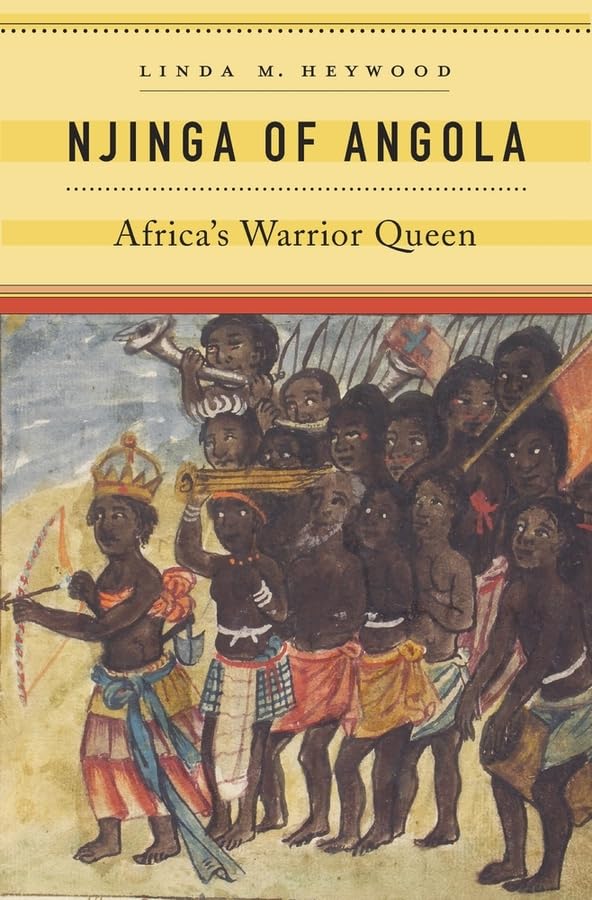

Africa gave the world everything that came first: the human species itself, the oldest mathematical artifacts, the 365-day calendar, the foundations of geometry and medicine, the alphabet and writing, iron metallurgy, and the moral framework that later became the ethics of every major civilization.
Read that one firstThe queens and empires we were never taught are waiting for you at CEEK.
Join a community of people who post daily, dig into the real history, and build something from what they find.
Join me on CEEK
Comments
Comments are public. Links are removed.