Who is Thomas Mensah? What was his role in Fiber Optics?
Asked 20 times
Dr. Thomas Owusu Mensah was a Ghanaian-American chemical engineer and inventor whose work at Corning Glass Works and AT&T Bell Laboratories made fiber optic technology fast enough and cheap enough to power the global internet.

Answer from Mary's digital twin. Checkmark turns Green once she confirms it.
Quick facts
- Born: 1950, Kumasi, Ghana
- Died: March 27, 2024, age 74, Kumasi, Ghana
- Known for: Pioneer in fiber optic manufacturing and nanotechnology
- Education: Undergraduate chemical engineering at Kwame Nkrumah University of Science and Technology, after attending Adisadel College in Cape Coast, Ghana. He holds a PhD in Chemical Engineering from Montpellier University, and a Certificate in Modeling of Chemical Processes from MIT.
- Patents: 14 patents; inducted into the US National Academy of Inventors in 2015.
Their story
His extraordinary journey from a young student with a passion for science to becoming one of the most influential scientists of his generation is a testament to his brilliance, perseverance, and vision. His father, J.K. Mensah, was a businessman who shipped cocoa products to chocolate manufacturers in France, which gave Thomas Mensah early exposure to French and a window into the world beyond Ghana. He was fluent in French from a tender age and won the Ghanaian National French Competition in Accra twice, at the Ordinary and Advanced levels.
What he achieved in fiber optics
Fiber optics is a technology that transmits information as pulses of light along a glass or plastic fiber, the backbone of the modern internet. The problem in the early 1980s was that manufacturing those fibers was painfully slow.
In 1983 Mensah was employed at Corning Glass Works in Sullivan Park, New York, as a fiber optics research engineer. His work dramatically increased fiber optic production speeds from 2 meters per second to over 20 meters per second, a breakthrough that made possible the global internet and telecommunications infrastructure we rely on today. He received 4 patents for that innovation.
He then moved to Bell Laboratories in 1986, where he led a program to develop the first laser-guided weapons for the US Department of Defense guided missile program, enabling the development of missiles that travel at the speed of sound, Mach 1. He received another 3 patents for his developments in the guided missile program.
His work made fiber optics a more practical and cost-effective solution for data transmission, while his contributions to military technology, such as fiber optic reels for advanced missile systems during the Gulf War, showcased the breadth of his influence.
Beyond the lab
Mensah was also commissioned to work on specialized projects for NASA (superconductors for space communication), the US Army (smart munitions at Picatinny Arsenal), and the US Department of Energy (fiber optic sensors for highway traffic monitoring).
On the institutional level, Mensah was a founding member of the Emerging Technologies area for the American Institute of Chemical Engineers (AIChE) and the first and only Black person to serve as the National Chairman of the Materials and Engineering Sciences Division of AIChE.
He authored four books: Fiber Optics Engineering in 1987, Superconductor Engineering in 1992, his autobiography The Right Stuff Comes in Black, Too in 2013, and Nanotechnology Commercialization in 2017.
Beyond his scientific achievements, Mensah was deeply committed to creating opportunities for underrepresented groups in science and technology, establishing educational initiatives, mentorship programs, and research foundations.
His books
- Nanotechnology Commercialization (2017): on bringing nanotechnology from the lab to the market
- The Right Stuff Comes in Black, Too (2013): his autobiography, the story of a Ghanaian boy who became a fiber optics pioneer in America
- Superconductor Engineering (1992): a technical volume on superconductor applications
- Fiber Optics Engineering (1987): the foundational text he edited for AIChE on the manufacturing discipline he helped invent
Worth knowing
Every time you stream a video, send a message or load a page, the data almost certainly travels through fiber optic cables manufactured using processes Mensah helped design. The internet as you know it runs on infrastructure he helped make fast enough and cheap enough to build at global scale. He grew up in Ghana, earned a scholarship, studied on two continents, and then changed the communications world. Nobody who looks at that arc can seriously argue that anyone started too late or came from the wrong place.
Follow-ups

The books
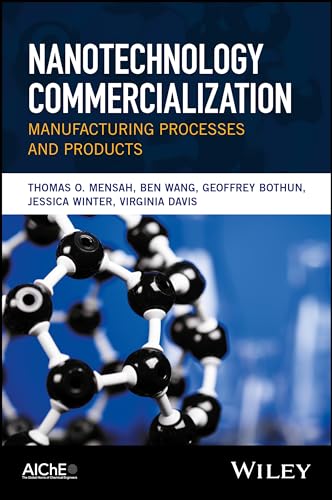 Nanotechnology Commercialization: Manufacturing Processes and ProductsThomas O. Mensah
Buy on Amazon
The Right Stuff Comes in Black, TooThomas O. Mensah
The Right Stuff Comes in Black, TooThomas O. Mensah
Buy on Amazon
 Superconductor EngineeringThomas O. Mensah
 · 1992
Buy on Amazon
 Fiber Optics EngineeringThomas O. Mensah
 · 1987
Buy on Amazon
Build something with your own story at CEEK
Daily posts and a community of builders who are figuring out how to turn their skills into something that lasts.
Join me on CEEK
Comments
Comments are public. Links are removed.