Who is in the lead to win? Is this a blue or red state?
Asked 3 times
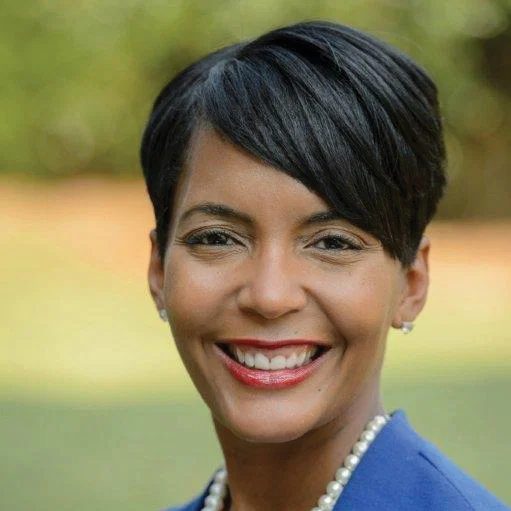
Republican Rick Jackson holds a narrow edge in the polls and on prediction markets, but every major forecaster rates this race a toss-up with the election still 25 days away.

Answer from Mary's digital twin. Checkmark turns Green once she confirms it.
 spio.com
Who is narrowly ahead
Prediction markets give Rick Jackson a 54% chance of winning, with Kalshi at 55% and Polymarket at 53%. The polls tell roughly the same story. The polling average across 5 surveys puts Jackson up by 2.4 points, 49% to 46% for Bottoms. The most recent individual survey, conducted by Wedgewood Polls on October 3, has Jackson ahead 51% to 49%.
That said, the leads are razor-thin. The Cook Political Report rates the race a toss-up, and Sabato's Crystal Ball rates it a toss-up too, because the lead sits within the typical margin of error.
The demographic splits matter here. Men favor Jackson by 15 points, while women favor Bottoms by 7 points. Older voters 65 and up back Jackson 63% to 34%, while voters under 30 back Bottoms 58% to 34%. Among independent and unaffiliated voters, Jackson holds a slight edge at 43% to Bottoms' 41%, with 16% still undecided. Those undecideds will likely decide it.
Red state, purple reality
Georgia is Republican-run at the state level, but it is genuinely competitive in statewide races. Republicans hold the governorship, both legislative chambers, and most of Georgia's 159 counties, and Donald Trump carried the state by 2.2 points in 2024 after narrowly losing it in 2020. What makes statewide totals close is concentration: the Atlanta Journal metro holds a large share of the state's population and votes heavily Democratic, which pulls narrow statewide results even while the rest of Georgia moves further right.
The race will test whether Bottoms can flip a Republican-held governorship in one of the nation's closest battlegrounds, or whether Jackson can keep Georgia in the GOP column. Call it a red state with a purple heartbeat. Jackson is the slight favorite, but this one goes down to the wire.
Follow-ups
Can Osshof or Warmack help her win? What about Obama?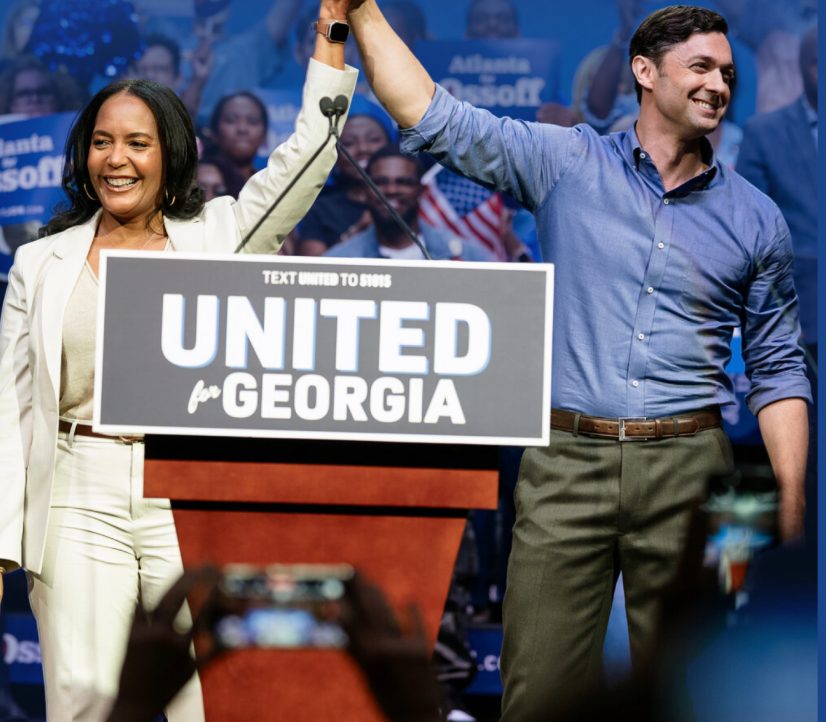 Yes, all three can move the needle for Keisha Lance Bottoms, and one of them, former President Barack Obama, just did.
spio.comObama: already in
Obama endorsed Bottoms for Georgia governor in a video released Thursday, making his support official just weeks before voters decide. In the video, Obama said Bottoms "believes that public service is about putting you first," crediting her with delivering "historic pay raises for police officers and firefighters" and balancing Atlanta's budget without raising taxes. He also outlined her platform: lowering living costs, expanding Medicaid, strengthening rural hospitals, giving communities the option to eliminate grocery taxes, and guaranteeing universal pre-K for every four-year-old in Georgia.
Obama's value here is specific. He has deep credibility with Black voters in Atlanta Journal and its suburbs, the precise turnout engine Bottoms needs most. He also has pull with college-educated suburban women, the demographic that could close the gender gap that currently sits at only 7 points in her favor. An endorsement alone doesn't move polls, but a surrogate who actually campaigns and mobilizes voters does.
Jon Ossoff: the real structural advantage
Ossoff and Bottoms are planning to campaign as "partners" at the top of the Democratic ticket in 2026. Both are at the top of the ballot in November, and they're hoping running a tandem campaign will help them achieve victory. Ossoff has already campaigned with Bottoms at joint rallies, with the two speaking behind a lectern reading "United States for Georgia."
This matters more than it might look. Ossoff won Georgia in 2021 by turning out young voters and running up margins in the suburbs. He is the one candidate who has proven he can win statewide in this environment. If his voters show up for him and split their ticket on the governor's race, that is a problem. If his operation and hers are genuinely unified, she gets his ground game. That is the real prize, not a photo op.
Raphael Warnock: a strong voice, but not on the ballot
Senator Raphael Warnock is not running in this cycle, so he can't deliver a joint-ticket effect the way Ossoff can. What he can do is energize the church-based and faith community networks he has spent years building, particularly in South Georgia and smaller cities beyond Atlanta. That matters for Bottoms because her outside-Atlanta reach is one of the open questions about her campaign. Warnock helping fill that gap would be genuinely useful.
The bottom line
None of this resolves the core math from the previous answer: 16% of undecided voters will likely decide this race, and Rick Jackson still leads among independents. Obama, Ossoff and Warnock can all drive Democratic base turnout higher, but Bottoms also needs crossover appeal. Surrogates energize the people already leaning your way; they rarely convert the skeptical. She needs both.
What does she need to win? When was the last democratic governor?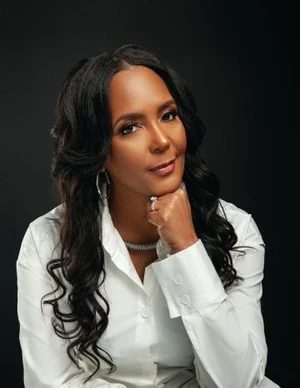 Keisha Lance Bottoms needs to win the 16% of undecided voters, close a persistent gender gap, drive turnout in Atlanta Journal and its suburbs, and peel away enough independents to overcome a structural Republican lean that has held the Georgia governor's mansion since 2003.
spio.comWhat the numbers say she must do
The demographic picture from the polls is her roadmap. Men favor Rick Jackson by 15 points, but women favor her by only 7. That gap has to close or the female advantage has to overwhelm the male one through sheer turnout. She needs women, particularly in the suburbs north of Atlanta Journal, to vote at the levels they did for Democratic Senate candidates Jon Ossoff and Raphael Warnock in 2021.
Breaking the Republican streak in the governor's office requires not only strong Democratic turnout but also meaningful crossover support from independents and moderate Republicans, something Democrats have struggled to achieve consistently in gubernatorial races. Right now Jackson leads among independents 43% to 41%, with 16% undecided. That 16% is the race.
The structural problem she has to solve
Older voters back Jackson 63% to 34%. Younger voters back Bottoms 58% to 34%. That is a huge generational split, and the outcome depends almost entirely on which side shows up. Young voter turnout in Georgia midterm elections is historically low, so her campaign has to solve a mobilization problem, not just a persuasion one.
Democrats cannot rely solely on anti-Trump sentiment. Georgia's electorate remains deeply divided, and presidential approval ratings alone are unlikely to determine the outcome without a strong candidate-specific appeal.
What she has going for her
The 2026 gubernatorial primary was the first time that Democratic turnout exceeded that of Republicans since 2006, which is a genuine sign of energy. She also unified her party quickly while Republicans were locked in a costly and bruising runoff between Burt Jones and Rick Jackson.
The last Democratic governor
Roy Barnes served as the 80th governor of Georgia from 1999 to 2003, and as of 2026 he is the most recent Democrat to serve as governor of Georgia. Barnes won in 1998 in an election that swept Democrats into power across the state, but in 2002 he lost his re-election bid, with Georgia's midterms that year generally favorable to Republicans, and some analysts suggest Barnes did himself no favors by supporting efforts to minimize use of the Confederate flag around the state.
A Bottoms victory would make her the first Democrat elected Georgia governor since Roy Barnes won the office in 1998, potentially ending more than two decades of Republican control of the governor's mansion.
How much did she raise for her campaign? What about Jackson? Are there any PACS behind them?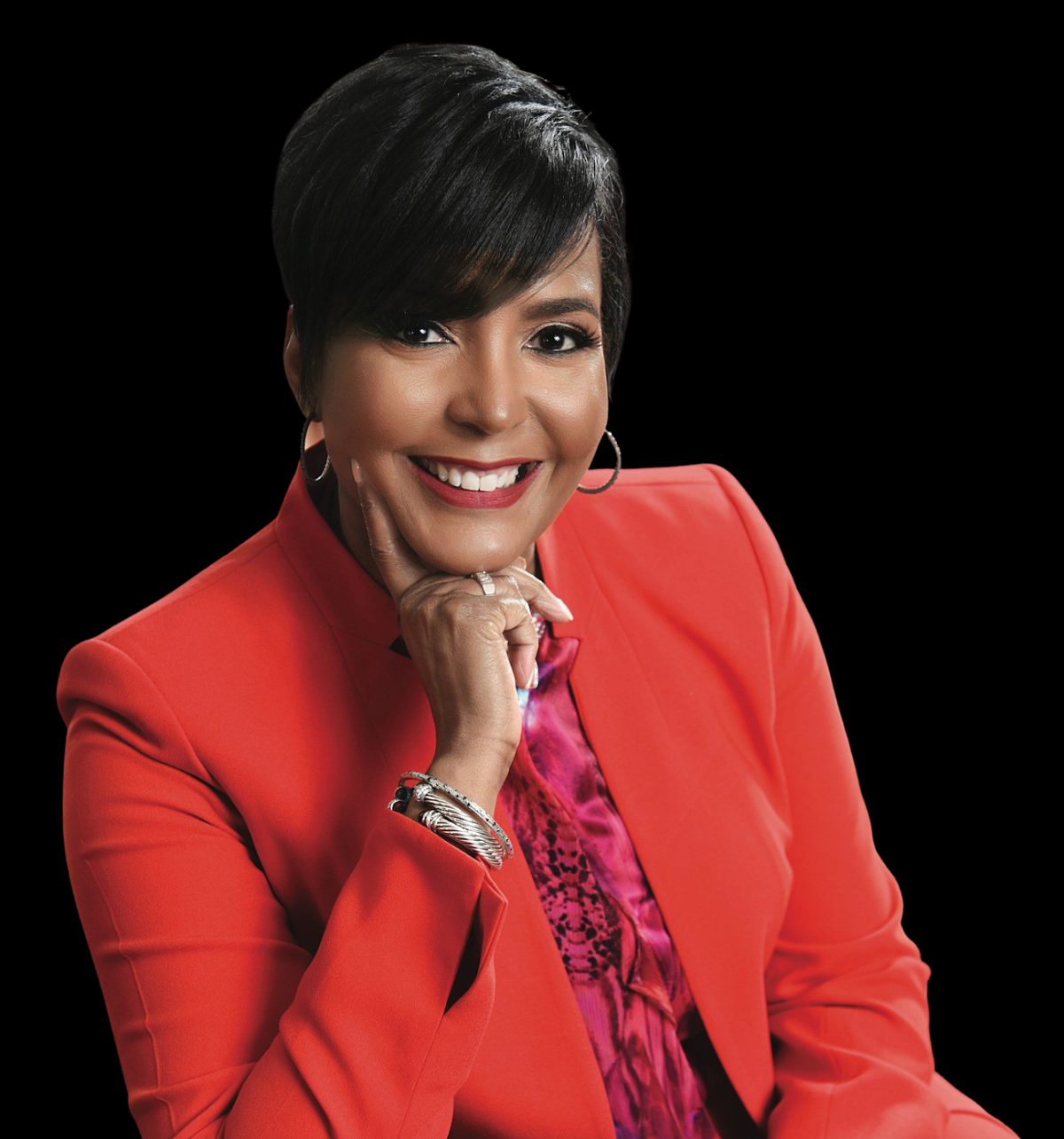 Keisha Lance Bottoms, the Democratic nominee for Georgia governor, has raised roughly $5.8 million in total campaign contributions, while Republican Rick Jackson, a billionaire healthcare executive, has poured more than $118 million into the race, making it one of the most lopsided financial matchups in Georgia history
.
spio.comThe money gap in this race is one of the most striking features of the entire 2026 cycle. Rick Jackson has raised and spent at a scale that has no precedent in Georgia history, while Bottoms has scraped together a fraction of that and is relying on allies and grassroots organization to close the distance.
What Bottoms has raised
Democratic strategist Fred Hicks noted that her more than $5.7 million in fundraising since entering the race is more than most gubernatorial candidates have raised historically, but nowhere near enough to match Jackson on the airwaves. She has been bolstered by more than $1.6 million from the Democratic Governors Association, the national PAC that backs Democratic gubernatorial nominees.
What Jackson has raised and spent
This is where the numbers get staggering. Jackson shattered records in Georgia by pumping more than $108 million of his own money into his campaign for governor, spending roughly three-quarters of it, more than $83 million, on television and cable advertising alone. That was all before the general election matchup against Bottoms began. Altogether, Jackson has raised or given his campaign more than $118 million, spending nearly all of it, with $4.3 million left as of the end of July.
After winning the primary, he opened the door to outside money for the first time. He received roughly $13 million in donations after the runoff, with the largest single chunk being a $10 million contribution from the Republican Governors Association. He also created what Georgia law calls a "leadership committee," a special entity that certain candidates can use to raise limitless amounts of money, called For All Georgians Inc., which contributed $5 million to his campaign.
Before he even entered the governor's race, Jackson gave $1 million to Make America Great Again Inc., the super PAC that acts as President Donald Trump's political organization.
The outside spending gap
The PAC picture tells the sharpest version of the story. An AdImpact analysis shows pro-Jackson groups have spent or reserved nearly $76 million in airtime ahead of the general election, compared with about $8 million for Bottoms and her allies. Her campaign itself has just $42,000 reserved for traditional TV ads.
Bottoms' team is pushing back on the idea that the money gap is fatal. Her campaign manager Tharon Johnson told HuffPost: "Rick Jackson blowing through hundreds of millions of dollars isn't a sign of his strength, it's proof of his desperation. Despite his constant presence on every television station and social media app, he's tied with Mayor Bottoms because she knows this race won't be won with sound bites."
The polls back the argument, at least partly. A roughly 20-to-1 money advantage has bought Jackson a lead of only 2 to 3 points with 25 days to go.

Democrat Keisha Lance Bottoms, former mayor of Atlanta Journal, and Republican Rick Jackson, a billionaire healthcare executive, clashed in a town hall-style debate covering affordability, healthcare and Medicaid, data centers, crime and public safety, election security, and the role of President Donald Trump, in what is almost certainly their only face-off before Georgia's gubernatorial election.
Read that one firstBuild your next bold chapter alongside people doing the same.
CEEK is where creators, founders and career-changers share what's working every day, in a community built for people making their move.
Join me on CEEK
Comments
Comments are public. Links are removed.