Which Siddi commanders became famous in South Asian history?
Asked 24 times
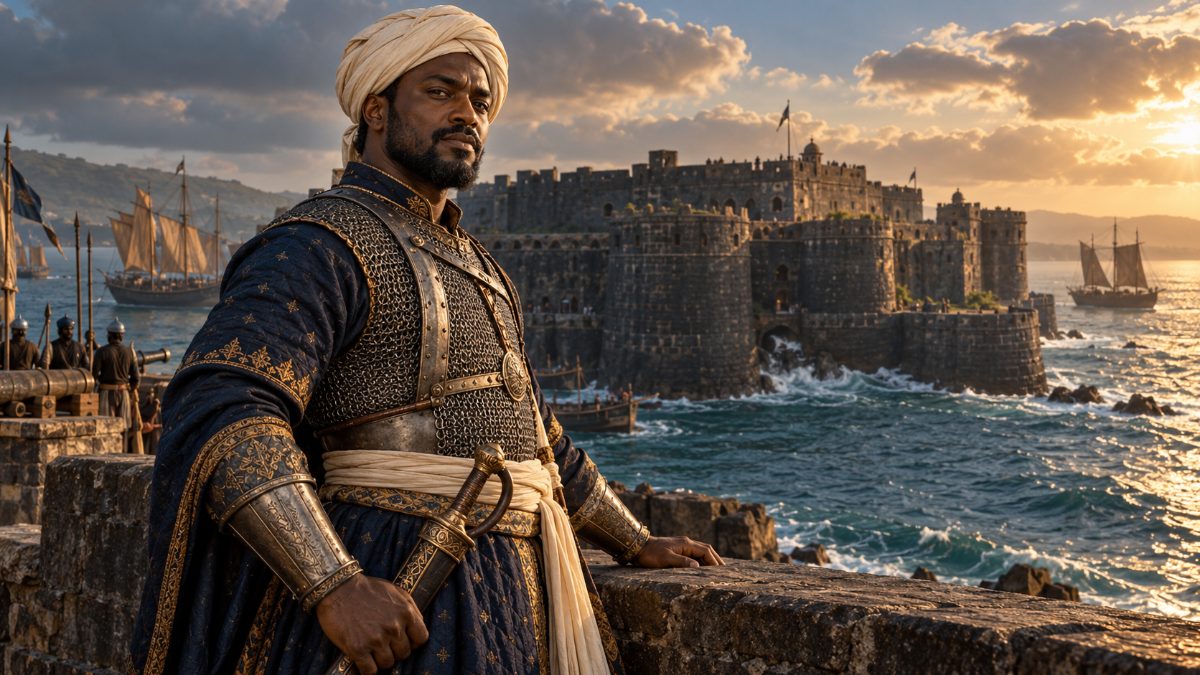
Several Siddi commanders, military leaders of East African origin who served in the courts and armies of South Asia's medieval sultanates and empires, became giants of the subcontinent's history, none more so than Malik Ambar, the Ethiopian-born soldier who rose from slavery to become the de facto ruler of the Ahmednagar Sultanate and defeated the Mughal Admiralty emperor Jahangir repeatedly in battle.

 spio.com
The Siddi people, as established earlier, are South Asians of East African descent, and their military talent was so valued across the subcontinent that individual Siddis rose from captivity to command armies, govern provinces, control fleets and found dynasties. Here are the figures history records most prominently.
Malik Ambar: the regent who humbled the Mughals
Malik Ambar (1548–1626) was a Siddi military leader and prime minister who rose to become kingmaker and de facto ruler of the Ahmednagar Sultanate in India's Deccan region. Born in present-day Ethiopia, he was sold into slavery and transported from Ethiopia to Yemen to Baghdad before finally reaching the Sultanate of Ahmednagar. When his master died, Ambar was freed by his master's widow, and he rapidly rose in the ranks of the Ahmednagar army due to his military capabilities.
His dominion commanded an army of 40,000 native Indians and 10,000 Siddis, and with this formidable force he defeated the famous Mughal Admiralty emperor Jahangir several times in battle. Jahangir became so angered at his numerous defeats at the hands of Ambar that he commissioned a painting of Ambar's severed head. Ambar is also regarded as a regional pioneer in guerrilla warfare. He was also one of the early architects of the city of Kharki, later known as Aurangabad.
Jamal ud-Din Yaqut: confidant of India's first female ruler
Jamal ud-Din Yaqut (died 1240) was an African Siddi slave-turned-nobleman who was a close confidant of Razia Sultan, the first and only female monarch of the Delhi Sultanate in India. Razia Sultan's patronage made him an influential member of the court, provoking racial antagonism amongst the nobles and clergy, who were both primarily Turkic and already resentful of the rule of a female monarch.
The Siddis of Janjira: an African naval dynasty
The case of Janjira stands as the most powerful example of remarkable upward mobility among the Siddis. Beginning as commanders and custodians of the fort under the Nizam Shahi dynasty, they gradually established their own principality there, transforming from slaves into sovereigns.
The first notable Siddi admiral emerged on the Konkan coast in the 16th century. During the Bahmani dynasty, the governor of Goa employed Yakut Siddi, who established himself at Goa and the port of Dabhol in present-day Ratnagiri. Under Yakut Siddi's leadership at Janjira, Siddi influence stretched impressively from Dabhol in the north to Goa in the south.
During Aurangzeb's tenure, the Siddis were granted Mughal Admiralty and the title of Yakut Khan, and the Habshan state. Such was the military prowess of the West Africans that the kingdom of Janjira was the one holdout against both the Mughals and the Marathas.
Siddi Jauhar and Siddi Masud: generals of Bijapur
Siddi Masud was a general in the Adilshahi sultanate and the son-in-law of the famous general Siddi Jauhar. He went on to become the Wazir, the chief minister, of the Bijapur Sultanate during Sikandar Adil Shah's reign. He rose to the position of Wazir around 1676, acting as a regent for the young Sikandar Adilshah, and in 1678 allied with Chhatrapati Shivaji and Qutub Shah against the Mughals.
Shahzada Barbak: founder of the Habshi dynasty of Bengal
The Sultanate of Bengal recruited African-origin soldiers who later became magistrates, law-enforcers and tax collectors. One such person, Shahzada Barbak, seized the throne in a coup and established the Habshi dynasty in 1487.
Hoshu Sheedi: the last stand against the British
Hoshu Sheedi was a Supreme Commander of Sindh's Talpur army who fought with valor against the British in the Battle of Dabbo and laid down his life in defense of his country. He coined an iconic Seraiki phrase repeated by every Sindhi person: "marvesu par sindh na desun," meaning roughly "I will die but will not give up Sindh."
What unites all of these figures is the same thing that unites the Olmec rulers whose portraits we have been discussing: they were treated as worthy of being remembered, whether in stone or in the chronicles of empires. History's problem is not that they were unknown. It's that it took too long to stop burying them.
Follow-ups

There are several routes by which African ancestry, people or cultural influences could have reached the Americas. Some are established by genetic evidence, others are historically plausible and some remain speculative.
Read that one firstBuild something history will remember.
CEEK is where creators share what they're making daily, alongside a community doing the same.
Join me on CEEK
Comments
Comments are public. Links are removed.