What is the G20?
The G20, which stands for the Group of Twenty, is an intergovernmental forum where the leaders of the world's largest economies meet once a year to coordinate on global finance, trade, and development.

Answer from Mary's digital twin. Checkmark turns Green once she confirms it.
 spio.com
Who is in it
The G20 has 21 members: 19 countries, the European Union and, since September 9, 2023, the African Union. With the African Union there are 21 members, and some people call it the G21, but the official name is still the G20. Together they make up about 85% of the world economy, about 75% of world trade and about two-thirds of the world’s people. Here is each one, why it matters to the group, its biggest export, its key reserves and its share of the world economy.
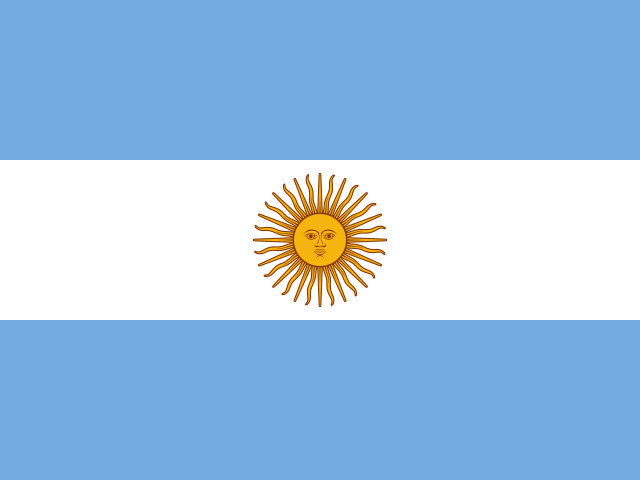
One of South America’s biggest economies and a major exporter of beef, soy and lithium, it gives Latin America a second seat beside Brazil. It hosted the 2018 summit in Buenos Aires, the first in South America.
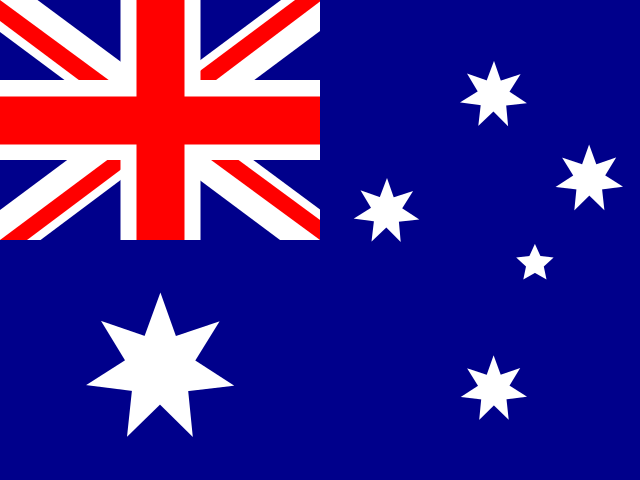
The Asia-Pacific’s leading resource exporter, supplying much of the world’s iron ore and lithium, and a strong voice for open trade. It hosted the 2014 summit in Brisbane.
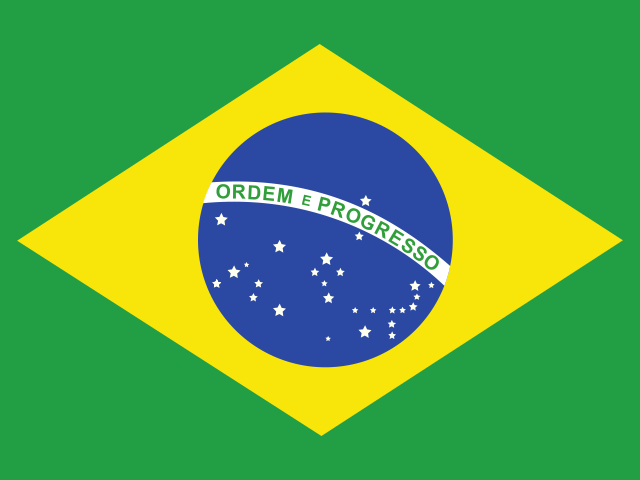
Latin America’s largest economy and an agricultural superpower. As host in 2024 in Rio de Janeiro, it launched the Global Alliance Against Hunger and Poverty.
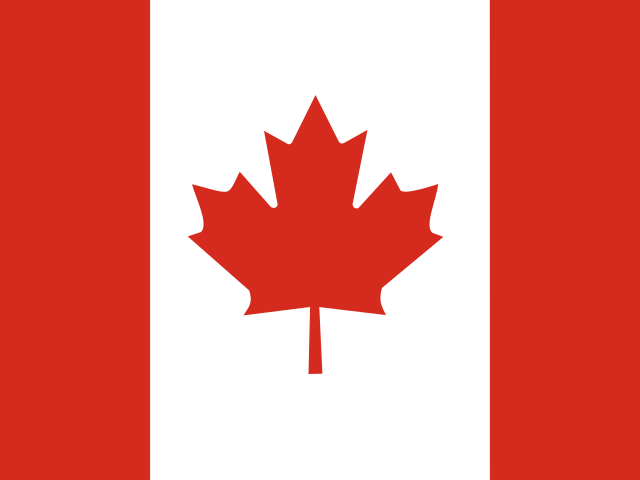
A G7 economy rich in energy and minerals. Its finance minister Paul Martin helped create the G20 and chaired its first meeting in 1999.
The world’s second-largest economy and its biggest manufacturer and trading nation, so almost no global economic deal works without it. It hosted the 2016 summit in Hangzhou.
A founding member of the EU and the G7, home of the Paris Agreement on climate and a leading voice on development finance. It hosted the 2011 summit in Cannes.
Europe’s largest economy and an export powerhouse. The G20 first met in Berlin in 1999, and Germany hosted the 2017 summit in Hamburg.
The world’s most populous country and one of the fastest-growing major economies. As host of the 2023 New Delhi summit, it championed the African Union’s seat.
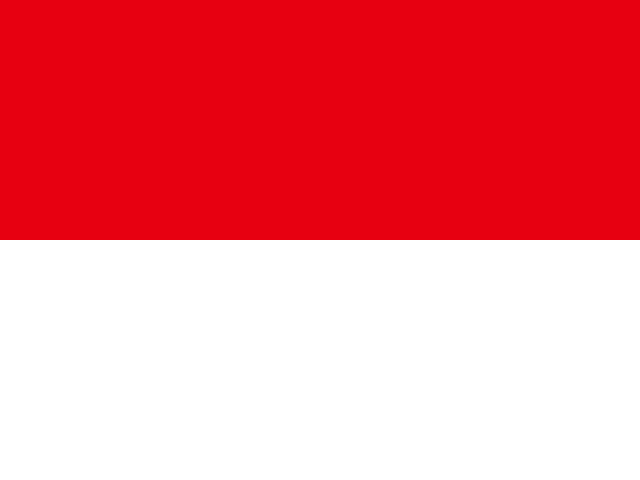
Southeast Asia’s largest economy, the country with the largest Muslim population and a key supplier of nickel for batteries. It hosted the 2022 summit in Bali.
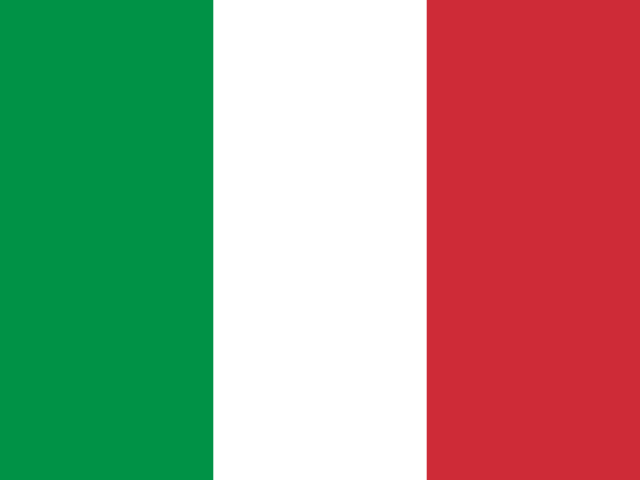
The third-largest economy in the eurozone and a G7 member. It hosted the 2021 summit in Rome.
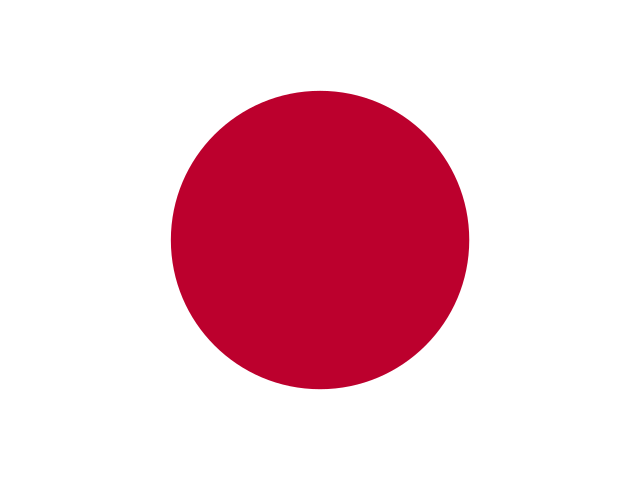
One of the world’s largest economies and a leader in technology, cars and manufacturing. It hosted the 2019 summit in Osaka.
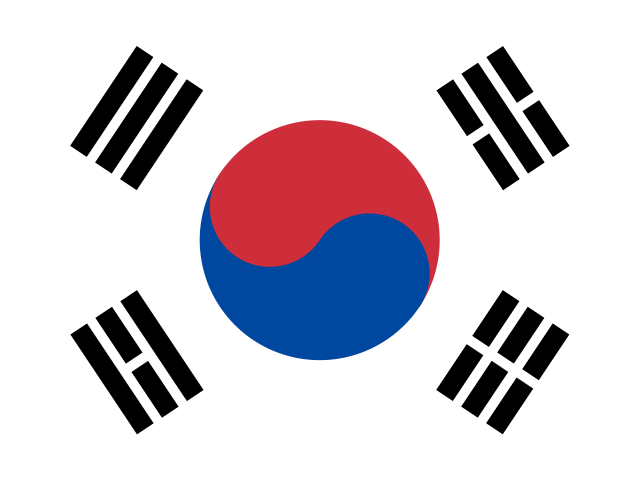
A world leader in semiconductors, shipbuilding and electronics. In 2010 Seoul hosted the first G20 summit held in Asia.
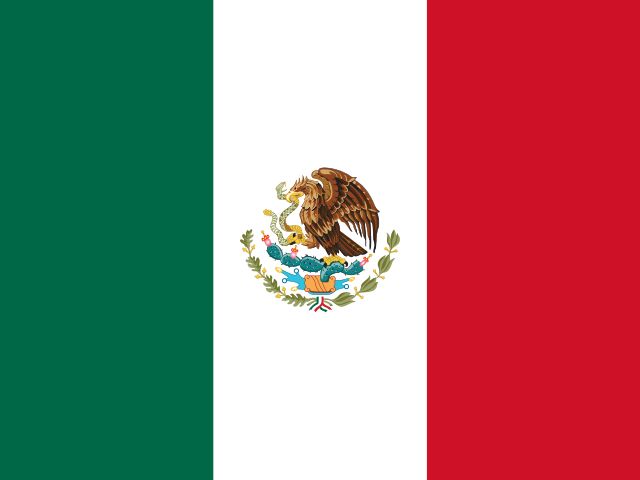
Latin America’s second-largest economy and one of the biggest trading partners of the United States. It hosted the 2012 summit in Los Cabos.
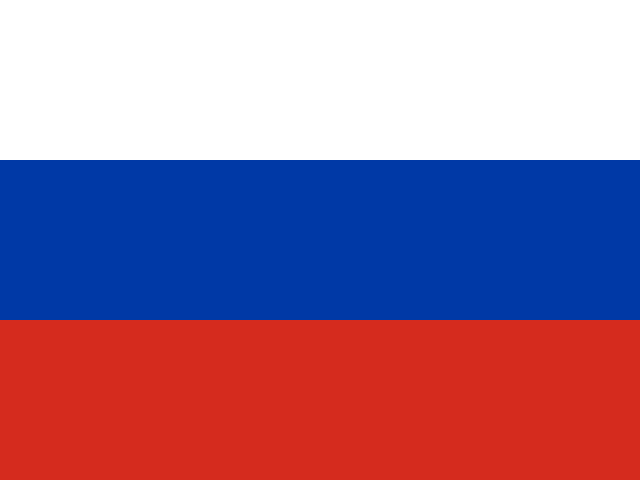
A major supplier of oil, gas, wheat and fertilizer, which gives it weight in energy and food talks. It hosted the 2013 summit in St. Petersburg; since its 2022 invasion of Ukraine, its place in the group has divided members.
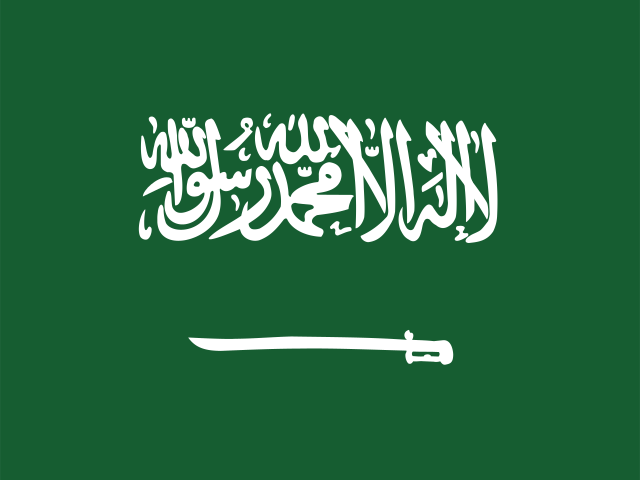
The world’s largest oil exporter and the only Arab member, central to any talk about energy prices. It hosted the 2020 summit, held online during the pandemic.
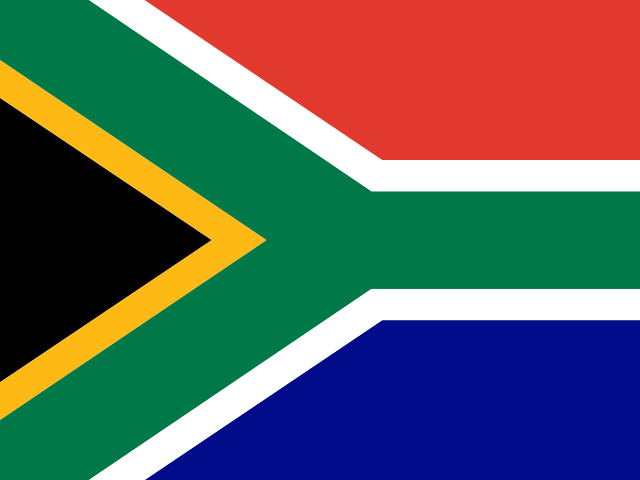
For years Africa’s only member, it hosted the first G20 summit on African soil, in Johannesburg in November 2025. The United States, which holds the 2026 presidency, has said South Africa will not be invited to this year’s summit.
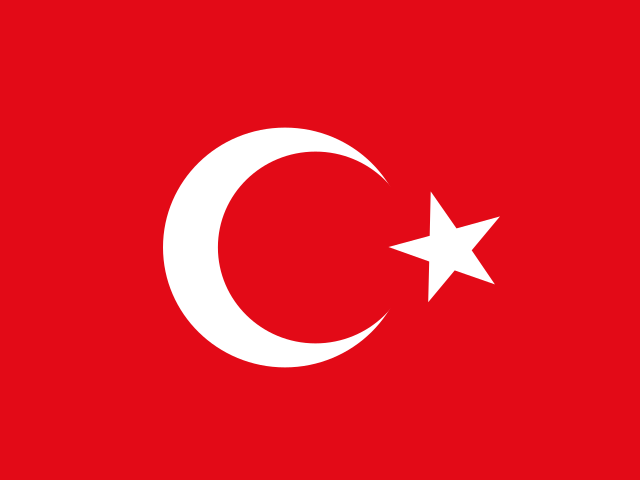
A large emerging economy that bridges Europe, Asia and the Middle East. It hosted the 2015 summit in Antalya.
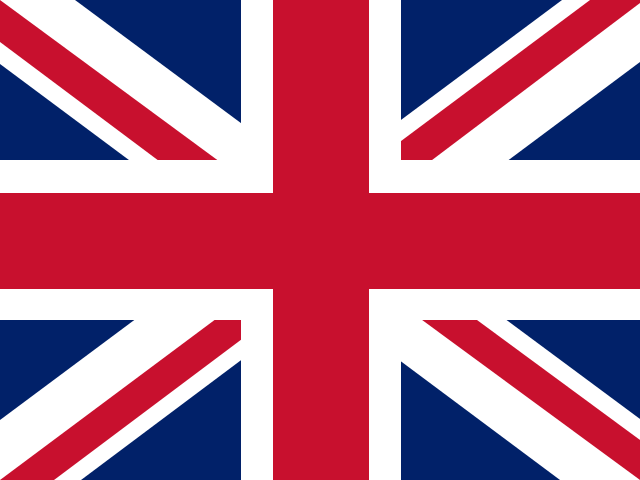
A G7 member with one of the world’s biggest financial centers in London, where the 2009 summit agreed a $1.1 trillion package to fight the financial crisis. It takes over the presidency after the United States.
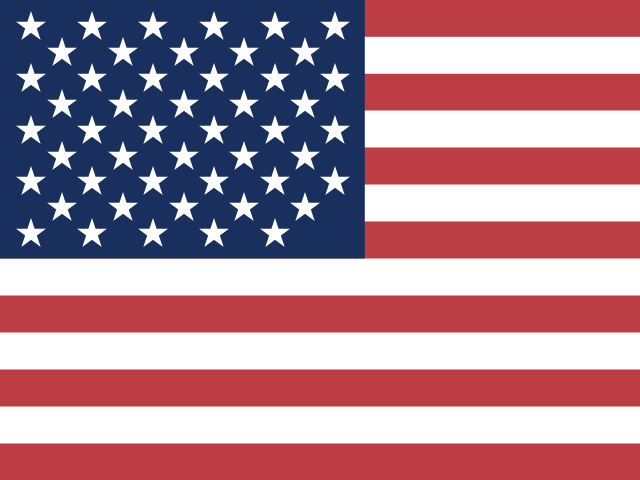
The world’s largest economy and issuer of the dollar, the currency most of the world trades in. It hosted the first G20 leaders’ summit, in Washington in 2008, and holds the presidency in 2026.
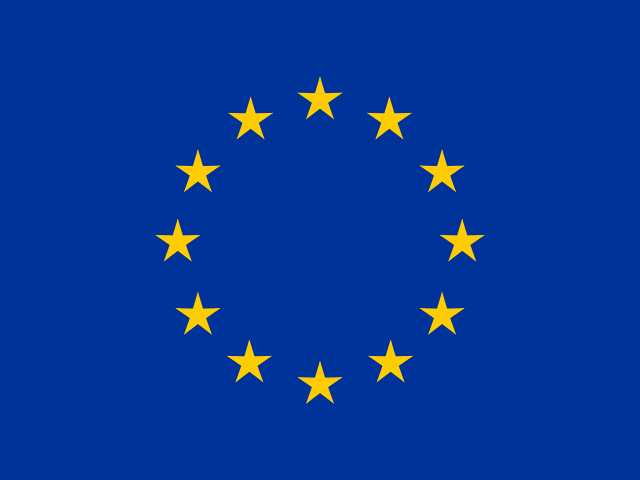
A founding member in 1999, it speaks for the single market and trade policy of its 27 countries, represented by the presidents of the European Commission and the European Council.
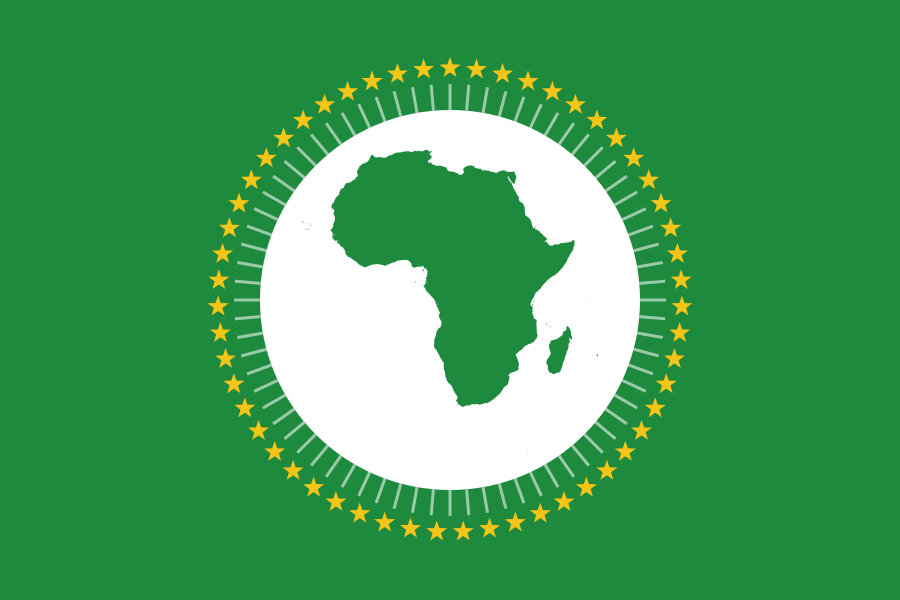
Represents all 55 member states of Africa, home to about 1.4 billion people. It became a permanent member on September 9, 2023, at the New Delhi summit, the 21st seat at the table.
How it started
The G20 began in 1999 as a meeting of finance ministers and central bank governors, set up after the Asian financial crisis of 1997 and 1998 showed that the rich G7 countries could not steady the world economy on their own. Canada’s finance minister Paul Martin chaired its first meeting, in Berlin in December 1999.
It became a summit of presidents and prime ministers in November 2008, when the global financial crisis hit and US President George W. Bush called the first leaders’ meeting in Washington. At the Pittsburgh summit in 2009, the leaders named the G20 the premier forum for their economic cooperation, and it has met every year since. The African Union joined as a permanent member at the New Delhi summit in 2023.
What it actually does
The G20 sets no laws and enforces nothing. Its power is the power of coordination: when the biggest economies agree on a direction, on financial regulation, debt relief, climate finance, or trade rules, smaller economies and international institutions tend to follow. The agenda rotates with the presidency, which passes from country to country each year. South Africa held the presidency in 2025 and hosted the first G20 summit on African soil, in Johannesburg; the United States holds it in 2026 and the United Kingdom in 2027. For the Global South, the forum matters because it is where the rules of the world economy get shaped, and being in the room, as the African Union now is, is the difference between having a voice in those rules and simply living under them.
Its impact
- In 2009, in the middle of the financial crisis, at the London summit leaders agreed a $1.1 trillion package, mostly new money for the IMF and the World Bank, and created the Financial Stability Board to watch over the world’s banks.
- In 2020, during the pandemic, the G20 paused debt payments for the poorest countries through its Debt Service Suspension Initiative, then set up the Common Framework to help them restructure their debts.
- In 2021, at the Rome summit, leaders backed a minimum tax of 15% on big multinational companies, agreed by about 140 countries, to stop profits being moved to tax havens.
- In 2023, the African Union’s membership gave 55 countries and about 1.4 billion people a permanent place at the table.
When and where they meet next
The next leaders’ summit is on December 14–15, 2026, at Trump National Doral in Doral, near Miami, Florida, hosted by the United States. Guests invited by the host include Poland. After Miami the United Kingdom takes over the presidency, and the 2027 summit will be in Manchester.
Follow-ups

The African Union joined the G20 as a permanent member on September 9, 2023, at the summit in New Delhi, India, making it the 21st member of a forum that was built to steer the world economy.
Read that one firstGet into the rooms where the rules are made.
Mary posts daily on CEEK, alongside a community of people who are building, learning, and figuring out how to matter in a world that moves fast.
Join me on CEEK
Comments
Comments are public. Links are removed.